
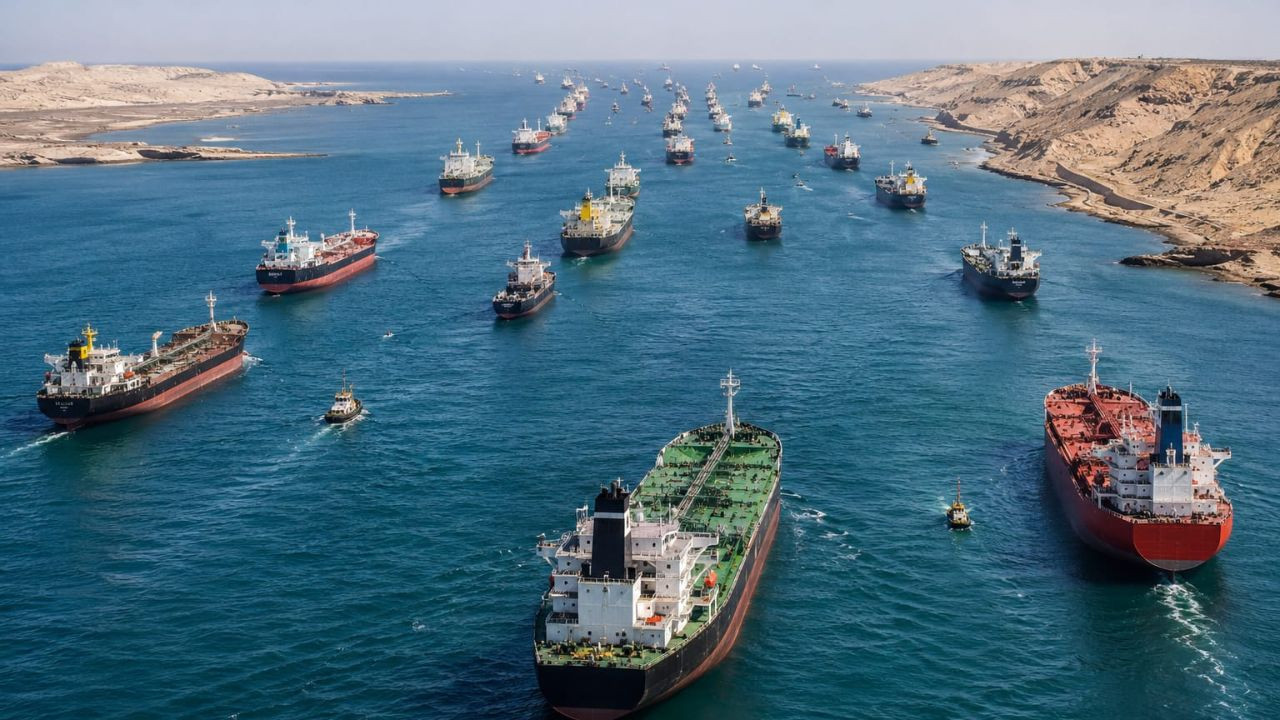
Long lines of ships formed in Hormuz due to Iran’s new strictness, new rules implemented for passage

New Delhi: After the recent peace agreement between America and Iran, the strategically important ‘Strait of Hormuz’ has been reopened for commercial ships. As soon as the route opened, a huge queue of ships has formed on this route, creating a jam-like situation at this major center of global trade. After the war, the ‘Persian Gulf Strait Authority’ has implemented new and strict rules to ensure safety and smooth movement.
Transit requests and strict rules
According to the new guidelines of PGSA, now any commercial ship will have to submit its ‘transit request’ at least 48 hours in advance to pass through Hormuz. This application can be made through the official website of the authority, in which it is mandatory to provide complete details of the journey, scheduled route, contact details and every technical information related to the ship.
Permission required to enter waterways
The authority has clarified that permission is required before entering the waterways and ships will have to be in constant touch with the authority during transit. The ship owner will be held directly responsible for any lapse or negligence in the rules.
Why is Hormuz a lifeline for the world?
- The Strait of Hormuz connects the Persian Gulf and the Gulf of Oman. This route was almost completely closed to normal traffic since March following US military operations, which disrupted the global oil supply.
- Center of energy crisis: About 80 percent of oil and gas exports from Gulf countries take place through this narrow route.
- Impact on India: India has been importing about 40 percent of its total crude oil requirement through this route.
- During the war, a large number of sea mines were laid in the waters of Hormuz. This entire area is still accident prone.
Relief from duty for 60 days
Under the bilateral agreement, Iran will not charge any fees from ships passing through this route for the next 60 days in the name of security, environment or maintenance. The entire expense of this period will be borne by the Iranian government itself. On Thursday, a record 25 ships passed safely through this route, whereas in the entire month of April, barely 7 to 8 ships were able to pass through this route. Although there is relief from this recovery in the global business world, the postponement of the US-Iran peace talks to be held in Switzerland and the increasing conflict between Israel-Hezbollah have once again increased the uncertainty in the region.

Comments are closed.