
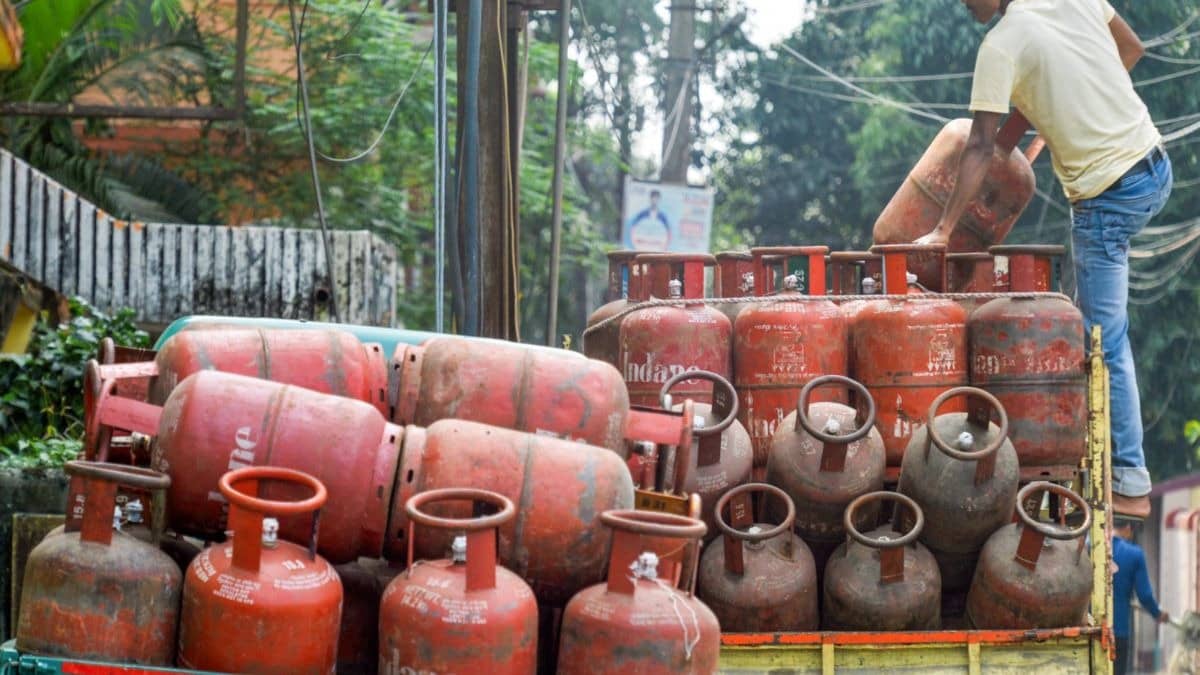

Following the latest increase of ₹29 in domestic LPG cylinder prices, the Ministry of Petroleum and Natural Gas has defended the revision, stating that Indian households continue to receive cooking gas at prices significantly below international market rates.
The revised rates came into effect on June 7, taking the price of a standard 14.2-kg domestic LPG cylinder in Delhi to ₹942.
Why LPG Prices Have Increased
According to the government, the recent hike is primarily linked to rising international LPG prices caused by ongoing geopolitical tensions and disruptions in West Asia.
India imports nearly 60 percent of its LPG requirement, making domestic prices sensitive to global market movements. The country’s LPG import cost is linked to the Saudi Contract Price (Saudi CP), an international benchmark revised every month.
Before the escalation of tensions in West Asia, Saudi CP stood at approximately USD 543 per tonne in February. However, following disruptions in the region and concerns over the Strait of Hormuz, prices surged significantly and reached around USD 790 per tonne by June.
As a result, the cost of importing LPG into India has increased sharply over the past few months.
Government Says Consumers Are Still Protected
The Petroleum Ministry stated that despite rising global costs, consumers are not bearing the full financial burden.
According to official estimates, the actual cost of supplying a 14.2-kg LPG cylinder has now crossed ₹1,600. However, households in Delhi pay ₹942, meaning the government and oil companies continue to absorb a substantial portion of the cost.
Officials said the effective under-recovery on every domestic cylinder is currently around ₹700.
Special Relief for Ujjwala Beneficiaries
The government highlighted that beneficiaries under the Pradhan Mantri Ujjwala Yojana (PMUY) continue to receive additional support.
Eligible households receive a direct benefit transfer (DBT) subsidy of ₹300 per cylinder on their first four refills annually.
As a result, PMUY beneficiaries effectively pay around ₹642 per cylinder, substantially lower than the market price.
India’s LPG Prices Still Lower Than Many Countries
The ministry argued that even after the latest revision, cooking gas remains more affordable in India compared to several neighbouring countries and developed economies.
Officials noted that domestic LPG pricing continues to be moderated despite international volatility, ensuring that households remain protected from sudden global price shocks.
Commercial LPG Prices Reflect Market Rates
Unlike domestic LPG cylinders, commercial cylinders used by restaurants, hotels and businesses are directly linked to international market prices and are revised every month.
Currently, a 19-kg commercial LPG cylinder in Delhi costs ₹3,113.50.
This translates to approximately ₹164 per kilogram, compared to around ₹66 per kilogram paid by domestic consumers.
The government said commercial LPG prices include higher taxes and market-linked adjustments.
Steps Taken to Ensure Supply
To maintain uninterrupted LPG availability, the government has implemented several measures:
- Increased domestic LPG production by more than 60 percent.
- Expanded sourcing from countries including the United States, Canada and Algeria.
- Prioritised household and essential-sector consumption.
- Promoted piped natural gas (PNG) adoption where available.
- Strengthened OTP-based delivery verification to prevent diversion of subsidised cylinders.
Officials said these measures have helped ensure adequate supply despite global disruptions.
Opposition Criticises Price Hike
The LPG price increase has drawn criticism from opposition leaders, who argue that consumers are being burdened during a period of rising living costs.
Critics have questioned why benefits were not fully passed on when international crude prices were lower and have expressed concerns over the impact on inflation and household budgets.
However, the government maintains that the increase was necessary to balance rising international costs while continuing to shield consumers from the full impact of global price escalation.
With global energy markets remaining volatile, LPG pricing is expected to remain closely linked to international developments in the coming months.
Comments are closed.