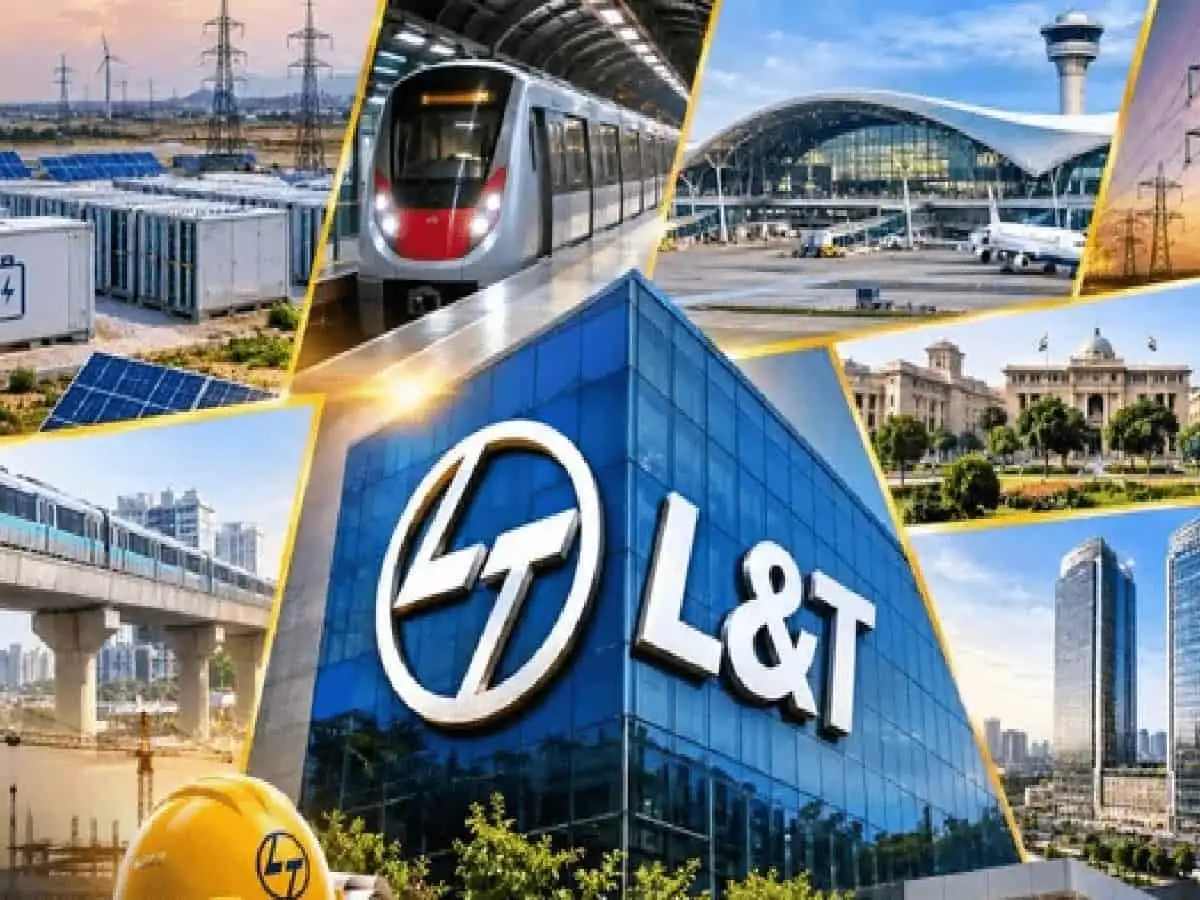
Extending an extraordinary streak of domestic and international order wins across urban transit, greenfield airports, high-rise government complexes, and clean energy infrastructure, Larsen & Toubro (L&T) announced on Wednesday, November 25, 2026, that it has secured a major contract to develop a 300 megawatt (MW) / 900 megawatt-hour (MWh) Battery Energy Storage System (BESS) at Khavda in Gujarat. Executed jointly by two specialized verticals—L&T’s Renewables business and L&T Electronic Products & Systems (LTEPS)—the mandate falls under L&T’s “Significant” order classification, valued between ₹1,000 crore and ₹2,500 crore. Engineered as a three-hour energy storage installation capable of delivering 300 MW of continuous electricity across a full three-hour discharge window, the Khavda facility will incorporate advanced liquid-cooling thermal management technology to maximize energy density, operational safety, and battery lifecycle in Kutch’s demanding desert climate. Located inside one of the world’s largest renewable energy hubs at Khavda, the project directly addresses India’s biggest clean-power challenge: storing surplus solar and wind generation during midday peaks and dispatching firm, reliable electricity during evening demand surges. For infrastructure investors, power-sector engineers, and market watchers across northern India—including readers in Lucknow and neighboring Uttar Pradesh cities such as Unnao, Kanpur, Prayagraj, and Varanasi, where L&T is actively executing major metro rail, expressway, and power-transmission corridors—the Khavda order underscores how India’s largest engineering conglomerate is cementing leadership in next-generation grid storage.
Because solar and wind generation fluctuate with sunlight and weather patterns, utility-scale Battery Energy Storage Systems (BESS) have become indispensable for maintaining grid frequency and preventing renewable energy curtailment. L&T’s upcoming Khavda installation combines power electronics, thermal safety, and grid-scale storage into an integrated clean-energy asset:
| Technical & Commercial Parameter | Verified Details of L&T’s Khavda BESS Contract (November 25, 2026) |
| Executing L&T Verticals | Jointly won and executed by L&T Renewables and L&T Electronic Products & Systems (LTEPS). |
| Power & Energy Capacity | 300 MW power capacity / 900 MWh energy storage capacity (3-hour continuous discharge duration). |
| Order Value Classification | Classified as a “Significant” order by L&T (valued between ₹1,000 crore and ₹2,500 crore). |
| Core Cooling Technology | Features liquid-cooling technology, engineered for higher power density, superior fire and thermal safety, and extended battery lifespan. |
| Grid & Clean-Energy Role | Captures excess renewable power during high-generation hours and releases it during peak evening demand, improving grid stability and accelerating renewable integration. |
The Khavda BESS award caps an exceptionally busy autumn for L&T across India’s flagship public infrastructure programmes:
-
Noida Metro Aqua Line Extension (₹1,000–₹2,500 Crore): Earlier on November 9, 2026, L&T’s Heavy Civil Infrastructure vertical won an order from the Noida Metro Rail Corporation (NMRC) to design and construct a 15.1-kilometre elevated viaduct (connecting Botanical Garden to Noida Sector 142 and Depot Station to Boraki) along with 10 modern elevated stations within a 36-month timeline.
-
Common Central Secretariat, New Delhi (₹2,500–₹5,000 Crore Band): L&T secured a major contract from the Central Public Works Department (CPWD) to construct Buildings No. 4 and 5 of the Common Central Secretariat near Kartavya Path in the national capital.
-
Amaravati Quantum Computing Towers, Andhra Pradesh (₹2,500–₹5,000 Crore Band): Awarded by the Andhra Pradesh government, this design-and-build mandate covers two landmark 47-storey towers (Basement + Ground + 47 floors) flanking the Amaravati Quantum Computing Center, spanning 3.75 million square feet of built-up area slated for completion in 30 months.
Alongside its domestic dominance, L&T continues to win marquee engineering, procurement, and construction (EPC) mandates across Asia and the Middle East. In Bangladesh, L&T’s Transportation Infrastructure business secured major contracts (valued in the ₹5,000–₹10,000 crore bracket) to construct Dhaka Metro Line 1, the country’s first underground metro rail network spanning roughly 31 kilometres with funding from the Japan International Cooperation Agency (JICA).
In Central Asia, L&T received a Limited Notice to Proceed (LNTP) to kick off preliminary construction on the New Tashkent International Airport in Uzbekistan—an ultra-mega greenfield aviation hub valued at over ₹15,000 crore—following ₹10,000–₹15,000 crore in power transmission, substation, and underground cabling orders won in Saudi Arabia and the UAE on October 5, 2026. Together with Wednesday’s Khavda battery-storage win, this diversified order book reinforces L&T’s status as a global powerhouse driving both traditional infrastructure and the clean-energy transition.