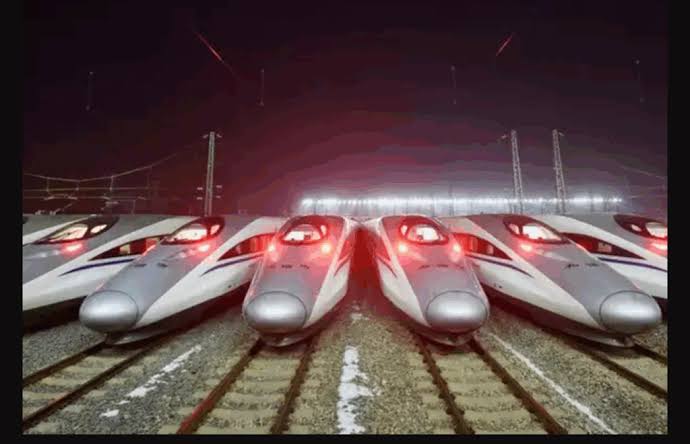
India is planning to manufacture its own high-speed bullet trains capable of a design speed of 350 kmph by 2030 as part of the Mumbai-Ahmedabad High-Speed Rail project. The proposed B35 trains would represent a major step towards developing indigenous high-speed rail technology.
B35 Trains To Reach 350 Kmph
The upcoming B35 trains are being designed with a maximum design speed of 350 kmph. This is faster than the trains that will initially operate on the Mumbai-Ahmedabad corridor.
The B35 is being developed as India’s next-generation indigenous high-speed train and is expected to be comparable in speed with Japan’s upcoming E10 series.
B28 Trains Will Operate First
The Mumbai-Ahmedabad corridor will initially use B28 trains manufactured by BEML.
These trains are designed for speeds of up to 280 kmph, although their maximum operating speed will be around 249 kmph during the initial phase.
BEML has received an order worth around Rs 5,400 crore to manufacture and supply 47 B28 trainsets. Prototype trains are expected to undergo trials in 2027.
India Developing Its Own Train Control System
Alongside the trains, India is also developing an indigenous Bharat Train Control System for high-speed rail operations.
The system is intended to provide advanced train control and signalling capabilities while reducing dependence on imported technology.
The development of indigenous trains and railway systems could also help India build expertise that can eventually be used on other proposed high-speed rail corridors.
Mumbai-Ahmedabad Project Costs Over Rs 2 Lakh Crore
The Mumbai-Ahmedabad High-Speed Rail project has seen its estimated cost rise to more than Rs 2 lakh crore, significantly higher than the original estimate made when the project was approved.
The 508-km corridor will connect Mumbai and Ahmedabad through 12 stations.
The project has a design speed of 350 kmph, while trains are expected to operate commercially at up to 320 kmph.
India’s High-Speed Rail Ambitions
The development of the B35 trains is part of India’s broader effort to establish domestic capabilities in high-speed rail technology.
Once the technology matures, the experience gained from the Mumbai-Ahmedabad project could support future high-speed rail corridors across the country.
For now, the immediate focus remains on completing the Mumbai-Ahmedabad corridor and introducing the first generation of Indian-made high-speed trains.
If the B35 programme progresses as planned, India could have domestically manufactured 350 kmph trains by the end of the decade.
Summary
India is developing indigenous B35 bullet trains with a design speed of 350 kmph, targeted for 2030. The Mumbai-Ahmedabad corridor will initially use B28 trains manufactured by BEML, with a maximum operating speed of around 249 kmph. India is also developing its own train control system as it builds domestic expertise in high-speed railway technology.