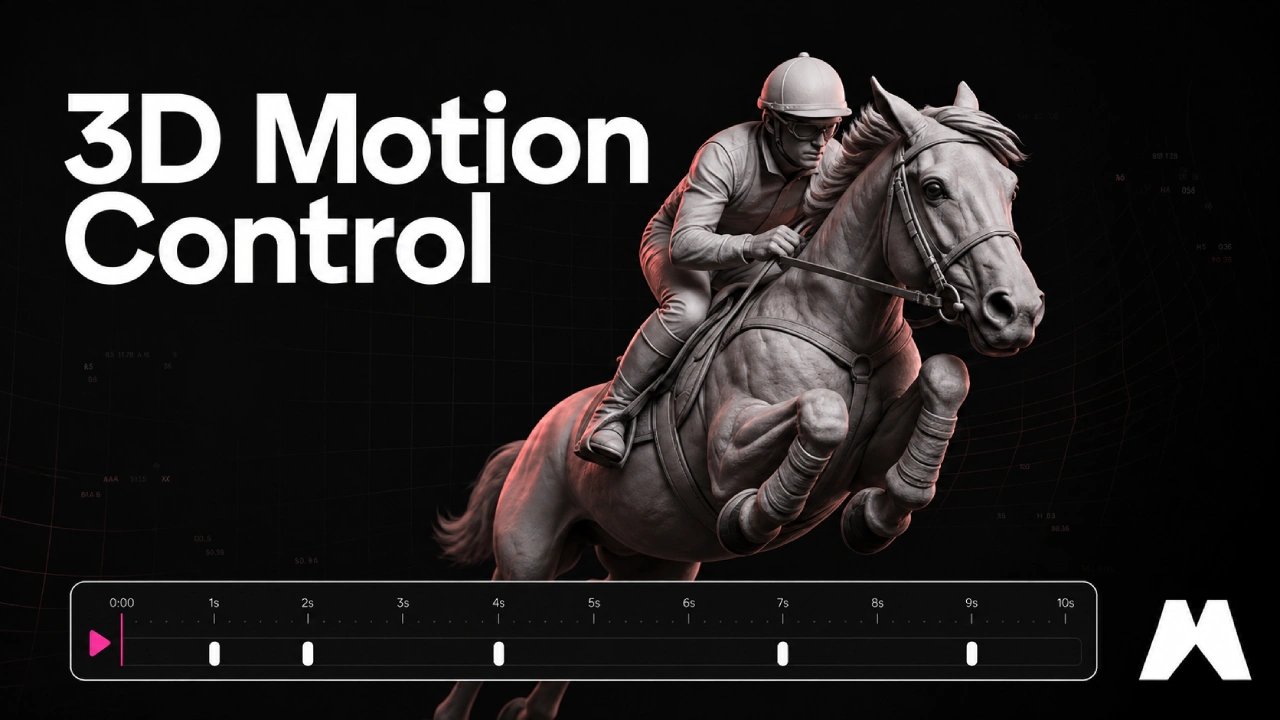
Magnific, the AI creative platform formerly known as Freepik, rebranded in April 2026 and now markets a motion-control feature that turns a static image into a moving, camera-directed video clip built for ads, branded content, and short film work.
The clips racking up views on X show smooth pans and tilts generated from a single photo, no rig or render farm required.
Strip away the polish, though, and you ask if this is actually usable in a real production pipeline, or is it a flashy toy that looks great for three seconds and falls apart the moment a working creator tries to build something with it?
The Tech Under the Hood: What It Actually Does vs What They Promise
| Feature / Aspect | Magnific 3D Capabilities |
| Technology | Sophisticated depth-mapped 2D warping (not true polygonal modeling). |
| Performance Limits | Convincing at small camera moves; smears backgrounds, stretches textures, and distorts rigid geometry on heavy pans. |
| User Interface | Accessible via intuitive sliders for motion control, camera angle adjustments, lip sync, and cinematic shot generation. |
| Accessibility Benefit | Enables complex camera movement without requiring prior experience in 3D software like Blender or After Effects. |
The Wallet Drain: The Cost of Creativity
- The Premium Paywall
Magnific runs on a credit system with no traditional free trial, though a limited free tier exists.
Entry-level plans start around $7.50 to $8 a month, with top individual tiers running as high as $210 to $230 a month depending on billing terms.
Video generation burns credits fast: some higher-quality video models cost close to a thousand credits for a four-second clip.
- Gatekeeping the “People’s” Art
The reality is a subscription model that asks working creators and students to pay real monthly money for a tool that might melt their background on attempt four.
The Practical Workflow: Can You Actually Use This for a Real Project?
- The Consistency Nightmare
Clips generated this way tend to run just a few seconds each. Faces drift, clothing details vanish, and the art style shifts from one generation to the next. Stitching several of these micro-clips into one coherent scene means fighting the tool’s own inconsistency at every cut.
- Where It Actually Wins
For rapid concept art, mood boards for a pitch deck, parallax panels for a graphic novel, or B-roll texture for an indie music video, it’s genuinely useful.
Nobody needs frame-perfect consistency for a two-second mood shot, and that’s exactly where this tool is strongest.
The Broader Canvas: AI’s Footprint on Modern Filmmaking and Storytelling
- Carbon Footprint and Compute Costs:
Generating high-resolution depth maps and video inferences requires massive data center processing power, raising valid sustainability concerns regarding the energy consumption of AI-driven creative workflows.
- The Democratization of Scale

Independent creators can now visualize complex visual effects and dynamic camera moves that previously required dedicated budgets, specialized camera rigs, and large post-production teams.
- Shift in Authorial Intent
Storytellers are transitioning from traditional direct-to-canvas creation to a supervisory role, acting more like curators or directors guiding generative algorithms.
Impact of AI Integration Across Traditional Production Pipelines
| Production Phase | Traditional Approach | AI-Assisted Shift |
| Pre-Production | Storyboards, physical mood boards, and manual concept sketching. | Instant text-to-image and depth-mapped animatics for rapid pitch visualization. |
| Production | On-set camera operators, physical sliders, jibs, and mechanical rigs. | Programmatic camera moves, synthetic B-roll generation, and digital environment extensions. |
| Post-Production | Rotoscoping, manual 3D tracking, and labor-intensive match-moving in Blender or After Effects. | Automated depth warping, fast object synthesis, and AI-driven cleanup passes. |
Conclusion: Power to the Creators, with a Heavy Asterisk
Magnific’s motion control is a strong brainstorming tool and a decent way to generate quick, disposable content.
It is not a replacement for a real cinematographer, animator, or 3D artist, and anyone treating it as one is going to hit the morphing glitch and the credit wall at the same time.
The tools belong to whoever picks them up, and this one is worth watching. Just keep your expectations grounded, your project scope small, and your wallet firmly guarded before you hit generate.