
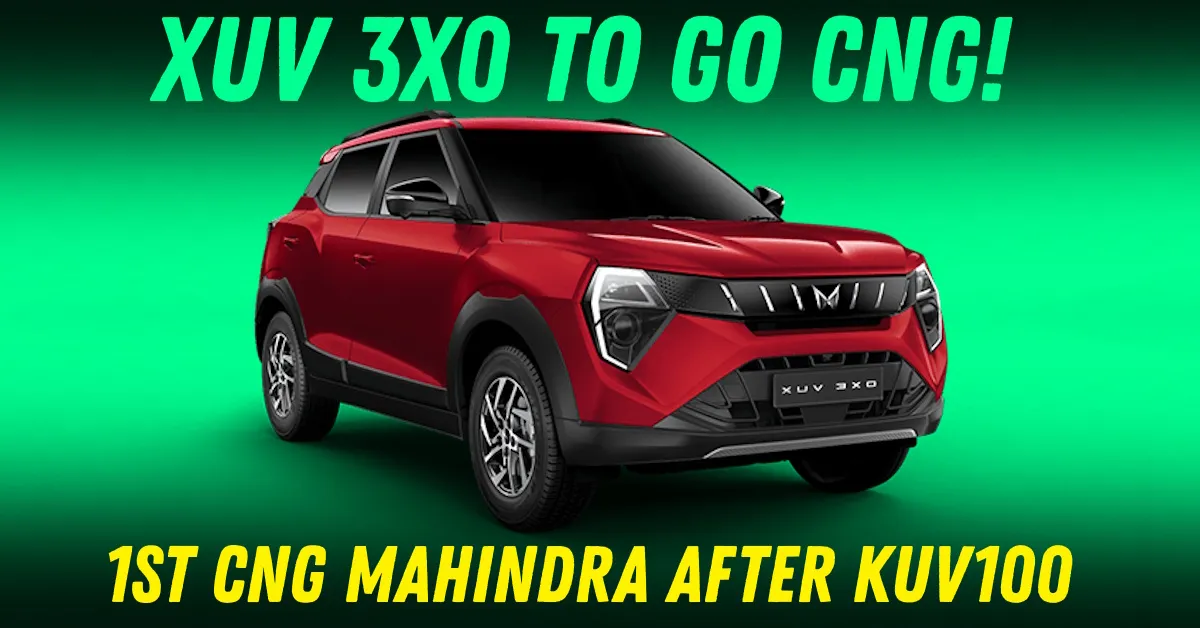

Mahindra is preparing to add a factory-fitted CNG option to the XUV 3XO, reports ACI. The new variant is expected to arrive by the end of 2026 or early 2027, and it will mark a clear shift for a company that has largely stayed away from CNG in its passenger SUV range, save for the KUV100 Trip CNG that’s no longer made.
The XUV 3XO is currently available with petrol, diesel and electric powertrains. Once the CNG version arrives, it will give Mahindra a wider spread in the sub-4 metre SUV segment, where running cost has become an important deciding factor for many buyers.
The engine expected to get the CNG kit is the 1.2-litre, three-cylinder MPFI turbo-petrol unit. This engine currently makes 109 HP in petrol form. The more powerful 1.2-litre direct-injection turbo-petrol engine, which makes 131 HP, is not expected to get a CNG version.
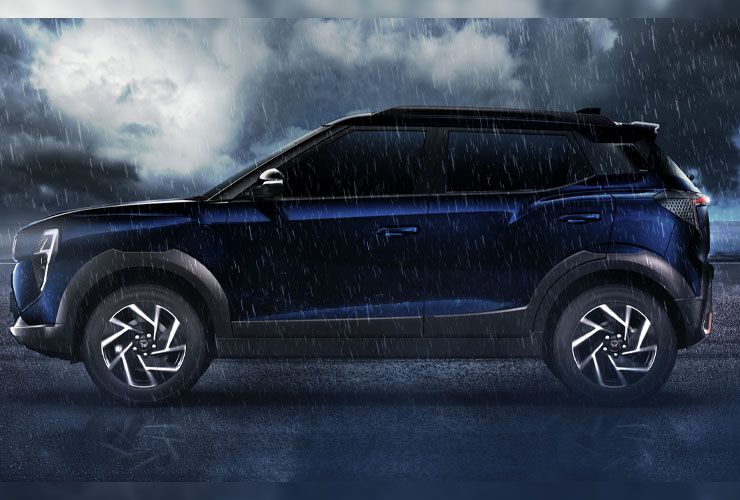
That is not unusual. CNG is usually easier to package and tune with port-injection engines than direct-injection engines. The MPFI engine is also the more sensible choice for a lower running-cost variant because it already sits below the TGDi engine in the XUV 3XO range.
The XUV 3XO has been selling in strong numbers. It sold 8,637 units in February 2026, slightly lower than the 8,845 units sold in January. In March 2026, sales rose again to 9,199 units.
For the 2025 calendar year, Mahindra sold just over 1 lakh units of the XUV 3XO. That is a healthy number, but the Tata Nexon sold more than 2 lakh units in the same period. The Nexon has a wider fuel mix, including petrol, diesel, EV and CNG versions.
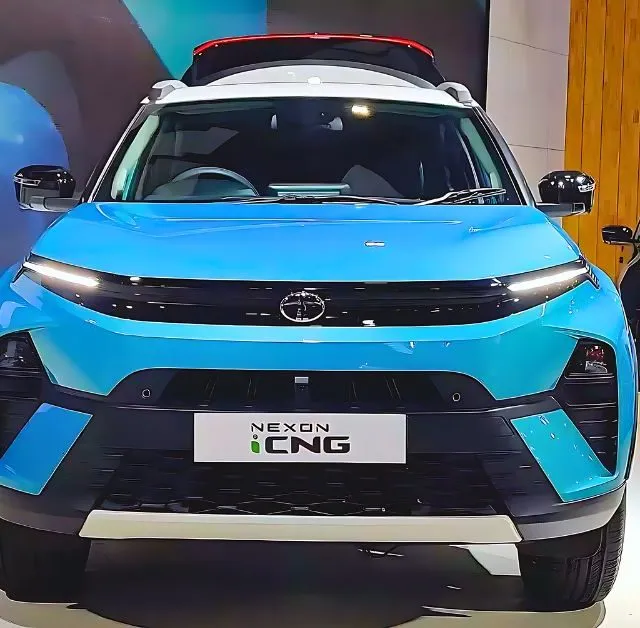
That is the gap Mahindra is now trying to close. The XUV 3XO already competes with the Nexon, Maruti Brezza, Kia Sonet, Hyundai Venue and Skoda Kylaq.
But among these, the Nexon and Brezza already offer factory-fitted CNG options. For buyers who want an SUV body style with lower running costs, Mahindra currently does not have an answer in the XUV 3XO line-up.
The Tata Nexon iCNG starts from around Rs. 8.30 lakh ex-showroom and uses a 1.2-litre turbo-petrol engine with CNG. It has an ARAI-rated fuel efficiency figure of 17.44 km/kg and uses Tata’s twin-cylinder CNG setup to free up more boot space than a single large tank would allow.

The Maruti Suzuki Brezza CNG is positioned higher, with the VXi CNG priced around Rs. 10.17 lakh ex-showroom. Its 1.5-litre petrol-CNG engine has an ARAI-rated CNG efficiency of 25.51 km/kg. Unlike the Nexon, the Brezza CNG is naturally aspirated, not turbocharged.
The XUV 3XO CNG is likely to sit closer to the Nexon iCNG in engine layout because both use turbo-petrol engines. But Mahindra will have to price it carefully because the Brezza has the advantage of Maruti’s CNG image and a strong fuel-efficiency number.
CNG continues to attract buyers in cities where fuel price gaps are high and pump availability is decent. The biggest markets for CNG cars include Gujarat, Maharashtra, Delhi-NCR and parts of Uttar Pradesh.
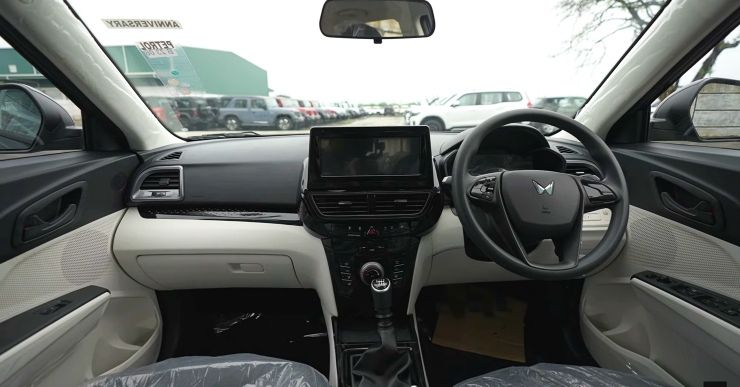
A petrol compact SUV can easily cost Rs. 6 to Rs. 7 per km in fuel, depending on mileage and local petrol prices. A CNG compact SUV can bring that cost down sharply, especially for owners who drive 1,000 to 1,500 km a month. For high-usage buyers, taxi operators, small-business owners and families with long daily commutes, that difference builds up quickly.
This is why CNG has moved beyond small hatchbacks and sedans. Buyers are now looking for CNG in SUVs as well. Tata has already moved in that direction with the Punch CNG and Nexon CNG. Maruti has the Brezza CNG. Mahindra entering this space was only a matter of time.
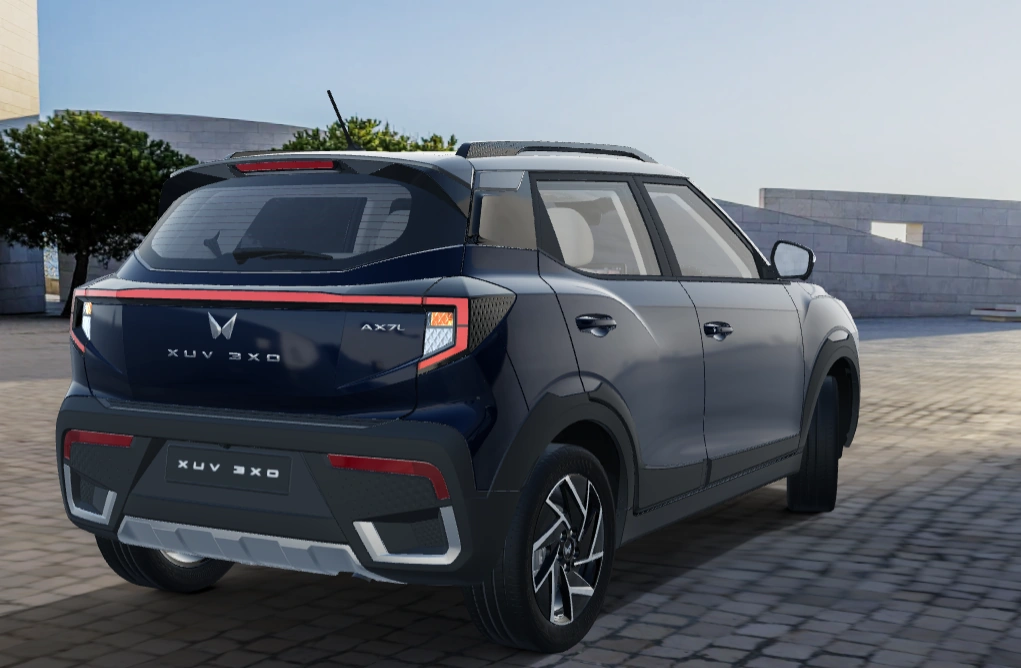
The XUV 3XO CNG is expected to use a dual-cylinder setup. This would help Mahindra avoid one of the biggest problems with older CNG cars: poor boot space.
In a single-cylinder setup, the tank takes up a large part of the luggage area. A twin-cylinder layout splits the CNG storage into two smaller cylinders placed lower in the boot area. Tata has used this format successfully in the Tiago, Tigor, Punch and Nexon CNG.
A buyer choosing an SUV expects some luggage space. A CNG version with a nearly unusable boot would be much harder to sell against the Nexon iCNG.
Mahindra is likely to offer the XUV 3XO CNG in select mid and upper trims rather than across the full range. The lower trims will help keep the starting price attractive, while higher trims can bring features such as the 10.25-inch touchscreen, digital instrument cluster, connected car tech and possibly a sunroof.
The panoramic sunroof and ADAS features may be kept for higher variants, if they are offered at all on the CNG version. Automakers usually avoid loading CNG variants too heavily at launch because the price difference over petrol needs to remain reasonable.
A manual gearbox is expected at launch. That is also standard practice in the CNG market. Automatic CNG options are still rare, especially in SUVs. The lower power output in CNG mode and the added calibration work usually make manual transmission the safer first step.
The petrol XUV 3XO range starts from around Rs. 7.54 lakh and goes up to nearly Rs. 14.89 lakh ex-showroom. The CNG version is likely to sit above the comparable petrol MPFI variants.
If Mahindra prices the entry CNG variant close to the Nexon iCNG, it could attract buyers who like the XUV 3XO’s design, safety package and feature list but want lower fuel costs. If the price moves too close to diesel or higher turbo-petrol variants, the case becomes weaker.
Comments are closed.