
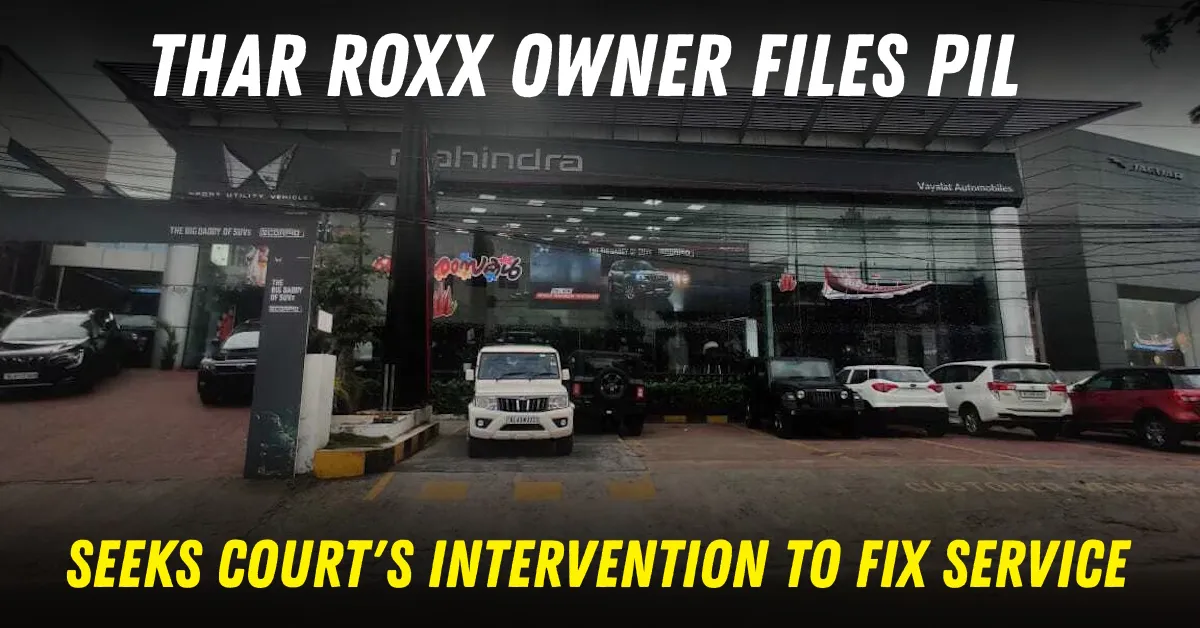
Mahindra Thar Roxx Owner Files PIL In High Court Seeking Dedicated Law To Address Poor Service

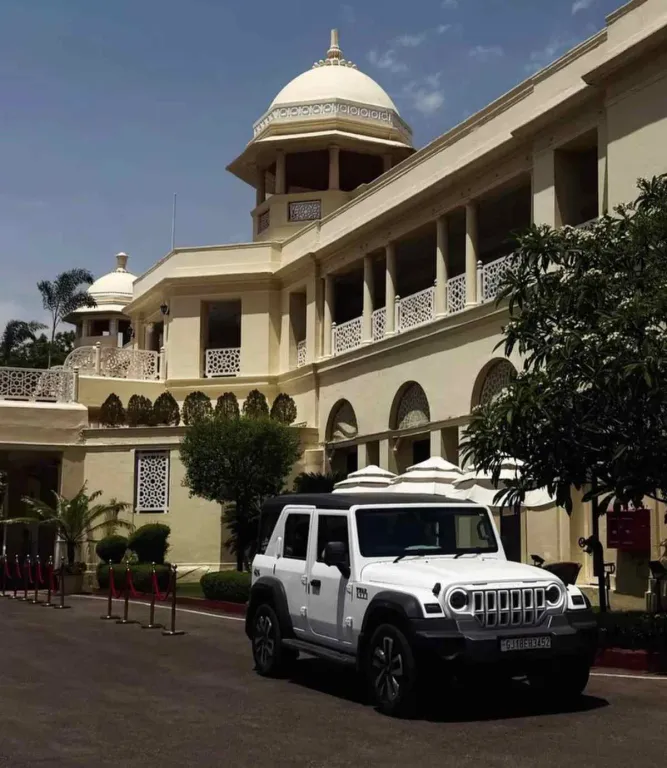
A Kochi resident has taken an unusual route to address a bad service experience with his Mahindra Thar Roxx. TGN Kumar, who owns a top-variant Thar Roxx, filed a Public Interest Litigation (PIL) in the Kerala High Court on May 12, seeking the enactment of a dedicated law to regulate vehicle sales, servicing, and maintenance in the state.
Kumar’s specific grievance is with the Vayalat Mahindra Service Centre in Maradu. He alleges that despite repeatedly bringing the car in for a persistent noise from the front door, the service centre failed to diagnose or fix the problem.
According to the petition, the centre showed a lack of technical competence, did not follow service protocols, and its staff were “unprofessional, indifferent, and discourteous.” Kumar says he escalated to the General Manager personally and still received no satisfactory resolution.
The PIL goes beyond Kumar’s individual case. He has argued that the existing legal framework leaves vehicle owners without meaningful protection against negligent service by authorised dealers.
His proposed remedy is the enactment of a Kerala Motor Vehicles Sales and Services Regulation Act, a dedicated state law that would govern manufacturer accountability and service centre standards.
A Vacation Bench of the Kerala High Court comprising Justice A Badharudeen and Justice Muralee Krishna S has issued notices to both the Maradu service centre and Mahindra’s Mumbai head office, seeking their response.
Before approaching the court, Kumar had already submitted a representation to the state Transport Department. The department forwarded it to the Transport Commissioner for examination.

The Thar Roxx is one of the most talked-about vehicles in the country right now, with significant waiting periods and strong aspirational value. The irony that a top-variant owner of this popular SUV found the post-purchase experience so poor that he moved a High Court speaks to a wider problem.
Authorised service centres operate within an exclusive franchise structure. Customers of a given brand are expected to use that brand’s authorised network for warranty work.
This creates an inherent imbalance: the customer has limited recourse if service quality is poor, because switching to an independent workshop during the warranty period carries its own risks.
Consumer courts exist, and the Consumer Protection Act 2019 provides legal recourse, but the process is slow and outcomes vary. Kumar’s argument is that the automobile sector needs faster, more specific regulation, not the general consumer protection apparatus.
Whether the Kerala High Court directs the state to legislate on this or not, the petition itself signals growing impatience with a gap that exists in every state: there is no dedicated, sector-specific accountability framework for vehicle sales and service.
Buyers are left navigating a system where the dealer network answers to the manufacturer, not to the customer, and formal complaints go through processes that take months to resolve while the vehicle sits deteriorating.
In some cases, vehicles have persistent problems. Such vehicles are known as ‘lemons’, and many countries abroad have ‘lemon laws’ that give customers the option of a full refund in cases where they have been sold a ‘lemon’. In India, such laws don’t exist, leaving customers at the mercy of the manufacturers and the after sales network.
Manufacturers routinely ask the customer to claim warranty, even in case of persistent problems that result in the vehicle remaining out of service for months, if not years. Therefore, a dedicated ‘lemon law’ for India would protect consumers.
Via BarAndBench
Comments are closed.