
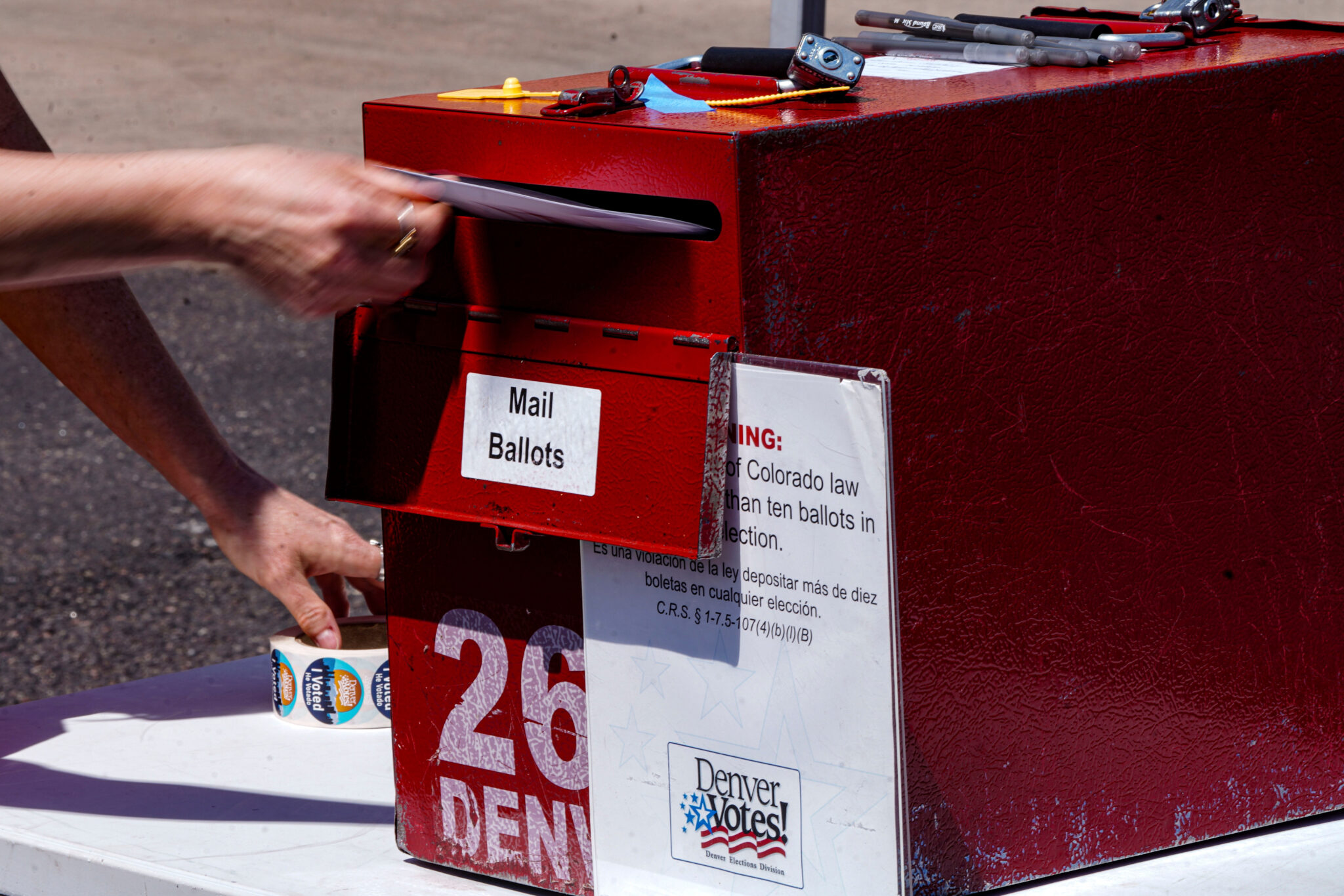

Mail Voting Takes Center Stage Ahead of 2026 Congressional Elections/ TezzBuzz/ WASHINGTON/ J. Mansour/ The Postal Service is facing increased scrutiny over ballot delivery delays and President Donald Trump’s attempt to change who may receive ballots by mail. Democratic officials raised alarms after more than 148,000 California primary ballots and hundreds in Wisconsin arrived too late to count. Legal challenges to Trump’s executive order are moving through federal courts as election officials urge voters to return ballots early or deliver them personally.

Quick Look
- The first midterm ballots are expected to be mailed in approximately six weeks.
- Trump’s executive order seeks to establish a federal list of voters eligible to receive mail ballots.
- Federal courts have issued conflicting decisions involving challenges to the order.
- The administration has asked the Supreme Court to permit its restrictions.
- Nearly 30% of American voters cast ballots by mail in 2024.
- Brookings found about four fraud cases for every 10 million mail ballots.
- California rejected more than 148,000 ballots from its June primary.
- State officials said 63% of those ballots arrived after the deadline.
- California permits ballots to arrive during a seven-day grace period.
- Wisconsin also reported hundreds of late ballots in an April election.
- Michigan and Kansas officials are encouraging hand delivery.
- The Postal Service processed more than 59 million pieces of ballot mail during the 2024 election.
- Its inspector general reported that 97.3% arrived on time.
- Postal workers oppose making USPS responsible for determining voter eligibility.


Deep Look
Postal Service becomes central midterm issue
With approximately six weeks remaining before the first ballots for the midterm elections enter the mail, the U.S. Postal Service is facing mounting scrutiny over its ability to process election materials reliably.
The elections will determine which party controls Congress, raising the stakes surrounding every aspect of ballot distribution and collection.
Two issues are placing USPS at the center of the political debate: President Donald Trump’s attempt to impose new conditions on mail voting and concerns that changes in postal operations are causing ballots to arrive too late.
Democratic officials intensified their criticism after large numbers of ballots missed counting deadlines in California and Wisconsin earlier this year.
Election authorities in Kansas and Michigan have gone further, advising voters to return early ballots personally instead of relying on the mail.
USPS promises secure election service
The Postal Service responded Tuesday by saying it remains committed to performing its election-related responsibilities.
The agency said it provides voters with a secure and effective method of participating whenever election laws allow ballots to be delivered and returned through the postal system.
USPS faced questions about ballot-delivery performance during the 2024 election as well.
Scrutiny is greater in 2026 because of Trump’s March executive order seeking a federal role in determining who is eligible to receive a mail ballot.
Trump seeks national eligibility list
Trump’s order calls for a national voter list assembled from databases maintained by federal agencies.
The Postal Service proposed a rule in June that would help implement the order. Under the proposal, only individuals appearing on the federal list would be eligible to receive ballots through the mail.
The plan would represent a substantial change in election administration, which traditionally falls under state and local authority.
Postal unions and Democratic officials argue that USPS should deliver election mail rather than make judgments about a person’s voting eligibility.
Jonathan Smith, president of the American Postal Workers Union, said deciding who may vote should not become the responsibility of postal employees.
The union, which represents approximately 200,000 workers, launched a campaign in April supporting mail voting and opposing the Postal Service’s transformation into an election administrator.
Trump renews attacks on mail voting
Trump has repeatedly made unsupported claims about widespread election fraud while seeking to challenge his 2020 loss to Democrat Joe Biden.
He has frequently targeted mail voting despite having used the method himself.
During a recent visit to Michigan, Trump described mail ballots as inherently corrupt and said he hoped they would no longer be used.
Documented fraud involving mailed ballots is rare.
A Brookings report released in 2025 identified approximately four cases of fraud for every 10 million mail ballots cast.
Mail voting also remains popular among supporters of both major political parties.
Federal data shows that nearly 30% of voters nationwide used mail ballots during the 2024 election.
Michigan distributes millions of ballots
Michigan illustrates the continuing demand for the voting method.
The state has distributed more than 2 million absentee ballots ahead of its Aug. 4 primary.
Competitive Senate and House contests in Michigan could help determine control of Congress, making ballot access and timely delivery especially consequential.
Smith said the postal union wants to preserve and expand voting by mail because the system works and provides voters with an accessible method of participating.
Legal disputes reach Supreme Court
Trump’s executive order has generated several lawsuits and conflicting federal court decisions.
Democratic officials representing nearly two dozen states filed a case in Massachusetts challenging the administration’s authority to establish the voter list and restrict access to mailed ballots.
A federal judge blocked the order last month, and an appeals court upheld that decision.
The Trump administration then appealed to the U.S. Supreme Court, asking the justices to allow the restrictions to take effect.
A separate case produced a different procedural outcome Tuesday when the U.S. Court of Appeals for the District of Columbia Circuit declined to block the order.
That court concluded that the legal challenge had been brought prematurely.
Democrats warn of voter disruption
Democratic governors and senators have urged USPS to abandon work connected to Trump’s directive.
Wisconsin Sen. Tammy Baldwin accused the president of attempting to interfere in the midterms.
She warned that the proposed system could worsen existing mail delays or prevent eligible Americans from receiving and casting ballots.
Postal Service leaders told Democratic senators in a letter earlier in July that the agency was complying with court orders that had stopped implementation of Trump’s directive.
Questions remain, however, about whether technical preparations are continuing.
Union says portal work continues
Smith said unionized USPS information-technology employees were working behind the scenes on a proposed online portal connected to the national eligibility list.
The Postal Service declined to address his account.
It also said that ongoing litigation prevented it from discussing whether work associated with Trump’s order was continuing.
The postal workers union opposes the portal, the national voter list and any system requiring USPS to use that list when determining who may receive a ballot.
Mail-processing consolidation draws criticism
Concerns about the executive order coincide with broader operational changes at the financially troubled Postal Service.
USPS has consolidated operations into fewer regional processing facilities as part of its effort to reduce costs and improve efficiency.
A recent Brookings analysis found that an item of mail travels an average of 139 miles to reach a processing center. Some pieces travel as far as 500 miles.
A group consisting mostly of Democratic senators expressed concern in January about the decision to eliminate twice-daily dispatches from local post offices to regional centers.
Under the revised system, mail arriving after the single daily dispatch can remain at the local facility until the following day.
Election officials fear that the delay could affect both delivery times and postmark dates.
California rejects more than 148,000 ballots
California officials said the operational change contributed to the rejection of more than 148,000 ballots from the state’s June primary.
Of those rejected ballots, 63% arrived after the deadline despite California allowing a seven-day grace period.
Officials also raised concerns that some ballots deposited at local post offices were not postmarked until reaching regional processing facilities the following day.
In jurisdictions that rely on the postmark to establish when a ballot was cast, a one-day difference can determine whether a vote is accepted or rejected.
California’s state budget allocates $10 million for social media campaigns and other public-information efforts encouraging voters not to wait until the last moment to mail their ballots.
USPS explains postmark procedures
The Postal Service said automated equipment at processing centers continues applying postmarks in essentially the same way and at the same frequency as before.
Voters who want to guarantee an immediate postmark can ask a postal employee to apply one manually at no cost, the agency said.
Still, election administrators worry that many voters do not know about that option or understand how operational changes may affect the date shown on their envelopes.
Wisconsin reports late arrivals
Wisconsin election officials also reported that hundreds of ballots from an April election reached local offices after the deadline.
Those reports contributed to calls for clearer USPS procedures and stronger assurances before the midterms.
Late-arriving ballots can become especially important in close races, where a relatively small number of rejected votes could exceed a candidate’s margin of victory.
Inspector general reviewed 2024 performance
The USPS Office of Inspector General examined the Postal Service’s handling of election mail during the 2024 campaign.
Its report found that USPS processed more than 59 million pieces of ballot mail between Sept. 1 and Nov. 15.
The inspector general concluded that 97.3% of those items arrived on time.
While that percentage reflects a high overall success rate, election administrators note that even a small failure rate can affect a substantial number of voters when millions of ballots move through the system.
Michigan recommends hand delivery
Michigan’s secretary of state is advising voters to return completed ballots directly to local clerks or authorized drop boxes.
Deputy Secretary of State Aghogho Edevbie said election officials have encountered postal concerns over multiple election cycles.
The Postal Service said it was not experiencing processing delays at its Michigan facilities.
Nevertheless, state officials believe personal delivery provides voters with more certainty that their ballots will reach election offices before the deadline.
Kansas officials remain skeptical
Kansas officials have also questioned the reliability of ballot delivery.
After problems during the state’s 2024 primary, Republican Secretary of State Scott Schwab joked that the Pony Express was operating more efficiently.
His spokesperson, Whitney Tempel, said Schwab continues to believe voters should avoid placing their ballots in federal government hands when other return methods are available.
Jamie Shew, the Democratic election administrator for Douglas County, said voters must adjust their expectations about how quickly election mail moves.
Shew said voters may have become accustomed to mailing ballots on the Friday before Election Day and expecting them to arrive in time.
Under current conditions, he said, that expectation is no longer realistic.
The Postal Service continues to advise voters to mail their completed ballots well ahead of the applicable state deadline.
More on US News
Comments are closed.