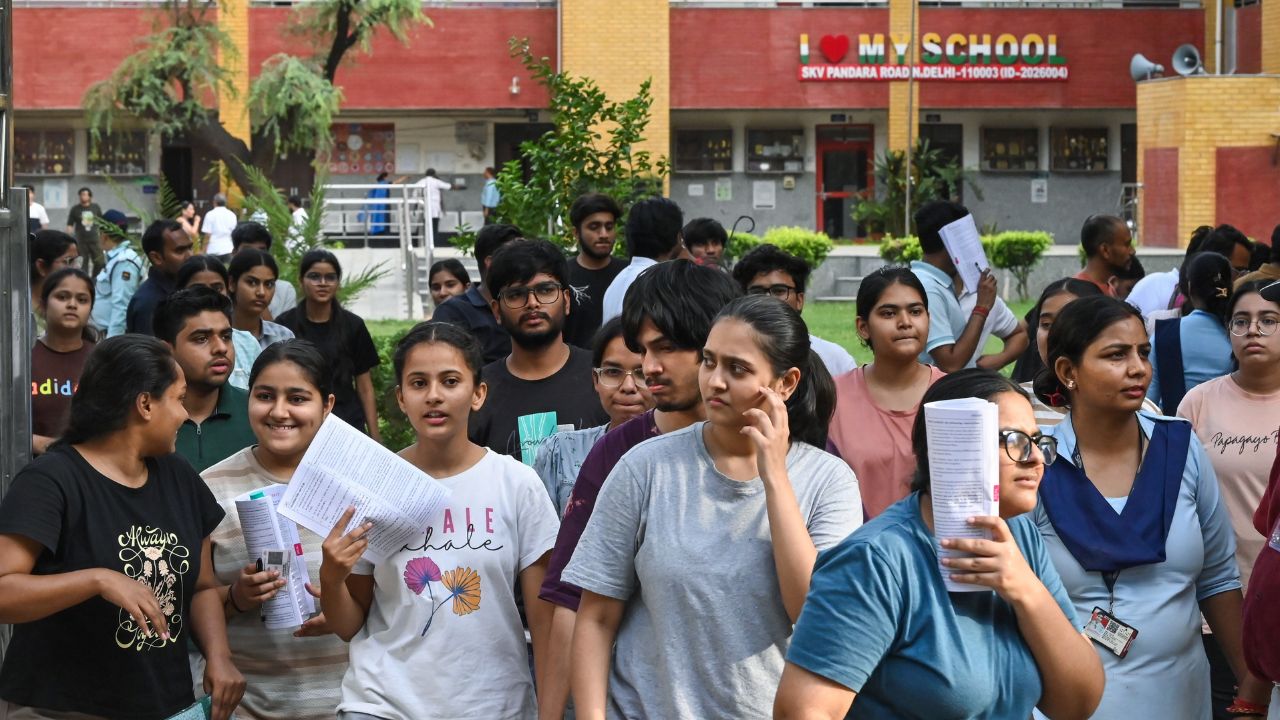
The country’s largest medical entrance exam, NEET-UG, may see major changes in the coming years. The central government has informed the Supreme Court that a comprehensive review of the exam’s current format is underway. It is also considering whether NEET should continue to be conducted in offline pen-paper mode or whether it should be made fully computer-based (CBT). The option of conducting the exam in two phases, similar to JEE Main and JEE Advanced, is also being discussed.
This information was provided by the Central Government in an affidavit filed in the Supreme Court. The court is currently hearing petitions seeking to make the NTA’s examination system more secure, transparent, and free from paper leaks. The next hearing in this matter has been scheduled for August 6th.
1. Can the entire system of NEET-UG change?
The government informed the court that several options are being considered simultaneously to modernize the NEET exam format. The most prominent proposal is to convert the exam from offline to online (CBT) and, if necessary, conduct it in two phases. However, the government clarified that no model has been finalized yet. Detailed discussions are currently underway with various ministries, experts, and relevant institutions.
2. Nandan Nilekani’s task force will decide the future course of action
The Center stated that any major changes to the NEET exam will be decided only after the recommendations of a high-powered task force headed by Nandan Nilekani. The committee comprises experts from technology, cybersecurity, space, intelligence, education, and administration. The team is studying how to make the exam system more technologically secure, fair, and future-proof.
3. Almost all national exams of NTA have been conducted online
The government said in its affidavit that the National Testing Agency (NTA) is already conducting most of its major examinations in Computer Based Test (CBT) mode.
These mainly include-
- JEE Main
- CUET AND
- CUET PG
- UGC NET
- CSIR NET
Other National Level Exams
According to the government, NEET-UG is now the only major exam of NTA which is still conducted in pen-paper mode.
4. Why is NEET being considered different from other examinations?
The government says the format of NEET is significantly different from other entrance exams. More than 2.2 million students appear for it each year, with a large number coming from rural and remote areas. Female candidates also participate significantly.
Furthermore, this single exam provides admission to numerous medical and health science courses, including MBBS, BDS, AYUSH, Veterinary Science, and Nursing. Therefore, any change in the examination system will impact millions of students, and extreme caution is being exercised.
5. Approval from the Ministry of Health and NMC will be necessary
The government told the court that the NEET-UG exam is conducted by the Ministry of Health and Family Welfare, while the National Medical Commission (NMC) is the supreme regulator of medical education. Therefore, any major changes to the exam format, mode, or structure will only be implemented with the consent of both the Ministry of Health and the NMC.
6. Students will get a chance to prepare thoroughly first
The central government has assured that any changes to the exam pattern or mode will be made public well in advance. The government stated that the changes will be implemented in a manner that allows students adequate time to prepare and ensures no candidate faces inconvenience or mental stress.
7. Reform efforts accelerated after the paper leak.
Following allegations of paper leaks and other irregularities in several national and state-level competitive examinations in recent years, there has been a growing demand for comprehensive reforms in the examination system. Against this backdrop, the Supreme Court is hearing cases related to the functioning of the NTA and exam security. All eyes will now be on the hearing on August 6th, where the future course of action regarding examination reforms and a potential new format for NEET-UG may become clear.