Most of what gets called “marketing automation” today is mass messaging dressed up with a thin layer of customization.
Slapping a “personalized engagement” label on a batch-and-blast system doesn’t make it personal. It just makes the gap between the label and the experience more obvious, and customers notice that gap. It costs the brand credibility every time.
Take the classic example: “We noticed you browsing!” That email usually came from a system that registered nothing more than a URL, with no context, no understanding of intent, nothing. And people can feel it every time one of these lands in their inbox.
It’s worth thinking of this the way you’d think of a broken NPC in a game — one that repeats the same line no matter what you do. “Welcome to our store! Welcome to our store!” Endlessly. That is noise and noise doesn’t build unsubscribes.
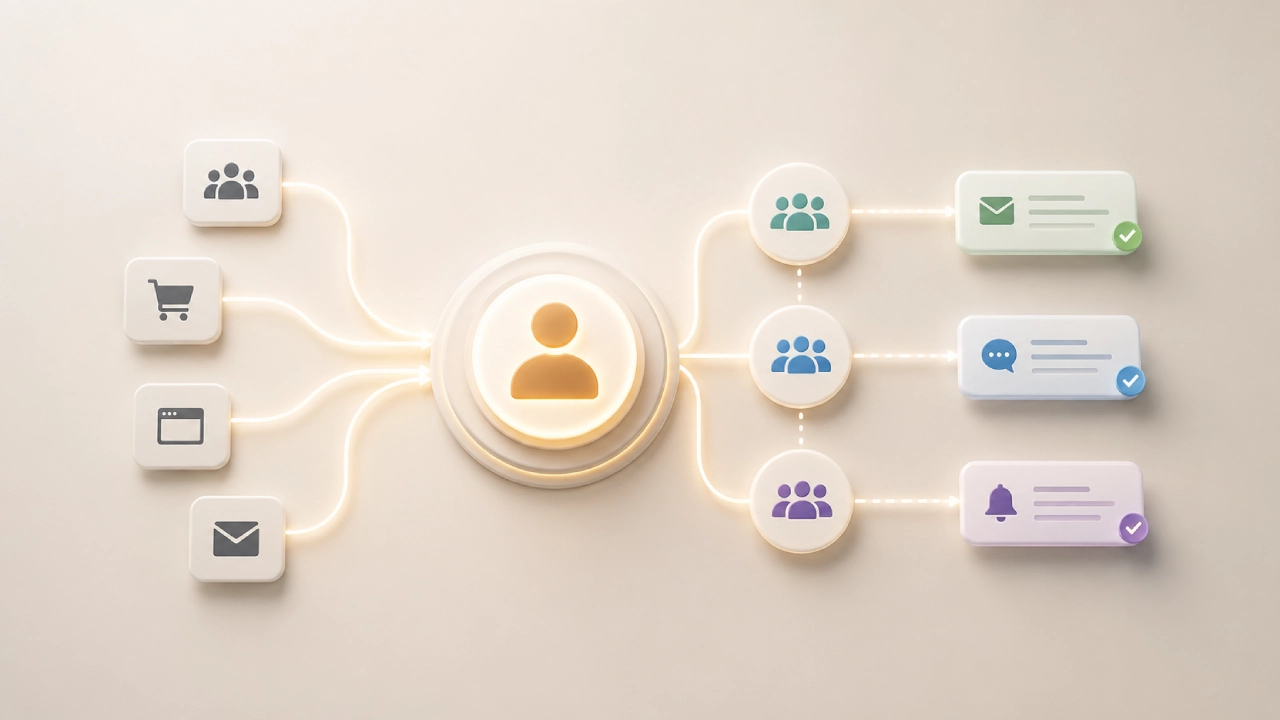
The better approach starts from a simple shift: treat customers as people making individual choices, and build systems that respond to those choices, rather than funneling everyone down the same rigid path regardless of what they’ve actually done.
Stop Guessing, Start Slicing: How Advanced Audience Segmentation Boosts Conversion Rates
Why is it insufficient to send identical messaging to an entire email list?
Sending one message to an entire list, with no regard for who’s actually on it, rarely works well. It ignores the fact that different customers are in completely different relationships with the brand, and that mismatch shows.
Giving a new customer discount to someone who has literally been paying you every month forever feels like a giant slap in the face, honestly. Unexplained promos pop up in fresh leads’ inboxes sometimes, leaving them totally baffled about why they got it or if they even qualify. People unsubscribe over stuff like this, which makes total sense because nobody likes feeling played.
Real audience slicing requires digging into actual buying habits and website clicks rather than just guessing.
| Segment | Data Used | Recommended Approach |
| High-value purchasers | Spending history and purchase frequency | Loyalty rewards, early access, exclusive offers |
| Prospective customers (“window shoppers”) | Page visits and cart additions | Educational content, case studies, gentle follow-up |
| Inactive users | Time since last interaction | Re-engagement campaigns, feedback requests |
| New leads | Sign-up source and stated interests | Onboarding sequences, welcome discounts |
Segmentation produces measurable results. Delivering the appropriate message to the appropriate audience segment can substantially improve conversion rates.
Beyond the Clock: Why Behavioral Triggers Outperform Calendar-Based Campaigns Every Time
How can automated communication feel responsive rather than mechanical?
Calendar-based campaigns are essentially blind. They fire on a schedule with zero awareness of whether the customer is even paying attention.
Event-based automation works differently for it reacts to what a customer is actually doing:
| Trigger Type | Example | Typical Customer Perception |
| Time-based | Email sent every Tuesday at 10 AM | Perceived as generic and impersonal |
| Event-based | Email sent two hours after cart abandonment | Perceived as attentive and relevant |
| Event-based | Email sent three days after first purchase | Perceived as timely follow-up |
| Event-based | Email sent after user views pricing page three times | Perceived as responsive to genuine interest |
A well-designed behavioral trigger functions as a helpful, unobtrusive intervention delivered at the appropriate moment. A poorly designed one is intrusive and detracts from the overall customer experience.
Drip campaigns should be structured around distinct stages of the customer journey:
- Discovery Phase:
The customer is browsing initial content. Educational resources are appropriate.
- Consideration Phase:
People keep looking at the pricing page over and over again, so tossing some case studies or real user testimonials their way makes total sense to finally push them past the hesitation.
- Decision Phase:
Someone actually dumped an item straight into their shopping cart, which means a polite little reminder backed up by some solid social proof should do the trick.
- Post-Purchase Phase:
Money has officially changed hands and the transaction went through, meaning onboarding guides and clear next steps need to land in their inbox immediately.
The whole point is that the journey adapts to the person, not the other way around.
The Human Firewall: How to Automate Workflows Without Losing Your Brand’s Soul
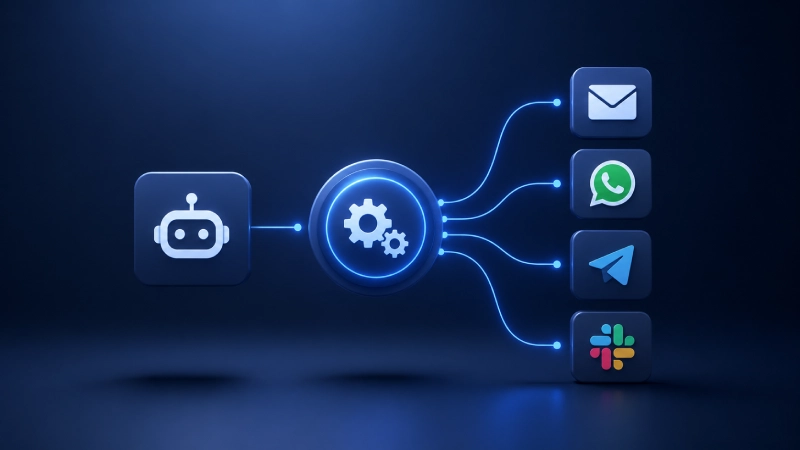
How can organizations automate communication without sacrificing a human-centered approach?
Here’s where things go wrong most often: a system keeps trying to sell someone a product they already bought, or it keeps firing scheduled emails straight through a crisis without anyone noticing. Automation without judgment is just tone-deaf at scale.
The fix is a set of mandatory human checkpoints built directly into the workflow. This matters most in a few specific situations:
- During a crisis, a blanket send is almost guaranteed to land badly.
- With high-value accounts, where a generic message undersells the relationship.
- Whenever a campaign carries real risk of being misread or damaging the brand.
Away from the customer-facing side, internal workflows are where automation quietly does some of its best work:
| Internal Workflow | Function |
| Lead scoring based on engagement | Enables sales teams to prioritize high-potential leads |
| Automatic tag updates | Maintains accurate, up-to-date customer records |
| Cross-platform data synchronization | Reduces duplicate entries and missing information |
| Automated task assignment | Ensures consistent follow-through on outstanding tasks |
Kill the Vanity Metrics: How to Measure True Marketing Automation ROI
Open rate obsession needs to end. All it really confirms is that a message was viewed, nothing about whether it mattered, moved anyone, or made money.
The metrics worth actually watching:
- Click-through rate:
Real engagement, not just a glance.
- Revenue per email:
The number that actually reflects business impact.
- Unsubscribe rate:
A direct signal that something’s annoying people, which is worth fixing and not ignoring.
- Conversion rate:
The metric that tells you whether the campaign did its job.
A/B testing isn’t optional, and it shouldn’t be treated as one. Subject lines, send times, content length, calls to action, test them, keep what wins, drop what doesn’t. It takes discipline, which is probably why so many teams skip it.

Sustainable, Respectful Automation
Marketing automation is an efficiency tool. It was never meant to replace the actual value a product or brand needs to deliver in the first place.
No workflow, however sophisticated, will save a product nobody wants or a brand nobody trusts. That’s just not what automation is for.
The standard worth holding onto is simple: build the kind of system you’d be fine experiencing as a customer yourself. If it starts to feel manipulative or extractive, that’s the signal to rebuild it — with the customer’s autonomy at the center, not an afterthought.