


Maruti Suzuki’s first electric car has produced two very different sales stories.
Between January and May 2026, the company dispatched 7,097 e Vitaras to dealerships. Over the same period, it exported nearly 36,000 units to more than 40 countries. Exports were therefore around five times domestic wholesales.
At first glance, that looks like weak acceptance in the company’s home market. Look more closely, and the picture becomes less damaging.
Domestic wholesale volumes rose from 528 units in January to 870 in February and 2,254 in March. They then slipped to 2,006 in April and 1,439 in May. Retail registrations, however, moved in the opposite direction, rising from around 224 units in January to 1,658 in May. June brought another record month, with approximately 1,900 customer registrations.
The factory-dispatch slowdown was therefore not evidence that customers had suddenly stopped buying the e Vitara. Maruti was sending more of its limited production overseas while dealers worked through the inventory already supplied.
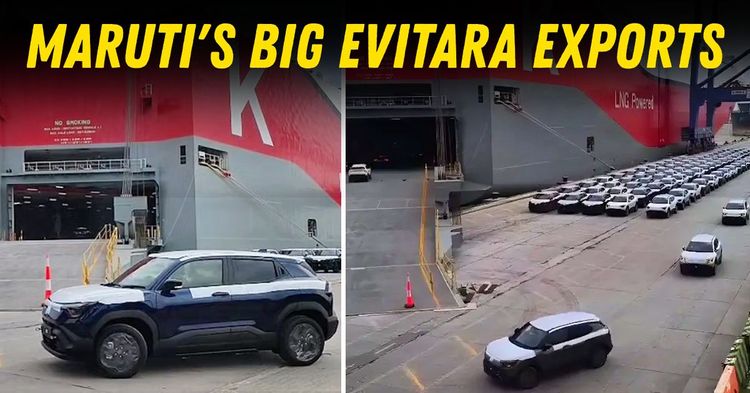
The e Vitara is built at Maruti’s Gujarat plant, which serves as the global production hub for the vehicle and its Toyota derivative.
Maruti exported 25,549 e Vitaras during FY26. Another estimated 10,000-plus units followed during April and May. Domestic allocation was reportedly restricted to around 2,000 to 2,500 vehicles a month, with additional capacity expected from August or September.
This matters when judging the product’s performance. The e Vitara accounted for only around 6 percent of electric passenger-vehicle registrations in June, behind Tata, Mahindra and MG. But Maruti was not supplying enough units to compete with brands selling several EV models simultaneously.
Tata registered more than 12,000 electric cars in June, Mahindra nearly 7,800 and MG close to 5,900. Maruti had one model and approximately 1,900 retail sales. That does not make the eVitara a market leader. It does mean that its current share reflects both demand and restricted domestic supply.
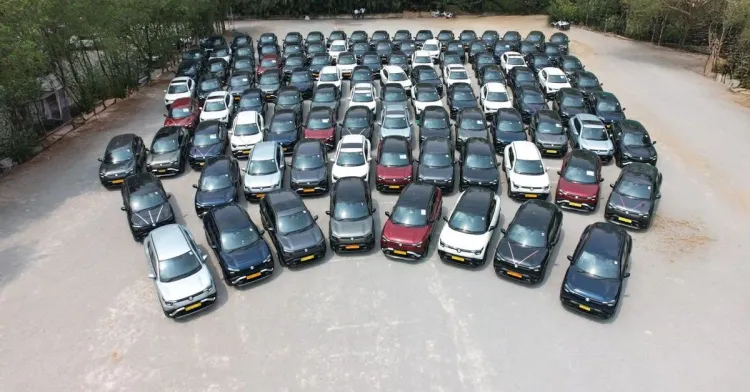
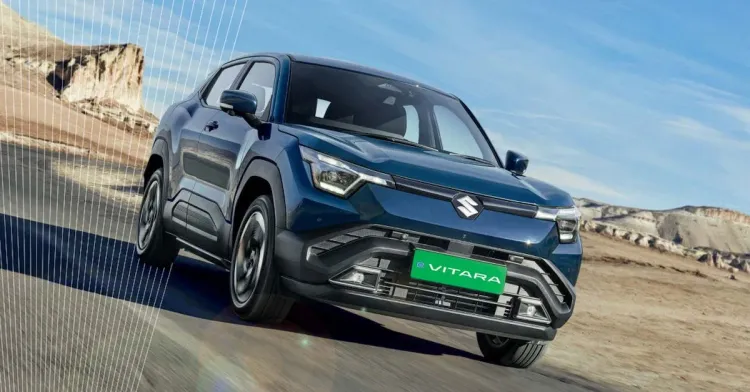
The eVitara is available with 49kWh and 61kWh lithium-iron-phosphate battery packs. The 49kWh version produces approximately 144hp and carries a certified range of 440km. The 61kWh version develops about 174hp and has a certified range of 543km.
Full-battery prices range from Rs 15.99 lakh to Rs 20.01 lakh. That allows the eVitara to undercut the starting prices of the Hyundai Creta Electric and Mahindra BE 6, although MG’s Windsor remains cheaper.
Maruti also introduced a Battery-as-a-Service finance structure, with the vehicle initially advertised from Rs 10.99 lakh plus a battery charge of Rs 3.99 per kilometre. The lower headline price does not remove the battery cost. It shifts part of it into a usage-linked payment.
The equipment list is competitive. Seven airbags are standard, and the vehicle has a five-star Bharat NCAP rating. Higher versions include Level 2 driver assistance, a 360-degree camera, ventilated seats, a fixed glass roof and connected-car functions.
The 61kWh model takes approximately 45 minutes to charge from 10 to 80 percent using a charger delivering at least 70kW. That is acceptable for occasional highway use, but Mahindra’s electric-origin SUVs support substantially higher peak charging rates.
Newer MG and Tata products also offer faster charging on compatible infrastructure. Peak power alone does not determine charging time, but 70kW is a conservative specification for a new 61kWh vehicle.
Maruti says more than 1,500 workshops are ready to service the eVitara. Its charging application combines multiple operators, while the ownership package includes home-charger support and an eight-year or 1,60,000km battery warranty.
That network could matter more than an extra screen or a slightly quicker 0-100kmph time. EV ownership problems often involve charger access, diagnostic support, accident repairs and parts availability rather than the motor or battery itself.
Maruti has a scale advantage in these areas, but it must prove that EV-trained technicians, battery repairs and specialised parts are genuinely available across that network rather than concentrated in major cities.
The company also needs to develop its software and connected-services experience more quickly. Tata, Mahindra and MG have already built larger EV customer bases and collected years of data on charging, battery usage and remote diagnostics.
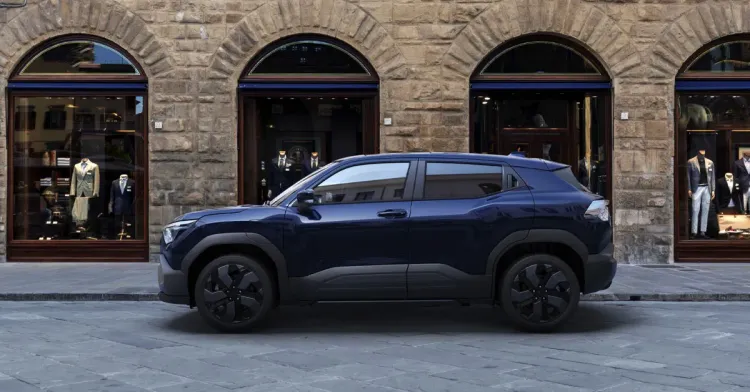
The eVitara is safer, less expensive and more competitive than many expected from Maruti’s first EV. Its long-range version offers enough certified range for intercity use, while the base model enters the market below several direct rivals.
It is not obviously the best electric SUV in its class. Faster-charging alternatives exist, MG offers more rear-seat space in the Windsor, and Mahindra’s electric-origin models deliver stronger performance and more ambitious cabin technology.
The domestic numbers also cannot yet prove whether the eVitara can become a mass-market success. Wholesale sales have been distorted by export priorities, while retail registrations only crossed 6,000 during the first half of the year.
Maruti has built a sensible, globally viable first EV. What it has not built is the kind of product that immediately resets the segment around itself. The eVitara shows that Maruti can compete. Higher domestic allocation, sharper charging performance and a broader electric range will decide whether it can lead.
Comments are closed.