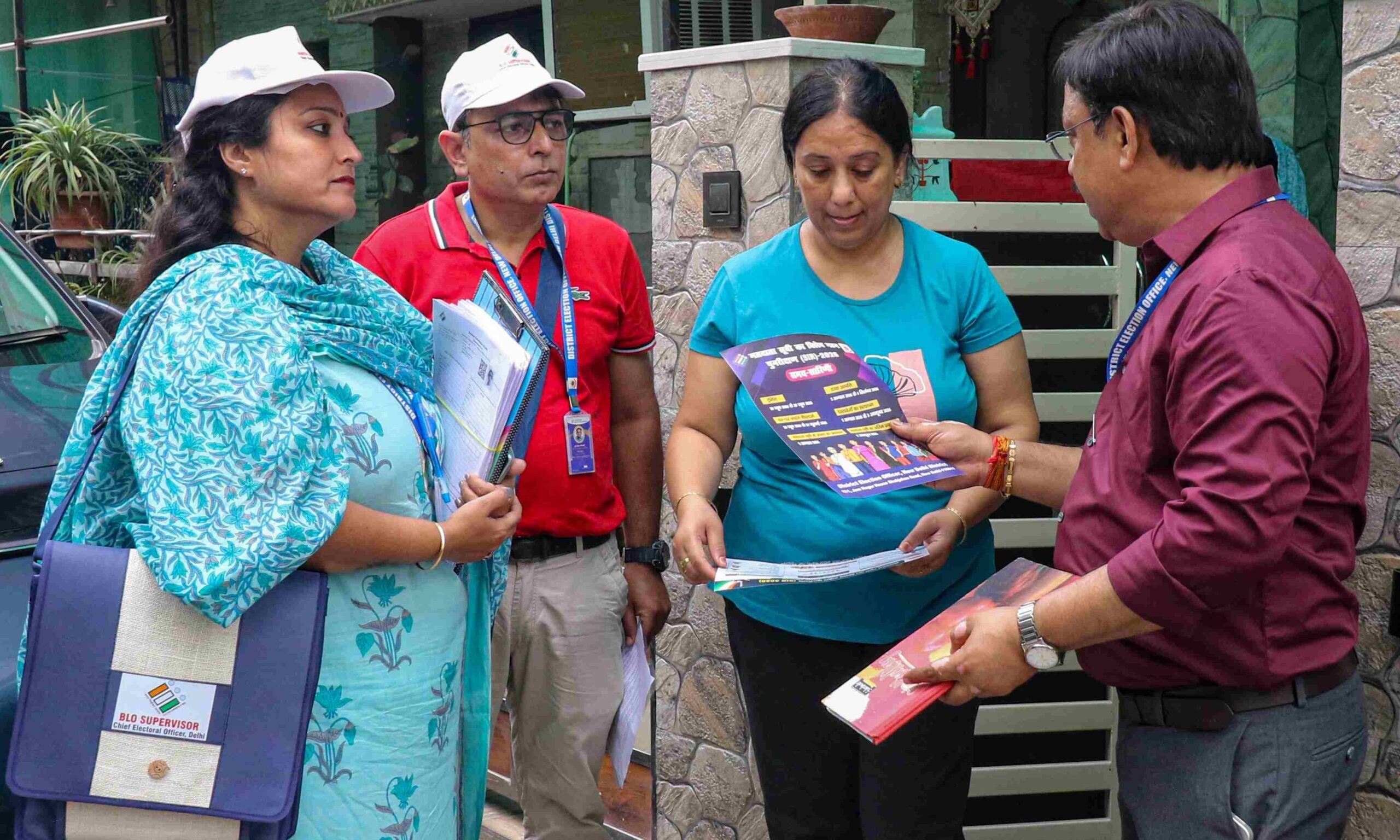
The large-scale deletion of names from draft electoral rolls during the ongoing Special Intensive Revision (SIR) has triggered a fresh political debate over voter verification, with Opposition leaders and civil society groups raising concerns about the potential disenfranchisement of millions of voters.
More than 2 crore names were excluded from Maharashtra’s draft electoral roll, accounting for 21.1 per cent of the state’s previous electorate. In Delhi, 47.7 lakh names were deleted, representing nearly 33 per cent of the Union Territory’s electorate. Across the third phase of the SIR exercise, about 6 crore names have reportedly been excluded from draft rolls.
Also read: SIR phase 3: States extend deadline for final voter rolls by up to 28 days
The deletions have also been substantial in other states. Karnataka saw more than one crore names excluded, equivalent to about 19 per cent of its electorate. Haryana recorded the deletion of 24 lakh names, or 16 per cent of voters, while Andhra Pradesh saw 22 lakh names removed, accounting for 10.8 per cent of its electorate.
Earlier revisions in July resulted in the removal of more than 22 lakh names from electoral rolls in Odisha, Manipur, Mizoram and Sikkim. The deletions amounted to about 6.1 per cent of the electorate across the four States.
Question over verification process
Economist and Congress spokesperson Salman Soz has questioned the procedural burden placed on voters whose names are excluded during the revision.
Also read: Parents’ SIR details now mandatory for new voter registration
Speaking on The Federal’s Capital BeatSoz said the responsibility for establishing a voter’s eligibility should rest with the Election Commission (EC) rather than the individual voter.
“It’s not the responsibility of the voters to prove that they are the voters. Is the responsibility of the election commission which by the way has become a selection commission to prove that somebody should not be on the voter rolls,” he said.
He also questioned the changes in electoral figures in Maharashtra, pointing to the addition of more than 40 lakh voters before the Assembly election and the subsequent exclusion of more than two crore names from the draft roll.
“Either that voter list was correct or this voter list is correct. They cannot both be correct,” he said.
Soz said the Congress would pursue the issue through legal and political channels and seek to take the matter to the public.
Concerns over scale of exclusions
Journalist Samar Halarnkar, citing psephological calculations, has estimated that 13 crore names have been excluded from electoral rolls across 30 States and Union Territories.
The figures have raised questions among opposition parties and civil society groups about the methodology used for the revision of electoral rolls and the safeguards available to voters whose names are removed.
The technical infrastructure used for voter verification has also come under scrutiny. IT expert Madhav Arvind Deshpande has pointed to the range of government databases, including Aadhaar, income-tax records, census data, ration-card records and health-survey databases, that hold information on citizens.
The extent to which such databases are used in the electoral-roll revision process has become a subject of wider public discussion.
Civil society activist Tara Rao said estimates of the number of names that could ultimately be excluded nationwide had risen to about 12 crore. She said deletions on such a scale could create substantial difficulties for citizens seeking to have their names restored to the electoral rolls.