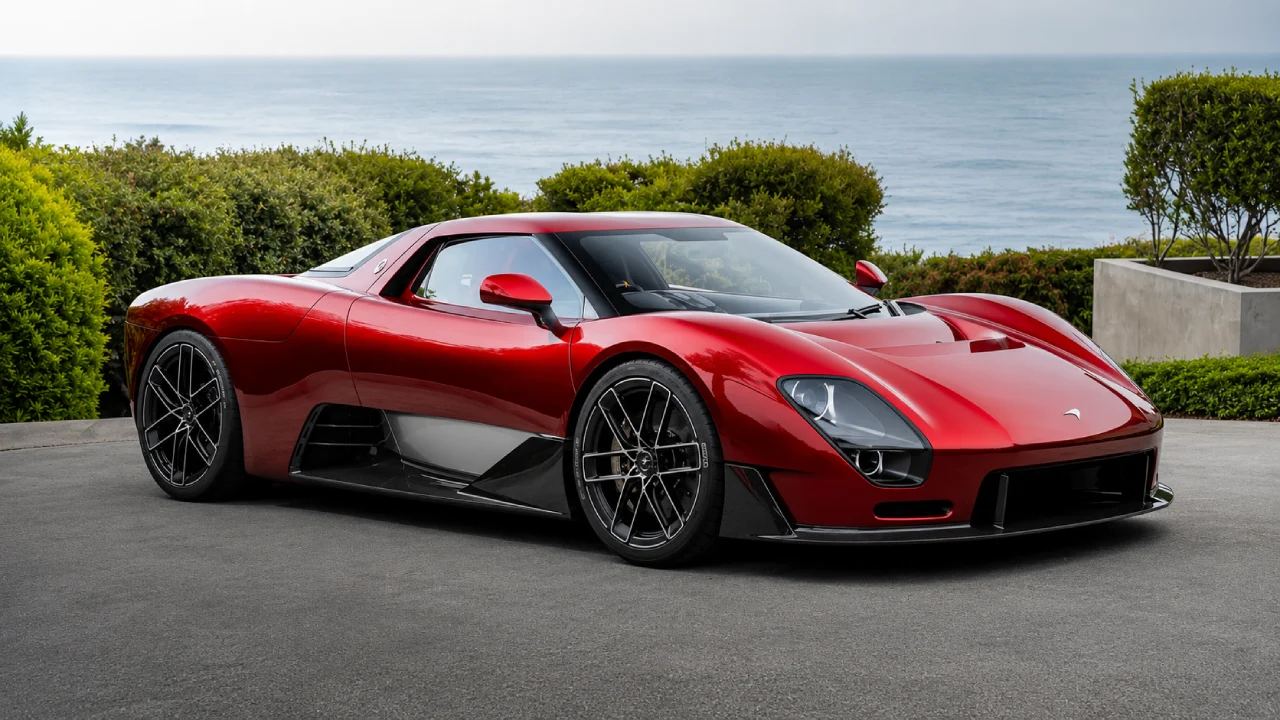
McLaren McL 6GT concept details reveal that McLaren just pulled the covers off a very sharp new concept, the McL 6GT, which kind of drags one of the biggest unfinished chapters from the company’s history back into the spotlight. It was shown at Monterey Car Week 2026, and the whole concept traces back to the earlier M6GT that Bruce McLaren wanted as his company’s first real road supercar.
But this modern M6GT isn’t only a museum-style nod or a nostalgic exercise. McLaren claims it tees up a highly exclusive production variant arriving in 2028, and it’s meant to sit in a limited production lane of roughly 500 units that sits outside their normal supercar bracket.
Inspired by Bruce McLaren’s M6GT
The roots of the McLaren M6GT start in 1969, when Bruce McLaren was already working on the original M6GT. Back then, based on technology and concepts pulled from McLaren’s successful Can-Am racing days, the M6GT was aimed at becoming a road-going sports car. Bruce McLaren wanted to transfer that racing know-how into a lightweight street car, with plans that originally talked about roughly 250 production cars before his tragic passing brought the project to an abrupt halt.
A Modern Interpretation of a Classic
The McL 6GT’s exterior clearly points back to its predecessor, without just copying it, straight up. You can see it in the extremely low and wide stance, the smooth roofline, and that kind of Kammback-styled rear section. Instead of slapping on lots of aggressive aero bits all over the body, McLaren has chosen a relatively clean silhouette and kind of lets the shape do most of the talking.
Some of the details really tie it to the M6GT. The rear lighting uses a “Racing Loop” layout that’s inspired by the original car, and then there are other nods that connect to Bruce McLaren and the company’s historic Speedy Kiwi emblem, alongside sleek horizontal intake strakes.
Carbon Fibre at the Core
Lightweight engineering stays kinda central to the whole thing; it remains at the core. The McL 6GT runs with a carbon-fibre monocoque, plus carbon-fibre body panels too, and it continues that philosophy that has been at the heart of McLaren road cars for decades. Carbon fibre lets McLaren chase a strong yet still lightweight framework, which is pretty important for a car meant to stay about driver engagement.
Instead of throwing out big “headline” power stats, McLaren is leaning more toward what it feels like behind the wheel. The company hasn’t released the final production numbers yet, like horsepower, the exact engine displacement, kerb weight or acceleration times, so there’s that gap, leaving enthusiasts eager for official performance figures.
V8 Power and Rear-Wheel Drive
Even if the exact performance specs are still kept under wraps, McLaren has confirmed that the McL 6GT will come with a V8 internal combustion engine and rear-wheel drive. That setup gives the concept a familiar McLaren base, while it also separates itself from the rising crowd of hybrid performance cars and fully electric ones. This decision matters too, because McLaren is not treating the McL 6GT like just another numbers-first hypercar. The whole point is to craft a very tactile, immediate driving experience.
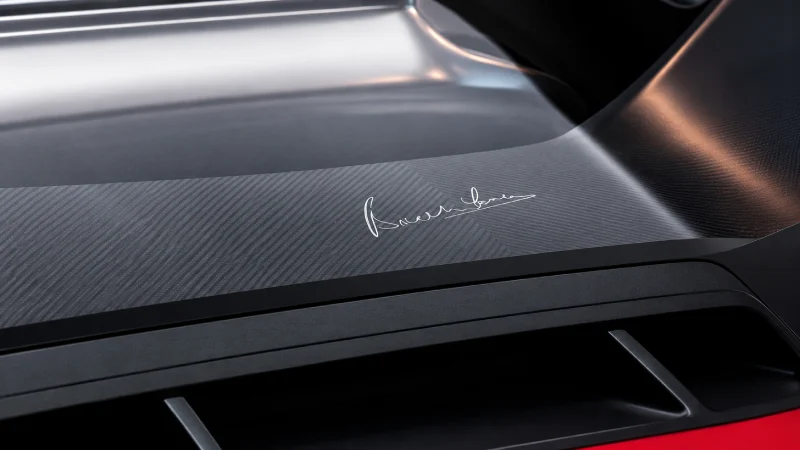
With a light carbon structure, V8 power, rear-wheel drive, hydraulic steering, and a six-speed manual transmission making it McLaren’s first three-pedal road car since the legendary F1 in 1992, the production version could end up being one of the most driver-focused McLarens in decades, honestly. Furthermore, knurled machined aluminum switchgear reinforces this mechanical purism.
Conclusion
The McLaren McL 6GT is, kind of, one of the brand’s most unusual concepts in years. It draws from Bruce McLaren’s unfinished M6GT project, and it mixes old-school design hints with modern carbon-fibre craft plus a V8 power system.
Its biggest aspect, though, might be the six-speed manual transmission. By bringing back three pedals and hydraulic steering, McLaren seems to put driver involvement right at the core of its idea for this exclusive future model. With production planned for 2028, the McL 6GT could become one of those rare modern supercars that favors mechanical kinship over digital complication. This isn’t just a plain homage to McLaren’s past; it’s the company’s take on what that same past could have looked like if today’s technology had been there.