
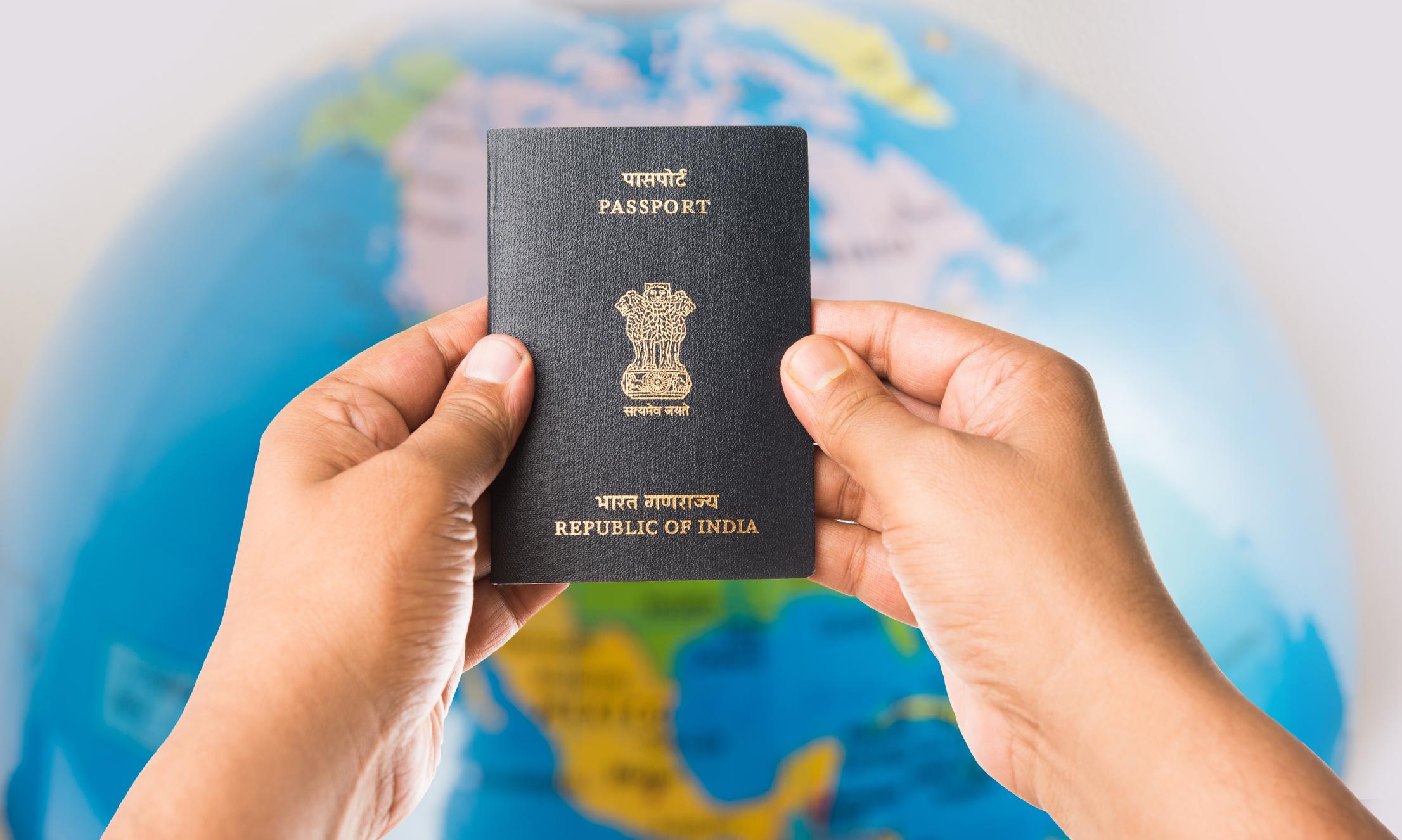

In a landmark clarification, the Ministry of External Affairs (MEA) has stated that an Indian passport is strictly a travel document and cannot be treated as conclusive or standalone proof of Indian citizenship.
Despite rigorous identity checks and the fact that it is issued only to Indian nationals, the government has reaffirmed that it is a tool to facilitate international travel rather than an unassailable legal proof of nationality.
Also read: SC issues notice on plea against Aadhaar being used as citizenship and residence proof
The recent clarification by the MEA was triggered by a specific legal issue regarding voter exclusion under the Special Intensive Revision (SIR) of electoral rolls. The MEA explicitly detailed that while a passport “attests to your nationality” while travelling abroad, it is legally classified as a travel document, not a citizenship document.
Why a passport is not conclusive proof of citizenship
First, the MEA has stressed that a passport functions fundamentally as a travel document.
Besides, a note on the passport itself states it remains the property of the Government of India, which holders must surrender if ordered.
The MEA has also noted that passports are issued based on a “due diligence” check of other records (like Aadhaar or PAN). Because it is a downstream document built on identity proofs, courts do not treat it as an unassailable root document for citizenship verification.
The Bombay High Court has previously ruled that questions of citizenship must be evaluated strictly under the Citizenship Act of 1955, meaning identity documents alone do not suffice.
Legal status of other major documents
So, what proves your Indian citizenship? The Indian government and the courts have systematically clarified that common identity documents do not automatically establish legal citizenship status. Here is a list of the major documents and what they denote:
Aadhaar Card: The Supreme Court has ruled that it is strictly a proof of identity and residence, not citizenship.
Voter ID Card: It is primarily for electoral participation and local residence; not standalone proof.
PAN Card: It is a tax identification number and does not confirm citizenship status.
So, how is Indian citizenship legally established?
India does not grant automatic citizenship simply for being born on its soil (soli juice). Under the Citizenship Act of 1955, actual legal verification depends heavily on a combination of birth records and parental status. You must verify which legal window you fall under based on Section 3 of the Citizenship Act, 1955:
Also read: Digital push in citizenship rules: Govt rolls out e-OCI, tightens norms for minors
Born between Jan 26, 1950, and July 1, 1987: Citizen by birth, regardless of parents’ nationality. Your own valid birth certificate is your primary legal proof.
Born between July 1, 1987, and Dec 3, 2004: At least one parent must be an Indian citizen at the time of birth. You need your birth certificate plus your parents’ legacy identification (like their birth certificates, school-leaving certificates, or land records).
Born on or after Dec 3, 2004: Both parents must be Indian citizens, or one parent must be a citizen while the other is not an illegal immigrant. Proof requires a combination of your birth certificate and established parentage citizenship records.
The onus of proof is on you
Under Section 9 of the Foreigners Act, 1946, the burden of proving that a person is an Indian citizen always lies on the individual, not the government. If you need to establish absolute proof of citizenship for legal disputes, government employment, or state-level verifications, you must acquire root-level documents:
1. Legitimize your birth certificate
A birth certificate is only considered conclusive if it is registered under the Registration of Births and Deaths Act, 1969.
How to secure it: If unregistered at birth, you must file for a delayed birth registration at your local Municipal Corporation (urban) or Gram Panchayat (rural).
Process: Requires an affidavit from your parents/elders, a Non-Availability Certificate (NAC) from the local registrar proving it wasn’t registered earlier, and an order from a First Class Magistrate verifying your birth details.
Also read: Centre tells SC it will bring back deported individuals for citizenship review
2. Obtain a domicile certificate
A Domicile Certificate proves you are a permanent resident of a specific Indian state, which heavily reinforces nationality claims during state-level verifications.
How to secure it: Apply online through your state’s official e-District portal or offline at the local Revenue Office (Tehsildar/Sub-Divisional Magistrate).
Requirements: You typically must prove continuous residence in that specific state for a minimum period (usually 10 to 15 years, depending on the state).
Evidence needed: Structural evidence like registered land deeds, continuous school-leaving certificates, or ancestral property records.
3. Formal MHA citizenship certificate (Rule 29)
For individuals who acquired citizenship via registration or naturalisation (such as Persons of Indian Origin or foreign spouses), the absolute legal proof is a Certificate of Indian Citizenship.
How to secure it: Applications must be processed online through the Ministry of Home Affairs (MHA) Indian Citizenship Online portal.
Process: The local District Collector reviews physical documents, administers an Oath of Allegiance, and forwards it to the State Government and MHA for final approval.

Comments are closed.