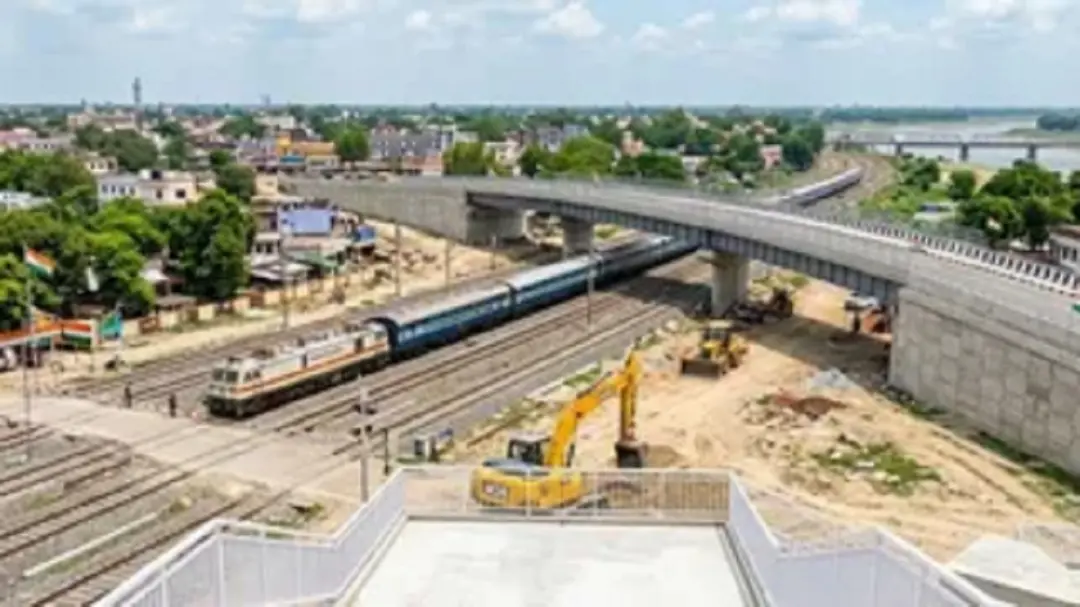
MEMU train stopped for 15 minutes in the jam at the railway crossing at Sohsarai halt in Nalanda. RPF and police got the vehicles stuck on the track removed.
Photo Credit / Attribution: Google
The problem of road jam in Biharsharif of Nalanda district has now started affecting railway operations also. On Friday morning, such a situation arose at the railway crossing near Sohsarai Halt that due to the rush of vehicles on the road, the MEMU train had to stop midway. There were long queues of vehicles on both sides of the crossing. Meanwhile, some vehicles also got stuck on the railway track. Due to the track not being vacant, MEMU train running on Rajgir-Bakhtiyarpur railway section could not move forward for about 15 minutes. The jam on the road directly affected the railway passengers and train operations were disrupted.
The incident is said to have taken place on Friday morning. The pressure of vehicles had suddenly increased at the railway crossing near Sohsarai Halt. There were vehicles standing in queues on both sides of the road. Meanwhile, some drivers started crossing the railway crossing in a hurry. Due to the large number of vehicles and the competition to overtake, some vehicles got stuck in the middle of the railway track. In such a situation, there was no vacant path left for the train to pass. MEMU train had to stop and wait on the track itself.
After receiving information about the stoppage of the train, Railway Protection Force personnel and police from Rahui police station reached the spot. Police and RPF personnel first removed the vehicles stuck on the railway track and then cleared the crossing. After a lot of effort, when the track was completely cleared, the MEMU train was sent forward. During this period, train operations were disrupted for about 15 minutes. After the vehicle was removed from the track, the situation became normal and the train could move ahead.
According to local people, the problem of jam at the railway crossing near Sohsarai Halt persists. These days, due to the wedding and marriage season, the movement of vehicles on the road has increased. Its effect is also visible at the crossing. People say that there is a traffic jam here every few days. Many times, common pedestrians have to wait for a long time due to long queues of vehicles on the road. This time the jam situation became so serious that even the train had to be stopped.
Bihar Sharif Station Manager Amrendra Kumar said that during the passage of trains that stop at Sohsarai halt, long queues of vehicles form on both sides of the railway crossing. When the railway gate is opened after the train passes, the drivers try to pass first. During this time, many times vehicles get stuck between each other and some vehicles reach the railway track. The situation becomes worse due to the competition between drivers in a hurry to get ahead.
According to the station manager, if the drivers leave one by one in an organized manner after the gates open, then the problem of vehicles getting stuck on the railway track can be reduced. But many times the drivers try to pass together. This causes jam at the railway crossing. In such a situation, it becomes difficult to close the gate again and the next train has to wait. Trains which do not stop at Sohsarai halt face relatively less trouble during their passage.
This incident has raised serious questions regarding the traffic system at the railway crossing. Getting a vehicle stuck on a railway track not only causes delay in train operations but can also create a risk of a major accident. If a vehicle gets stuck on the track at the time of arrival of the train, the lives of passengers and people on the road may be in danger. In such a situation, drivers need to avoid haste while crossing the railway crossing and proceed only after the track is completely clear. Local people say that to find a permanent solution to the problem of traffic jam near Sohsarai Halt, the Railways and the administration should work together to improve the traffic system.