
Merge Fusion AI integration platform officially launched to help companies build and deploy AI-powered applications that can securely reach into enterprise software. The launch was shared via the company’s official blog and social media channels, and Fusion builds on Merge’s Unified API platform by letting developers and AI agents interact with business systems through one single integration layer, instead of assembling and maintaining numerous individual connections.
As organizations start using AI agents for customer support, HR, finance, and operations, getting to enterprise data across multiple software platforms becomes a big challenge. Merge believes Fusion tackles that issue by making enterprise integrations faster, simpler, and more scalable, in a very practical way.
Merge Fusion AI: Addressing the integration challenge
Modern businesses depend on dozens of cloud applications for day-to-day operations, and most of the time, human resources, accounting, CRM, ticketing, payroll, plus productivity platforms are running kinda on their own. Because of that, they form data silos, which makes automation harder and slower.
According to Merge, developers have historically been stuck building separate integrations for each software provider. So you end up with longer development cycles, plus extra ongoing maintenance whenever an API changes, which is frankly not fun. Fusion is designed to remove a lot of that mess by offering one unified way to connect AI applications with enterprise systems. It tries to make the whole connection process feel less fragmented and more manageable.
Built for the AI era, basically
Merge says Fusion was developed with AI-powered applications in mind. Instead of only moving data around between systems, the platform helps AI agents securely pull relevant information, perform actions, and automate workflows across the connected business apps. For example, an AI assistant might be able to:
- Retrieve employee information from an HR platform
- Create support tickets automatically
- Update CRM records
- Access accounting information
- Trigger workflow approvals
- Synchronize customer data across applications
That’s what lets AI agents do more than answer questions. They can actually carry out real business tasks, step-by-step, with less friction. Enterprise security still stays a priority
Since enterprise integrations usually touch sensitive business data, Merge kind of puts security everywhere across the Fusion platform. As the company notes, Fusion is built with enterprise-grade authentication and permission management, so connected AI applications can reach only authorized information, no extra or random stuff.
Security and compliance stay essential too, because more organizations are letting AI agents interact directly with business software and day-to-day operational data.
Supporting the next generation of AI agents
The arrival of Fusion points to a wider industry move toward agentic AI where systems do multi-step work instead of only answering user prompts. So for these AI agents to be actually useful, they need access to real business facts, and they also have to interact with enterprise applications in a safe way.
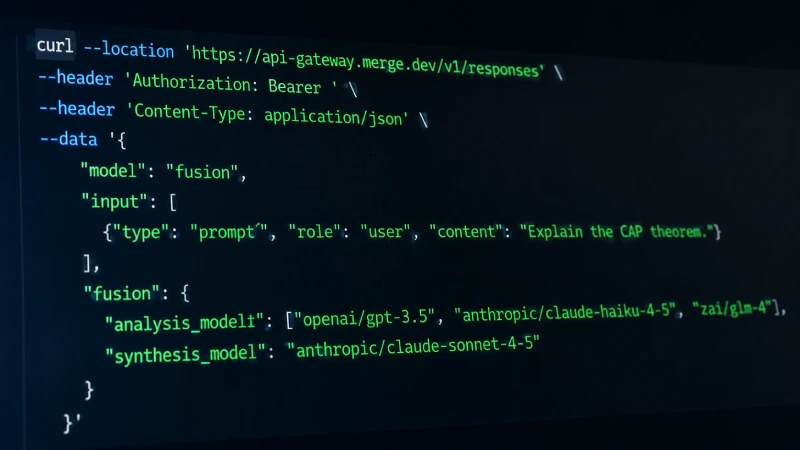
Merge frames Fusion as the underlying infrastructure that helps these next-gen AI agents operate across multiple software ecosystems without forcing companies to spin up a pile of separate custom integrations.
Looking ahead
As businesses keep investing in AI-powered automation, integration platforms are turning into a real critical part of enterprise software development. Merge’s new Fusion platform tries to remove one of the main barriers to AI adoption by giving applications and AI agents secure unified access to business systems through a single integration layer, so it’s not fragmented or messy.
Fusion basically blends Unified APIs, workflow automation, and enterprise-grade connectivity, and it’s positioned as a platform made for the next generation of AI-powered applications. And as organizations start deploying intelligent agents across departments, offerings like Fusion might end up being pretty important for helping AI shift from isolated assistants to practical collaborators who can actually complete real business tasks, not just “suggest” things.