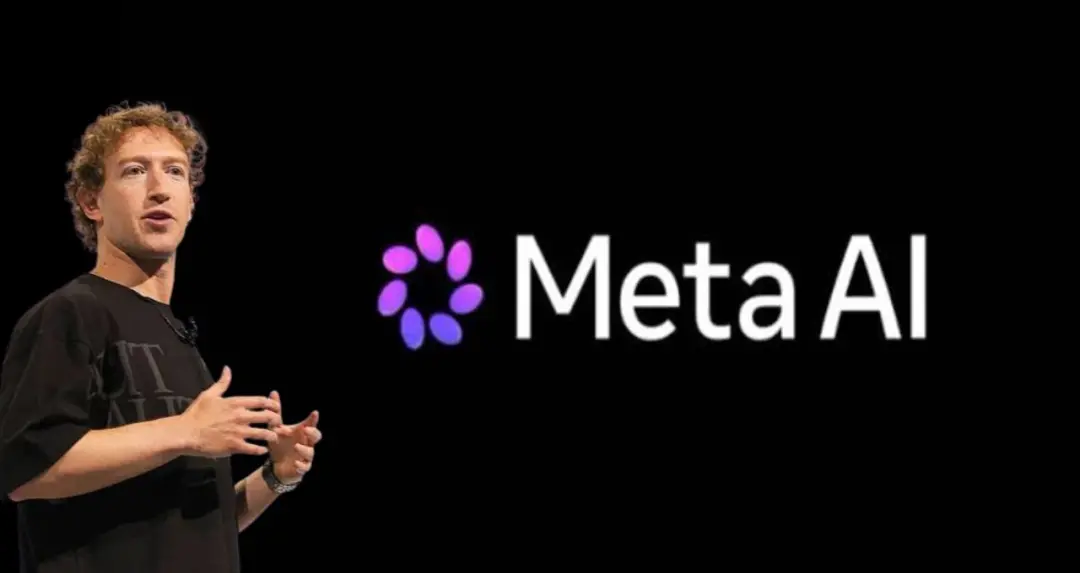
Meta introduced the Muse Spark Open AI model on 16 October 2026. This model is designed for coding, complex reasoning and multi-step tasks. According to the company, it can also be run on two Apple Mac Studio systems.
Tech: Meta has released a new open-weight AI model called Muse Spark Open, which has a total of 816 billion parameters and a context window of 1 million tokens. The company is calling it useful for software development, complex reasoning and agentic AI workflows. Its special thing is that it can be run locally by combining two Mac Studio systems with Apple's M5 Ultra chip.
816 Billion Parameters in Meta Muse Spark Open AI Model
Meta has released its new AI model Muse Spark Open. It is designed for tasks that include writing code, fixing bugs in software, considering complex problems, and completing tasks that require multiple steps. It is an open-weight model, meaning developers can download its model weights and use and customize them as per their needs.
According to the company, the model has a total of 816 billion parameters, while the number of parameters active at a time is 42 billion. A context window of 1 million tokens is also given in it. Large context windows allow AI models to process large amounts of information in a single interaction.
Meta has also tested the model on tasks like software development and video editing. In a test, it was used to fix bugs and add new features to the open-source Mastodon client called Ice Cubes. In the second test, the model viewed video footage frame-by-frame with DaVinci Resolve, identifying useful parts and helping to prepare the clips in a vertical format.
The model can also run on two Apple Mac Studios
Key features of Muse Spark Open include the ability to run it on a local computer system. Meta has optimized it for Mac Studio with Apple's M5 Ultra chip through the MLX framework. According to the company, connecting two Mac Studio systems together can provide enough unified memory to run the model.
This means that developers with suitable hardware and configuration will not need to rely solely on cloud-based AI services for every task. However, to run it locally, sufficient memory and compatible software setup will be required.
Meta also supports multiple inference platforms for models. Developers can access it through platforms like Baseten, Fireworks AI, Groq, Modal, Nebius, OpenRouter and Together AI. Its model weights are also made available on Hugging Face, Amazon SageMaker AI, Google Cloud Model Garden and Microsoft Foundry Models.
Inference engines like SGLang, vLLM, TensorRT-LLM, Hugging Face Transformers, Apple MLX, llama.cpp and Unsloth are supported to run the model. Developers can also customize it according to their needs through PyTorch.
Focus on Coding, Video Editing and AI Agents
Muse Spark Open is designed not just as a question-answering chatbot, but for longer, multi-step tasks. In such AI workflows, the model can perform several actions one after the other to accomplish a goal. This is called agentic AI.
The model also has native multimodal capabilities, meaning it is designed to work with different types of information. Meta also includes optimized GPU kernels for NVIDIA and AMD GPUs. According to the company, some kernel-level tasks recorded speed improvements ranging from 1.03 to 3.95 times, while an overall speed increase of 3 percent was reported on the AMD MI350.
Meta has said that it will adopt the process of safety training and safety assessment before releasing the model. It is released under the Muse Model License. It may be free to use for developers, but the license also includes some limitations related to commercial use. Therefore, it is important to understand its license terms before commercial use.
Overall, the focus of Muse Spark Open is to make large AI models more useful for developers, especially for tasks like coding, video editing, and multi-step automation. Its actual usefulness will depend on hardware capabilities, model performance, and license terms.