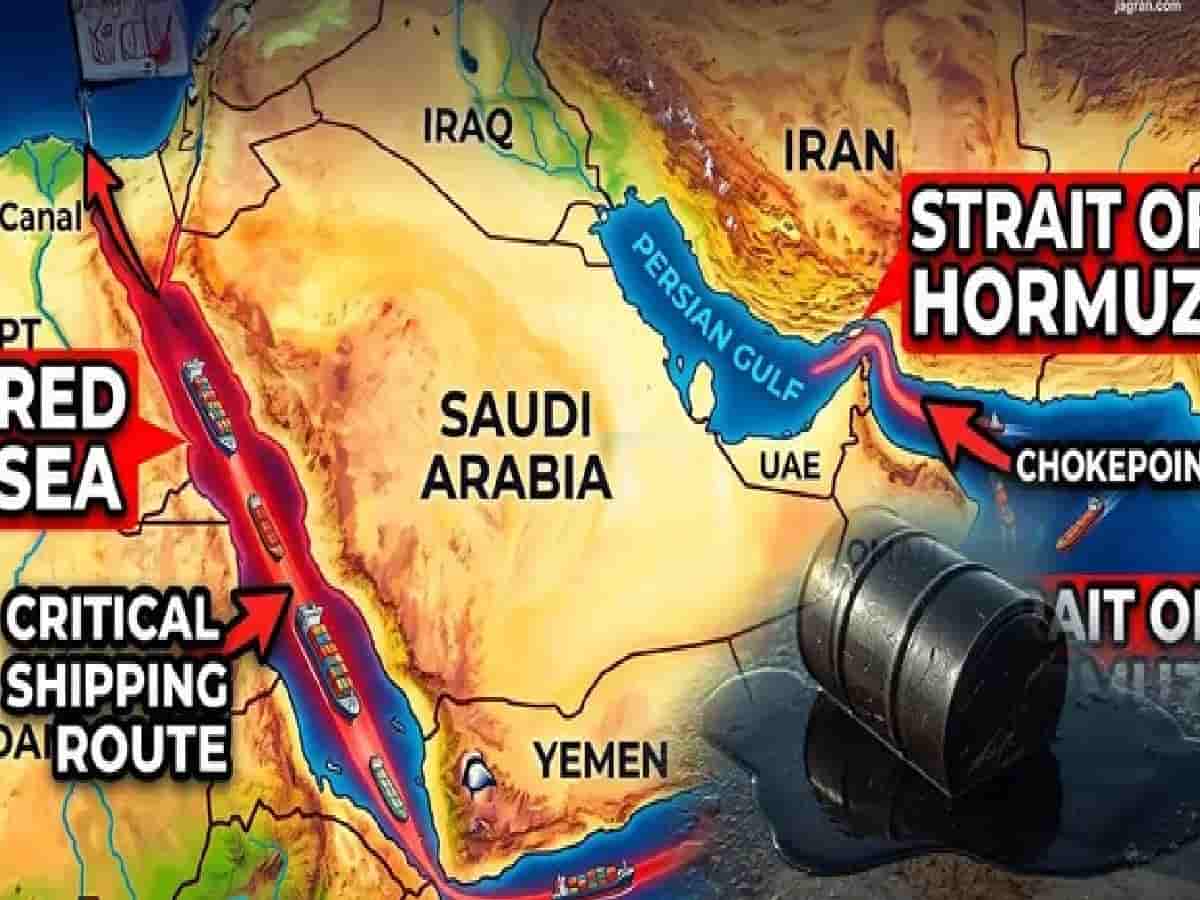
The military conflict between America, Israel and Iran in West Asia (Middle East) has now reached a devastating turn, which has shaken the energy market and maritime trade system of the entire world. This triangular war had not even subsided when the renewed direct war between Yemen's Houthi rebels and Saudi Arabia has put the global supply chain in serious trouble. Energy experts and international strategic analysts believe that if the conflict continues at this pace, oil and natural gas exports from the Middle East could be completely paralyzed for the first time in modern history. The US-Iranian blockade on the Strait of Hormuz, the lifeline of 20 percent of the world's oil supply, has proved to be the biggest blow to the global economy. In normal times, about 20 percent of the total crude oil consumed worldwide passed through this narrow waterway. Due to the fierce war that has been going on between America and Iran for the last six months, the navies of both the countries have imposed an unprecedented blockade of this sea route. The operation of cargo ships and oil tankers in the Persian Gulf has become completely unsafe, due to which the uninterrupted supply chain of fuel in the international market has been broken and any kind of movement for ships has become impossible. Crisis looming on the Red Sea and a historic surge of $ 100 per barrel in crude oil prices. After the complete blockage of the Strait of Hormuz, the Red Sea was left as the only alternative route for global energy companies and commercial ships. Some limited ships originating from the Gulf region had also started using this waterway as an alternative corridor, but the new war between Saudi Arabia and Houthi rebels has also taken away this lifeline. The simultaneous closure of the maritime waterways has sent international energy markets into a tizzy and sent crude oil prices soaring above US$100 per barrel, threatening inflation and a fuel crisis in Asian and European economies. Houthi rebels' capture of the Red Sea coast and drone attack on Saudi Arabia's lifeline East-West Pipeline The bloody conflict between Houthi fighters and the Saudi Arabia-led coalition has been going on for the past decade, which was largely controlled through agreements after the mediation of the United Nations (UN) in 2022. However, last week, Houthi rebels launched a military campaign and captured a large part of Yemen's strategic Red Sea coast. Along with this he announced a complete blockade of Saudi ships. On the other hand, after the closure of Hormuz, Saudi Arabia was running its historic 'East-West Pipeline' at full capacity, through which about 7 million (7 million) barrels of oil was being transported daily across the peninsula to Yanbu port on the Red Sea. The massive drone attack on the pipeline by the Houthi front as well as Iraq-based Iran-backed Shia militias has seriously damaged this most important alternative route to Saudi Arabia. Scope of war spread to Mecca due to Saudi bombing on Sana airport and emergency alert. This latest conflict between Saudi Arabia and Houthis is not the result of any sudden incident, rather its background was being prepared since the state funeral of former Supreme Leader of Iran Ayatollah Ali Khamenei. Yemen's Houthi faction initially maintained a strategic distance from the US-Iran war, but in July, when a high-level Houthi delegation went to Tehran to attend Khamenei's funeral, the equations changed rapidly. When the Iranian plane carrying Houthi representatives was returning to Yemen's capital Sanaa, Saudi Arabia warned it to stop it from landing and heavily bombed the Houthi-controlled Sanaa airport. Despite this fierce attack, the Iranian plane finally succeeded in landing, but it provoked a fire of revenge. As a result, Houthi rebels launched a fierce counterattack against Saudi Arabia and reportedly fired drones in the direction of the holy city of Mecca. For the first time in Islamic history, the Saudi Civil Defense Department had to issue air raid sirens and emergency red alerts in residential areas of Mecca, instructing citizens to take shelter in safe places away from windows and doors. According to strategic analysts, the strict US naval blockade imposed on Iranian ports in the Persian Gulf is also a major reason behind these aggressive steps of the Houthis. This complete blockade implemented by the US Navy has shaken the Iranian economy from within. Tehran has become completely unable to sell its oil on the international market, causing the value of the Iranian rial to fall to historic lows. Currency devaluation and food shortages have forced ordinary Iranian citizens to stockpile eggs and basic food items instead of cash and savings. This strategy of Washington is creating immense internal pressure on Iran, which the US military seems technically capable of continuing for a long time. Tehran's 'Axis of Resistance': After the loss of Hamas and Hezbollah, Houthis become the new vanguard. In this multi-dimensional war, Iran and Houthi rebels are seen standing completely shoulder to shoulder. Through the aggressive military actions of the Houthis, Tehran is sending a clear message that if Iranian oil cannot be traded through the Strait of Hormuz, then no other country in the world will be allowed to export oil through the Red Sea or Gulf routes. Iran's traditional proxy groups—notably Lebanon's Hezbollah and Gaza's Hamas—have suffered heavy military losses in the broader war in the Middle East. In such a situation, the center of power of Iran's 'Axis of Resistance' has now shifted towards the Houthi rebels of Yemen and Shia fighters of Iraq, to whom advanced weapons, drone technology, precise logistics and satellite intelligence information are being provided directly from Tehran. Saudi Arabia is struggling with the shortage of weapons and the indifference of Western allies. Amidst this unexpected crisis, the defensive challenges facing Saudi Arabia have increased manifold. The US has refused to take direct ground or military intervention against the Houthis in Yemen and is limited to only limited diplomatic assistance. Because of its long war with Iran, Washington's own stockpile of missile and drone interceptor defense systems is limited, making it unable to immediately provide Riyadh with additional shipments of Patriot missiles. Saudi Crown Prince Mohammed bin Salman (MBS) has also appealed for immediate defense help from traditional allies like the United Kingdom and Egypt, but no foreign power seems ready to wade directly into this quagmire. Even the defense mechanism decided under the recently discussed 'Makkah Agreement' between Saudi Arabia, Turkey and Pakistan has not yet been activated on the ground. The changing map of global energy trade and the big question on West Asia's monopoly. This devastating conflict in the Middle East has made it clear that now not only conventional armies but also non-governmental militia groups have the ability to paralyze the world's most sensitive energy corridors. Whether maritime chokepoints or underground oil pipelines, no route to energy markets is safe any longer. This unprecedented insecurity has put a big question mark on West Asia's decades-old dominance in the global energy landscape. International energy companies, Asian importing countries and global powers are now forced to consider diverting their long-term investments out of West Asia towards Africa, the US and alternative green energy sources, because unless a concrete diplomatic solution to this geopolitical conflict is found, the Gulf region's energy trade will remain under complete uncertainty.