Every month, another corporate platform tightens the screws — usage caps, tiered subscriptions, and licensing fine print that quietly claims your creative output the moment you stop paying.
Then MiniMax dropped its open-weights music model straight onto Hugging Face, no waitlist, no credit card, no gatekeeper deciding who’s worthy of a song.
Call it what it is: a cultural flex as much as a technical one.
MiniMax Music 3 isn’t polished corporate software handed down from a control board; it’s raw capability tossed to a community that immediately started building on it, forking it, and bending it to their own taste.
Can Your Rig Handle It? The VRAM Tax & ComfyUI Culture
| Aspect | The VRAM Tax | Day-One ComfyUI Culture |
| Core Subject | Hardware resource requirements and memory limitations | Community adaptation and workflow development |
| Underlying Architecture | 8-billion-parameter global language model paired with a flow-matching synthesis pipeline | Research-grade checkpoint transformed into accessible user tools |
| Hardware Performance (8GB VRAM) | Limps along via aggressive layer streaming; considered the budget experience | Enables running and generating content without command-line wrangling |
| Hardware Performance (20–24GB VRAM) | Required for full-precision generation without waiting around; enthusiast-tier GPU territory (excludes typical laptops) | N/A |
| Community & Development | N/A | Did not wait for MiniMax to hold their hand; built by volunteers instead of a product team chasing a quarterly roadmap |
| Usability & Implementation | N/A | ComfyUI workflows appeared within days, allowing regular creators to drag, drop, and generate with raw weights turned into usable tools |
What Actually Slaps: Real Human Vocals vs. Flat Instrumentals
- Vocals That Sound Human
I. Vocals sound genuinely sung:
Thanks to MiniMax’s flow-matching and VAE decoder pulled from their speech work, vocals avoid the warped, underwater warble and “drowning beneath the mix” effect common in earlier open attempts.
II. Consistent vocal identity:
Identity holds steady across a full track, preventing any unsettling drift where the singer subtly changes into someone else by the bridge.
- The Instrumental Flatness
I. Instrumentation:
Competent yet flat, relying heavily on generic English-language pop conventions.
II. Flexibility:
Struggles significantly when asked to handle styles outside of that lane.
Open-Source Freedom vs. Closed-Source Masters: Suno & Udio in the Crosshairs
| Feature / Aspect | Sound and Audio | MiniMax Music 3 |
| Final Product Quality | More polished final product; has a radio sheen that MiniMax cannot match yet (and likely won’t for another generation or two). | Output lacks the radio-ready sheen of Suno and Udio for now. |
| File Ownership & Dependency | Catalog effectively belongs to the company the second your subscription lapses; dependent on a server staying online. | Actual ownership of your files, no generation caps, and no dependency on a server staying online forever. |
| Commercial License & Revenue Ceiling | Subject to subscription-based terms where ownership can lapse. | Commercial use is free, full stop, until your product crosses $20 million in annual revenue (acts as “just freedom” for nearly everyone). |
Ditch the Lazy Prompts: How to Master MiniMax Song Architecture
Ditching One-Sentence Prompts
This isn’t a model for lazy prompting.
It expects two separate inputs — a structured caption describing genre, tempo, key, and instrumentation, plus your actual lyrics.
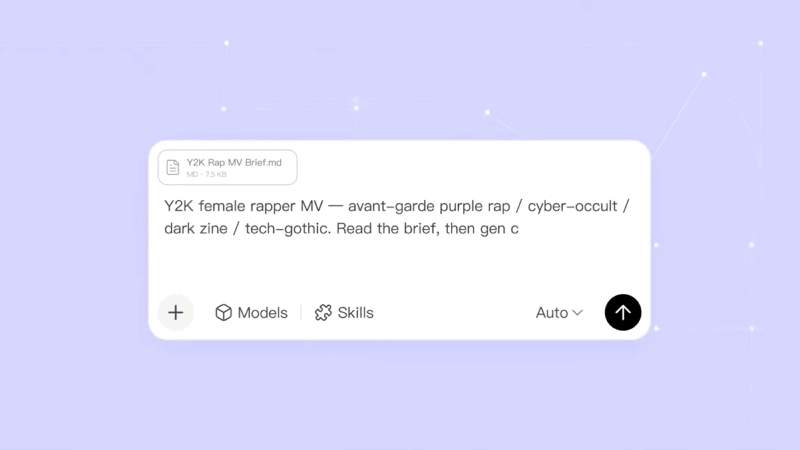
Typing “make a cool rock song” and expecting magic will get you generic mush. MiniMax Music 3 rewards people willing to actually engineer their request.
Structuring the Verse
Bracket tags like (Intro), (Verse), and (Chorus) are how you force the model to respect real song architecture across a full five-minute runtime, instead of drifting into formless noodling halfway through.
The Manifesto of Open Audio: Grabbing the Keys to the Studio
MiniMax Music 3 isn’t winning a Grammy this year, and it doesn’t need to. It’s a foundational brick — proof that a full-song, vocal-driven generation doesn’t have to live behind a corporate paywall.
The instrumentals are flat, the VRAM demands are real, and the license still has a ceiling. However, the walls around music creation are cracking, and for the first time, the community is holding a real set of keys to the studio.