
Mobile Analytics has been part of app development for years. Teams have used it to track downloads for years. Teams have used it to track downloads, daily active users, clicks, session length, purchases, and many other actions. The basic idea is simple: understand what users do inside an app and use that information to make the experience better.
But mobile analytics is changing
App teams are no longer satisfied with dashboards filled with numbers. A million app opens may look impressive, but they do not explain why users keep coming back or why thousands of others uninstall the app after a few minutes. Today, developers, product managers, and marketers are looking more closely at user journeys and events, conversion funnels, retention, and privacy.
The goal is shifting from collecting as much data as possible to collecting the right data and turning it into useful decisions. The goal is shifting from collecting as much data as possible to collecting the right data and turning it into useful decisions.
From Downloads to User Journey
One of the biggest changes in mobile analytics is the focus on the complete user journey. Previously, teams often looked at simple metrics such as downloads or monthly active users. These numbers are still useful, but they do not tell the whole story.
For example, if many users add items to their carts but leave when they reach payment, the team has a clear area to investigate. Perhaps the payment process is confusing, a preferred payment method is confusing, a preferred method is missing, or unexpected fees appear too late.
This journey-based approach helps teams understand where users struggle, what keeps them engaged, and what ultimately leads to conversion.
Events Tell Teams What Users Actually Do
Events are more useful than simply counting app sessions because they provide context. Imagine that an app has 100,000 monthly users. That number does not tell a product team whether people are actually using its main feature.
If analytics shows that only 15% of users reach that feature, the team has a very different problem to solve. However, tracking every possible action can create another problem: too much data.
When teams send thousands of unnecessary events, analytics dashboards can become difficult to understand. Important patterns can get buried under meaningless information.
That is why many app teams are becoming more deliberate about event tracking. Instead of asking, “What can we track?” they are asking, “What decision will this data help us make?”
Funnels Make Drop-Offs Easier to See
Funnels are another important part of mobile analytics. A funnel represents a series of steps that users are expected to complete. It is particularly useful for measuring activities such as registration, purchases, subscriptions, or onboarding.
For example, an e-commerce app might have this funnel. Suppose 100,000 people view a product, but only 5000 complete a purchase. Analytics can help identify where the largest drop occurs.
If most users disappear between checkout and payment, the company can investigate the payment experience rather than redesigning the entire app.
Funnels also allow teams to compare different groups of users. They might discover that new users convert differently from existing customers, or that users on one device type experience a higher drop-off rate.
This makes analytics more actionable. Instead of simply saying, “Our Conversion rate is low,” teams can ask a more useful question: “At which step are users leaving, and why?”
Retention Matters More Than a One-Time Visit
Acquiring a user is only the beginning. An app can have strong download numbers but still struggle if users never return. This is why retention has become one of the most important mobile analytics metrics.
Retention data can reveal whether an app provides lasting value.
For example, a fitness app may receive thousands of downloads after a New Year’s promotion. But if most of those users disappear within two weeks, the download number alone can be misleading.
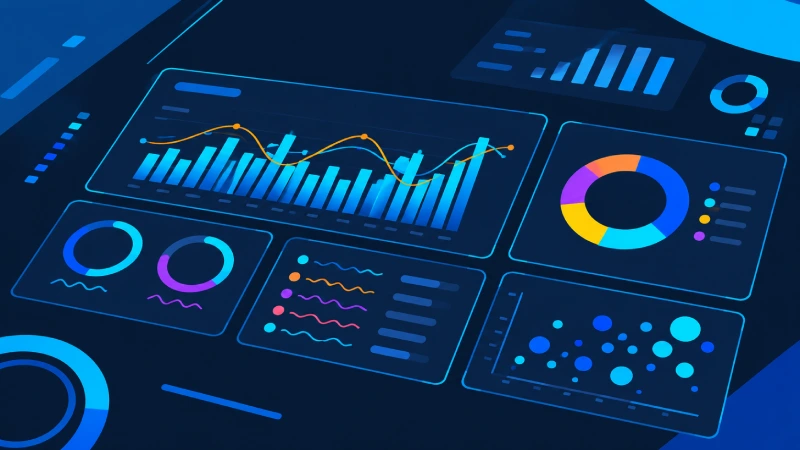
Analytics can help teams identify patterns among users who stay. Perhaps retained users complete onboarding, create a workout plan, or enable reminders. That information can help product teams improve the experience for everyone.
Retention also encourages companies to think beyond short-term marketing campaigns. Instead of asking only how many people installed an app, they can ask whether those people found enough value to keep using it.
Privacy is changing the Analytics Strategy
The biggest shift in mobile analytics may be the growing importance of privacy. Users have become more aware of how apps collect and use their information. At the same time, privacy regulations and platform-level controls have made tracking more complicated. This has pushed app teams towards privacy-aware analytics. The principle is straightforward: collect what is necessary, explain why it is collected, and protect it properly.
Instead of collecting detailed personal information whenever possible, teams can rely on aggregated or anonymized data where appropriate. They can also reduce unnecessary data collection and establish clear retention policies.
Privacy-aware analytics does not mean abandoning measurement. It means finding ways to understand product performance without treating user data as something that should be collected endlessly.
For developers, this can also mean building analytics into the product architecture more carefully. Teams need to understand what data is being sent, where it goes, who can access it, and how long it is retained.
First-Party Data is becoming More Valuable
Changes in advertising platforms and tracking technologies have also made first-party data increasingly important.
First-party data is information a company collects directly through its own app or services, with appropriate user permissions and privacy practices.
For example, an online retailer may know which products a signed-in customer viewed or purchased. A streaming service may understand which types of content users choose to watch.
This information can help businesses improve recommendations, personalize experiences, and understand product performance without relying entirely on third-party tracking. The challenge is making sure data is collected responsibly. Trust can disappear quickly if users feel that an app is collecting information without a clear purpose.
The Future: Less Noise, Better Insights
Mobile analytics is moving away from the idea that more data automatically means better decisions. A team can track thousands of events and still have no idea why its app is losing users. Meanwhile, a smaller, carefully designed analytics system can reveal exactly where customers are struggling. The future of mobile analytics is therefore likely to focus on quality over quantity.
User journeys will help teams to understand behavior from beginning to end. Event tracking will provide detailed information about important actions. Funnels will expose conversion problems. Retention analysis will show whether the app delivers lasting value. Privacy-aware practices will allow teams to collect useful information without unnecessarily compromising user trust. For app teams, the real question is no longer simply ”How many people use our app?”

But rather it’s becoming: what users are trying to accomplish, where they are getting stuck, what makes them come back, and how can we understand that without collecting more information than we actually need?” That shift is making mobile analytics less about watching numbers and more about understanding people.
Final thoughts: Real-time Analytics Can Speed Up Decisions
Mobile apps also generate huge amounts of behavioral information every day. Real-time or near-real-time analytics can help teams respond more quickly when something goes wrong. Imagine a new app update is released and the checkout completion rate suddenly drops. A team that notices the problem immediately can investigate the release before the issue affects a large portion of its customer base.
Real-time monitoring can also help identify unusual traffic, crashes, failed transactions, or sudden changes in engagement.
This does not mean every metric needs to be watched constantly; instead, teams can establish alerts for important changes and use deeper analytics when investigation is required. Security also remains relevant when teams decide what data to collect, transmit, and retain.
(Source)