
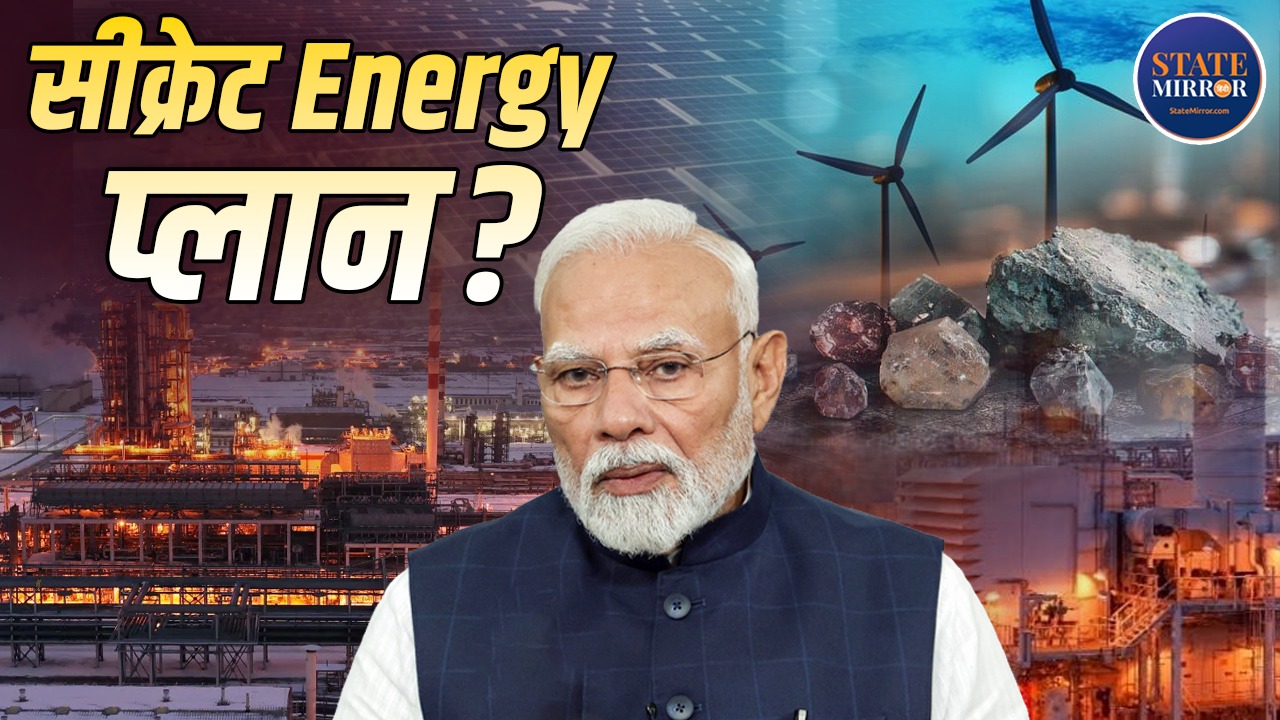
Modi’s Energy Triangle: Russia’s Oil, Gulf Gas and Australia’s Critical Minerals – What is India’s new energy blueprint?

Can India meet its energy needs just by buying cheap oil? The answer is- no. So, changing global politics, Russia-Ukraine war, increasing tensions in the Middle East and the race for clean energy have forced India to change its entire energy strategy. This is the reason why PM Narendra Modi’s visit to Australia is not just a diplomatic tour but is being considered an attempt to strengthen India’s ‘Energy Triangle’.
This is because keeping in mind the cheap crude oil of Russia on one side, the gas of Gulf countries on the other side and the Critical Minerals of Australia on the third side, India is preparing a new blueprint for its energy security, green development and energy self-sufficiency by 2047. These three are now becoming the new foundation of India’s energy security. Understand in 10 points, what did PM Modi say to the India-Australia CEO Forum regarding taking the Energy Blueprint campaign forward?
Why is Modi’s Australia visit special?
Prime Minister addressing the India-Australia CEO Forum in Melbourne Narendra Modi clearly indicated that India’s energy transition is no longer possible without global partnership. He said India has set a target of installing 500 GW of renewable energy capacity by 2030 and achieving net-zero emissions by 2070. In this mission, Australia’s technology, capital and natural resources can prove to be a game changer for India.
Modi also said that India is creating a strong manufacturing ecosystem for hydropower, green hydrogen, solar modules and wind turbines. This means that India is not just a consumer of energy but is also moving towards becoming a global center of clean energy production.
Russia, Gulf and Australia… Why did India become Energy Triangle?
India’s energy needs are increasing rapidly due to the country’s population and many other reasons. In such a situation, depending on any one country or region can be risky. For this reason, India has prepared an energy strategy based on three different pillars.
- The first pillar is Russia, from where India is controlling its energy costs by purchasing crude oil at concessional rates.
- The second pillar is the Middle East. Saudi Arabia, UAE, Qatar and Iraq are still the most reliable partners for oil and LNG supply to India.
- The third and most futuristic pillar is Australia, which is a major source of critical minerals like lithium, cobalt, nickel, rare earth elements and uranium. These minerals are the backbone of electric vehicles, batteries, solar panels, wind turbines and semiconductor industries.
Why is Australia the most important partner for India?
Indian High Commissioner Nagesh Singh also indicated that Prime Minister Modi’s visit is not limited to increasing trade only. Both countries are moving towards long-term partnership in Critical Minerals, Supply Chain Security, Processing and Value Addition.
This means that India not only wants to buy raw minerals from Australia, but also wants to be a part of the processing, manufacturing and high-tech value chain. This will also help in reducing dependence on China.
Big bet on nuclear energy too
Prime Minister Modi reiterated the target of 100 gigawatt nuclear power capacity by 2047. Australia is among the countries with the largest uranium reserves in the world. In such a situation, Australia can become a strategic partner for India’s nuclear energy plans.
New chapter of not only energy but also investment
Modi invited Australian investors to invest in India’s ports, railways, airports, logistics and urban infrastructure. Energy security is determined not only by production but also by strong infrastructure and supply chain. This is the reason why investment cooperation between the two countries is also being considered a part of the energy strategy.
Modi government’s 10-point energy blueprint
1. 500 GW renewable energy capacity by 2030: Target to generate 500 GW of electricity from solar, wind and other non-fossil sources.
2. Energy self-reliant India by 2047: Plan to significantly reduce dependence on energy imports by the completion of 100 years of independence.
3. Net-Zero Emission by 2070: India’s long-term climate goal is to bring carbon emissions to net zero.
4. PM Surya Ghar Yojana: The target is to provide up to 300 units of free electricity every month by installing rooftop solar on one crore houses.
5. Expansion of Nuclear Energy: Develop 100 GW nuclear power capacity by 2047 and strengthen global partnership for uranium supply.
6. National Green Hydrogen Mission: To make India a global hub of green hydrogen production and export.
7. Ethanol and Biofuel Mission: Reducing dependence on oil imports by increasing ethanol blending in petrol to 20% through E20 target.
8. E-Mobility and Electric Vehicles: Rapid expansion of EV manufacturing, battery production and charging networks.
9. Mission Life: Making energy saving, recycling and environment-friendly lifestyle a mass movement.
10. Smart Grid and Digital Energy System: Reducing power losses through smart meters, digital grids and increasing energy efficiency.
In fact, Modi’s visit to Australia indicates that India has now moved beyond the policy of only buying oil. The Energy Triangle being prepared by combining Russia’s oil, Gulf gas and Australia’s critical minerals is a big step towards strengthening India on the energy security, green development and strategic self-reliance fronts. In the coming years, this blueprint will decide how fast India moves in the race to become a global energy superpower.

Comments are closed.