
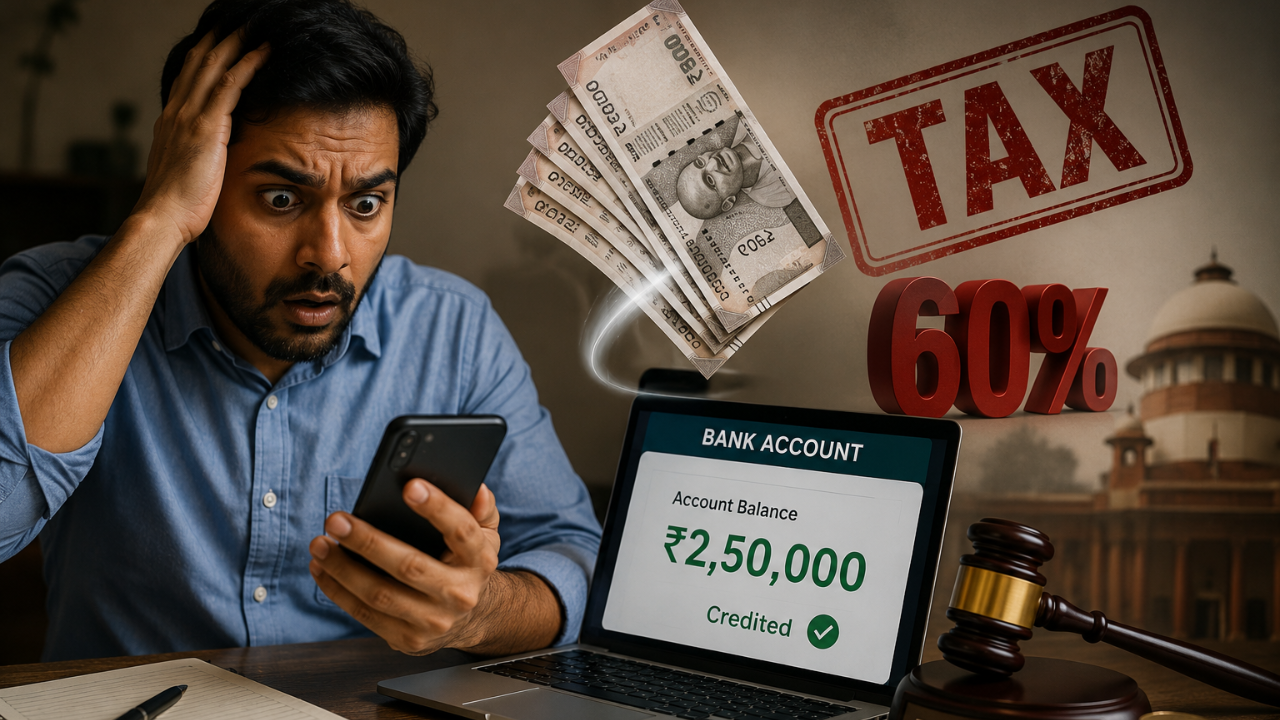
Money in the bank account by mistake? Don’t be flattered; One mistake and a huge penalty slapped with a direct 60% tax!

- Tax liability immediately as the amount is collected
- What do Tax Partners say in such a situation?
- Strict Provisions and Penalties of Income Tax Department:
Accidental Money In Account: Wouldn’t you be happy if some money suddenly gets transferred to your bank account! But this can be a shock for you. When an amount is unexpectedly deposited in a bank account, people often get confused as to whether the amount is taxable or not and what immediate steps should be taken in this regard. According to some experts, mere accidental deposit of money in an account does not immediately create Tax Liability; But, if the account holder uses the money even though he knows it is not his, it can lead to serious legal complications. Let’s learn about it in detail today.
Despite Ayushman Card, not getting free treatment for diseases? ‘These’ facilities are outside the scheme; Know the rules beforehand
Can the amount received by mistake be taxable?
As per income tax laws, tax is primarily levied only on the taxpayer’s own income. Especially on income earned through salary, business, gifts or other legitimate sources. However, if an amount is mistakenly credited to the account due to a banking error, the amount is not treated as ‘taxable income’; However, the recipient has no legal right to such amount.
What do Tax Partners say in such a situation?
In this context, ‘N.A. Gopal Bohra, tax partner at Shah Associates, explained that tax is payable only when the amount actually belongs to the taxpayer. In other words, if an amount is mistakenly credited to the account i.e. erroneous credit and the taxpayer immediately informs the bank in writing about the same, he cannot be held liable for tax on that amount.
Initially, it is the tax payer’s responsibility to explain in detail the nature of the accumulated amount to the tax authorities.
Strict Provisions and Penalties of Income Tax Department:
As per Section 69A of the ‘Income Tax Act, 1961’, if a taxpayer fails to explain satisfactorily the source of funds from him, the amount is treated as Deemed Income for that particular financial year. But in such case, that amount is taxed at the rate of 60 per cent; Apart from this tax, applicable surcharges and education cess are also payable.
What should you do immediately if an unexpected deposit occurs?
Kunal Sawani, partner at Cyril Amarchand Mangaldas, along with other experts, advises that if money gets deposited into your account, you should strictly avoid trying to spend or transfer the money.
Conversely, you should notify your bank immediately in writing or by email and note the Complaint Reference Number. Not only this, but if the identity of the sender can be traced, arrangements should be made to recover the amount as soon as possible through proper banking channels.
Tax increases abroad, but why does the impact fall on our pockets? What exactly is the game of Import Duty? Let’s understand

Comments are closed.