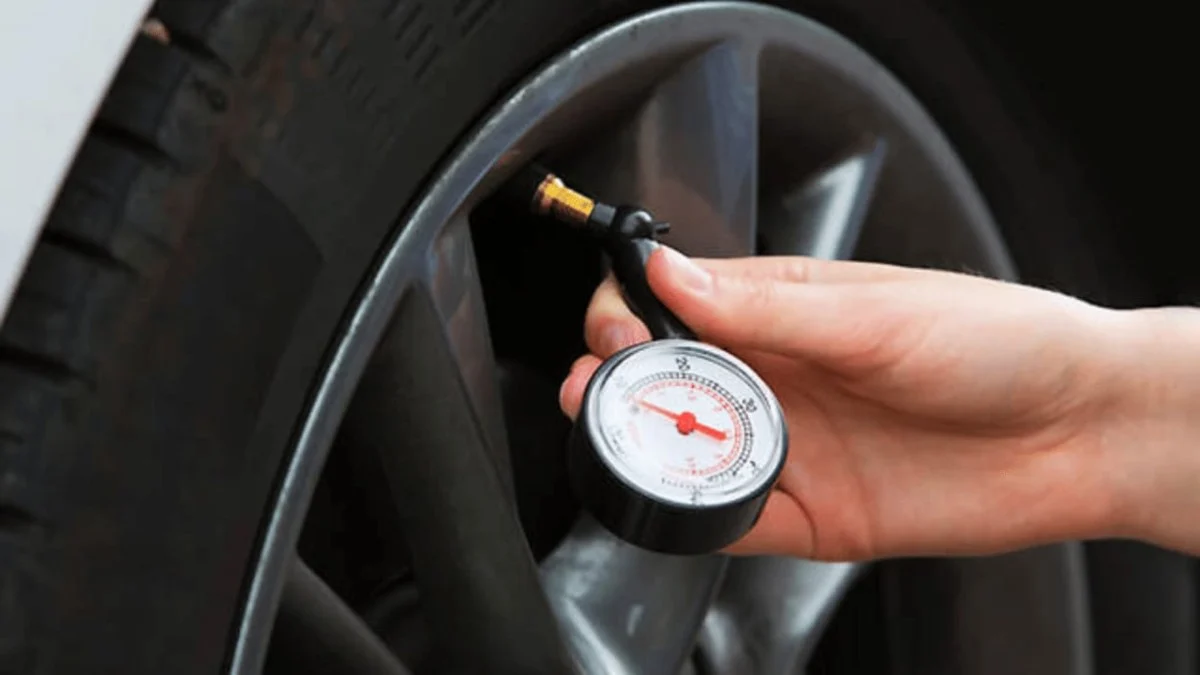
Automoblie Desk – Monsoon Car Care: Driving on the roads during rainy days is no less than a challenge. Due to waterlogging, mud and slippery roads, the risk of accidents increases manifold. In such weather, most drivers check their car’s wipers, brake lines and lights, but forget to pay attention to the condition of the wheels i.e. tyres. While the truth is that only the tyres make direct contact between the road and your vehicle. Maintaining the correct tyre pressure is very important for a safe journey on wet roads.
How much tyre pressure should be maintained during monsoon?
This question often arises in people’s mind whether tyre pressure should be increased or decreased during the rainy season? According to automobile experts, no matter what the weather is – summer, winter or monsoon – you should always follow the tyre pressure recommended by the vehicle manufacturer (OEM). The air pressure standard is different for every vehicle. The exact information about the correct tyre pressure for your car can be found on the sticker on the B-pillar of the driver’s side door, inside the fuel lid or in the car’s owner’s manual. Adjusting the air pressure on your own according to the weather can be harmful.
Disadvantages of over-inflation
Some people believe that over-inflating the tyres gives better mileage, but this habit can prove to be dangerous during monsoon. When the tyres are over-inflated, only the middle part of the tyre touches the road. This reduces the contact area between the tyre and the road considerably. During rains, a thin layer of water accumulates on the road. In such a situation, over-inflated tyres are not able to get proper grip on the road. As a result, the risk of the vehicle skidding increases significantly while taking sharp turns or when braking suddenly.
Under-inflation is also dangerous.
Many drivers have the misconception that underinflating tires during rain will increase their width and improve road grip. This belief is completely wrong. Underinflated tires put excessive pressure on the sidewalls, causing rapid and uneven tire wear. Furthermore, underinflation puts more load on the engine, reducing fuel economy. Underinflated tires overheat during long journeys, increasing the risk of sudden blowout.
Correct tread depth prevents aquaplaning
Just checking the air pressure is not enough, it is equally important to check the grip of the tyres and the condition of the tread (grooves made on the rubber). These grooves made on the tyres work to drain out the water accumulated on the road. If the tyres of your car are worn out too much and their tread depth has reduced, then the car may become a victim of ‘Hydroplaning’. Aquaplaning is a situation when a layer of water comes between the tyre and the road and the control over the steering and brakes of the car is completely lost. Therefore, worn out tyres should be replaced immediately.
Essential tips for monsoon driving
Regular pressure check: Check cold tyre pressure (when the vehicle has been parked for at least 3 hours or driven less than 2 km) at least twice a month.
Checking before a long trip: Before travelling a long distance, check the pressure and physical condition of all tyres, including the spare wheel.
Use of nitrogen air: If possible, fill your tyres with nitrogen instead of normal air, as it is not easily affected by temperature changes and the pressure remains constant.