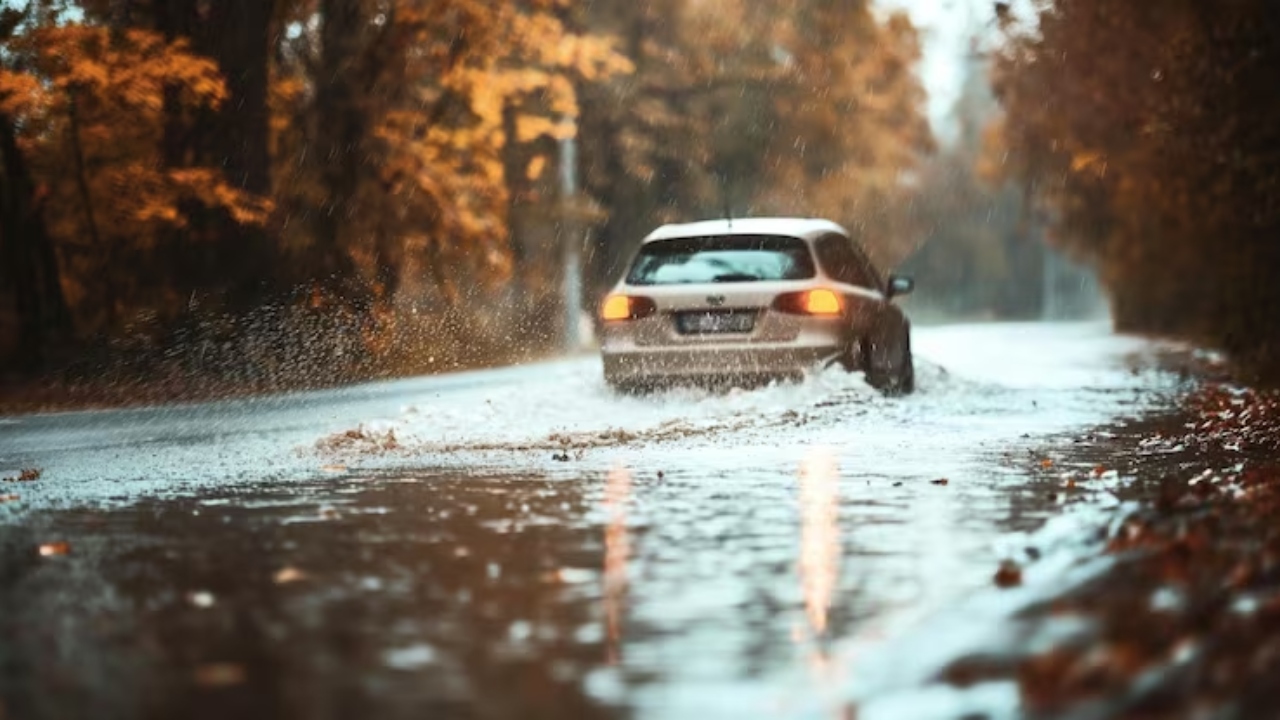
Avoid Driving at High Speeds
It should be noted that during rain, a layer of water forms on the road, which can reduce the grip of tires. This increases the risk of the car skidding if you brake suddenly or turn at high speed. Therefore, always drive at a low and controlled speed during the monsoon. It is also important to maintain a greater distance from the vehicle ahead than usual so that you have enough time in case of sudden braking.
Avoid Waterlogged Roads
Waterlogging on roads is a common problem after rain. However, it is difficult to judge the depth of a pothole just by looking at the water. Driving through heavy water can cause water to reach the engine or other vital electrical components, causing significant damage. Therefore, choose a road with less water. If the depth of the water is uncertain, it’s wiser to take another route rather than risking it.
Pay Attention to Lights and Indicators
During rainy weather, cloudy skies can reduce light even during the day. Visibility is further reduced during heavy rain. Keeping your headlights on can make your car easily visible to other drivers. Always use your indicators when changing lanes or turning. Also, carefully check your mirrors and surrounding traffic before changing directions.
Don’t Neglect the Condition of Your Tires
Tires play a crucial role in car safety during the monsoon season. Worn tires can lose grip on wet roads, affecting braking and control. Be sure to check your tire tread depth, air pressure, and overall condition before the rainy season. If your tires are significantly worn, it’s best to replace them promptly. With the right speed, good grip and caution, monsoon drives can be made quite safe.