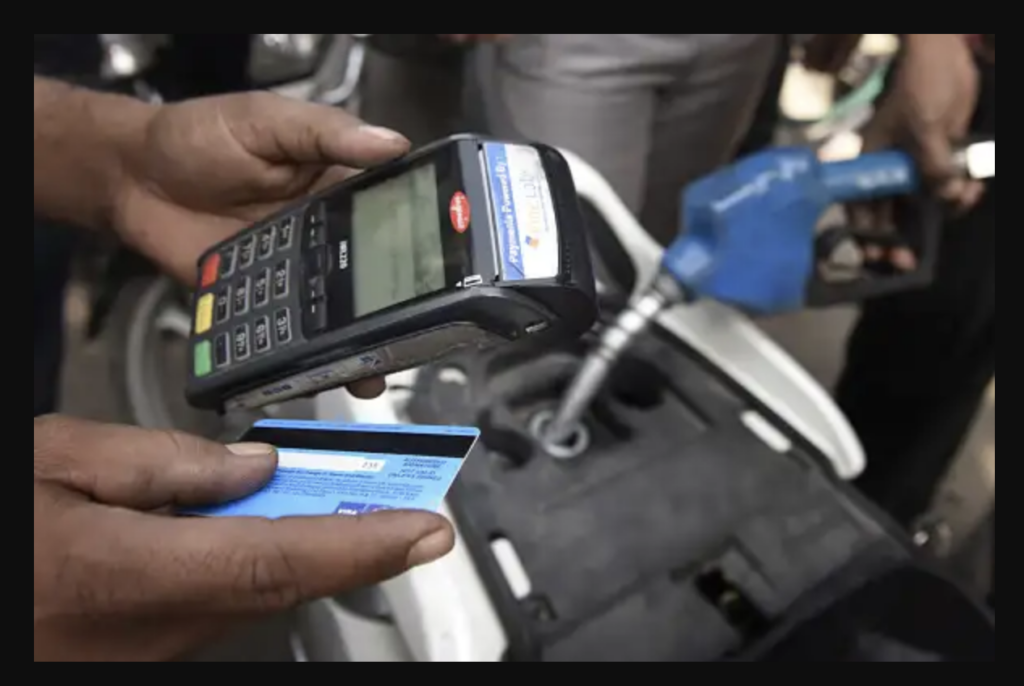
Petrol pump dealers across Madhya Pradesh have announced that they will stop accepting UPI payments above Rs 2,000 from October 16. The decision comes in response to the new Merchant Discount Rate, or MDR, that will apply to certain high-value UPI merchant transactions.
The move could affect thousands of motorists, particularly those who regularly use UPI to pay for larger fuel purchases.
Why Are Petrol Pumps Stopping UPI Payments?
The Madhya Pradesh Petroleum Dealers Association says petrol pump operators work on very narrow profit margins and cannot absorb the additional cost of processing high-value UPI transactions.
Under the new framework, eligible UPI transactions above Rs 2,000 will attract an MDR. Petrol dealers have therefore decided to restrict UPI payments above this threshold unless the government provides an exemption.
The association has already approached the authorities seeking relief.
Dealers Say Their Margins Are Too Low
According to the association, petrol pump dealers earn a profit margin of around 0.5%.
Association president Ajay Singh said that, on average, around 100 customers at each petrol pump make transactions above Rs 2,000 every day.
Based on this estimate, dealers calculate that an individual petrol pump could face an additional cost of around Rs 590 per day, or approximately Rs 17,700 per month.
Dealers argue that absorbing this expense would significantly affect their already narrow margins.
UPI Payments Above Rs 2,000 To Be Stopped
From October 16, customers visiting participating petrol pumps in Madhya Pradesh will not be able to make UPI payments exceeding Rs 2,000.
This means someone purchasing Rs 3,000 or Rs 5,000 worth of fuel may need to use another payment method.
The restriction specifically concerns UPI payments above Rs 2,000. Smaller UPI transactions will continue to be accepted.
Credit And Debit Cards Will Remain Available
Customers will still have alternatives for larger fuel purchases.
Petrol pumps will continue accepting debit and credit cards without the Rs 2,000 restriction, according to the dealers’ association.
Cash will also remain an option for customers who do not want to use cards.
This means the change does not make petrol pumps cash-only. It specifically limits high-value UPI payments.
Dealers Want UPI To Get An Exemption
Petrol pump dealers are asking the government to extend the existing MDR exemption applicable to certain card transactions to UPI payments as well.
They argue that fuel retailers should receive similar treatment because of their regulated margins and the essential nature of fuel sales.
The association has approached the State-Level Coordinator and is seeking intervention before the October 16 deadline.
Other States Are Also Raising Concerns
The issue is not limited to Madhya Pradesh.
Petrol pump dealers in Punjab have also announced plans to stop accepting UPI payments above Rs 2,000 from October 16 unless they receive an exemption.
Petroleum dealers in Maharashtra have separately urged the Centre to exempt fuel transactions from the new MDR framework.
This means the dispute could potentially expand beyond Madhya Pradesh if similar restrictions are adopted by dealer associations in other states.
What Does This Mean For Customers?
For motorists in Madhya Pradesh, the most important change is that UPI will no longer be available for fuel purchases above Rs 2,000 at participating petrol pumps from October 16, unless the policy changes before then.
Customers making larger purchases will need to carry cash or use a debit or credit card.
The development also highlights the wider impact of India’s new UPI MDR framework. While consumers are not being directly charged for using UPI, merchants in certain categories are facing new transaction costs, prompting some businesses to reconsider whether they can continue accepting high-value UPI payments.
Summary
Petrol pump dealers across Madhya Pradesh plan to stop accepting UPI payments above Rs 2,000 from October 16 because of the new MDR applicable to high-value merchant transactions. Dealers say their profit margins are too low to absorb the additional cost. Customers will still be able to pay larger fuel bills using cash, debit cards or credit cards.