
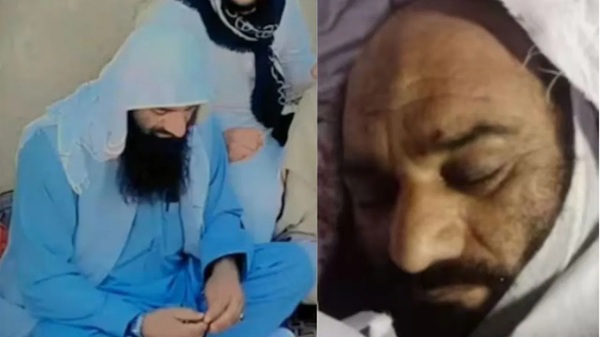
Mysterious Killings of Terror Operatives Continue in Pakistan, Close Aide of Hafiz Saeed Shot Dead

A series of mysterious killings targeting wanted terrorists and their handlers has been unfolding in Pakistan over the past few years. The latest victim is Sheikh Yusuf Afridi, a key figure associated with Lashkar-e-Taiba (LeT).
Latest Incident: Killing of Sheikh Yusuf Afridi
Afridi, a close associate of Hafiz Saeed—the mastermind behind the 2008 Mumbai attacks—was shot dead on April 26, 2026, in Landi Kotal, located in Pakistan’s Khyber Pakhtunkhwa province.
Unidentified gunmen opened fire on him, killing him on the spot before fleeing the scene.
Who Was Yusuf Afridi?
Afridi was a senior operative in LeT’s regional network in Khyber Pakhtunkhwa. He played a key role in recruitment and coordination of militant activities.
He was reportedly linked to Jamaat-ud-Dawa and belonged to the Zakha Khel tribe. He was also associated with the Salafi (Ahl-e-Hadith) ideology.
Attack on Senior LeT Leader Amir Hamza
Just a week before Afridi’s killing, Amir Hamza—a co-founder of LeT and one of its top leaders after Hafiz Saeed—was critically injured in a shooting in Lahore.
Hamza has been linked to operational planning and propaganda in multiple attacks against India.
Rising Fear Among Terror Networks
These incidents are part of a broader pattern. Since 2023, over 20 high-profile militants listed among India’s most wanted have been killed in similar “unknown attacker” incidents across Pakistan.
Some notable cases include:
- Adnan Ahmed alias Hanjla – killed in Karachi
- Akram Ghazi – killed in Khyber Pakhtunkhwa
- Khwaja Shahid – found beheaded in Pakistan-occupied Kashmir
- Shahid Latif – killed in Sialkot
Additionally, figures linked to Jaish-e-Mohammed and Hizbul Mujahideen have also been targeted.
Common Pattern in Attacks
A consistent pattern has emerged in these killings:
- Attackers often arrive on motorcycles
- They conduct prior surveillance
- Shoot targets in public places or near mosques
- Escape quickly without claiming responsibility
Possible Reasons Behind the Killings
While no theory has been officially confirmed, several explanations are being discussed:
1. Internal Rivalries:
Conflicts over funding, territory, and influence among militant groups—such as tensions involving Tehrik-i-Taliban Pakistan (TTP)—could be driving these killings.
2. ISI “Clean-up” Theory:
Some experts suggest that Inter-Services Intelligence (ISI) may be eliminating operatives under pressure from global watchdogs like Financial Action Task Force (FATF).
3. Local Feuds:
Personal disputes, tribal rivalries, and property conflicts may also play a role.
Growing Insecurity Among Militants
The attack on a high-profile figure like Amir Hamza in Lahore—a heavily secured urban center—has sent a strong signal. Terror operatives are reportedly living in fear, believing their safe havens are no longer secure.
Conclusion
Regardless of the cause, one thing is evident: Pakistan, long seen as a safe haven for anti-India militants, is increasingly becoming dangerous for them.
Meanwhile, Hafiz Saeed remains imprisoned in Lahore’s Kot Lakhpat Jail since 2019. The systematic targeting of his close associates reflects growing instability and fear within militant networks.

Comments are closed.