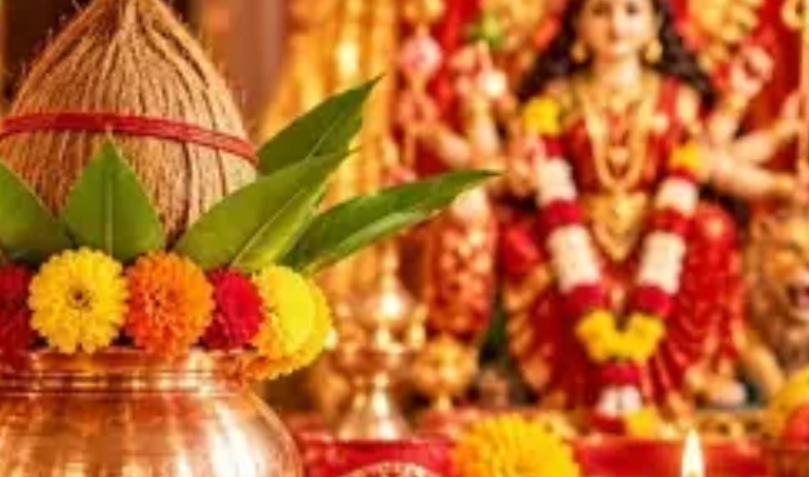
Sharad Navratri is a festival dedicated to the nine divine forms of Goddess Durga. On the third day, devotees worship Maa Chandraghanta, the third manifestation of the Goddess, who is traditionally associated with courage, strength, protection and freedom from fear.
In 2026, the third day of Sharad Navratri falls on Tuesday, October 13. According to the Hindu calendar, this day corresponds to Shukla Paksha Tritiya. Devotees observe the occasion through prayers, offerings, mantra chanting and other traditional rituals. <Cite refs={[“turn490564search0″,”turn490564search7”]}/>
Navratri Day 3, 2026: Important Details
- Date: Tuesday, October 13, 2026
- Navratri day: Day 3
- Goddess: Maa Chandraghanta
- Tithi: Ashwin Shukla Tritiya
- Colour of the day: Red
- Traditional offering (bhog): Milk, kheer and milk-based sweets
- Main mantra: Om Devi Chandraghantayai Namah
- Symbolic qualities: Courage, strength, peace and protection
The traditional colour associated with the third day in the 2026 Navratri calendar is red. Devotees who follow the daily colour tradition may wear red clothing or decorate their place of worship with red flowers. <Cite refs={[“turn490564search0″,”turn490564search11”]}/>
Who Is Maa Chandraghanta?
Maa Chandraghanta is worshipped as the third form of Goddess Durga during Navratri. Her name comes from the crescent moon shaped like a bell that adorns her forehead.
In traditional depictions, the Goddess has ten hands carrying various weapons and sacred objects, and she rides a lion or tiger. Her appearance represents the combination of divine strength and compassion.
According to Hindu religious beliefs, Maa Chandraghanta protects her devotees from fear and adversity. Her worship is associated with courage, inner confidence and the strength to face difficult circumstances.
Devotees pray to the Goddess for peace in their homes, strength during challenging times and the ability to overcome personal obstacles.
Why Is Red the Colour of Navratri Day 3?
Red is traditionally associated with energy, courage, strength and devotion. During the third day of Navratri, devotees may incorporate red into their clothing, flowers or decorations as an expression of their faith.
Wearing red is a customary observance rather than a compulsory religious requirement. Devotees can follow their family traditions and personal preferences while offering prayers.
Maa Chandraghanta Mantra
Devotees can chant the following mantra during morning or evening worship:
Om Devi Chandraghantayai Namah.
The mantra is traditionally recited as an expression of devotion and a prayer for courage, peace and protection. Those who follow a regular chanting practice may repeat it 108 times using a prayer rosary.
Maa Chandraghanta Dhyana Mantra
Pindaja Pravararudha Chandakopastrakairyuta.
Prasadam Tanute Mahyam Chandraghanteti Vishruta॥
This traditional devotional verse describes Maa Chandraghanta as a powerful form of the Goddess who rides her divine vehicle and carries weapons while blessing her devotees.
What Bhog Is Offered to Maa Chandraghanta?
Milk and sweets prepared from milk are traditional offerings associated with Maa Chandraghanta. Devotees may prepare simple, vegetarian offerings at home, according to their family customs.
Common bhog options include:
- Milk
- Rice kheer
- Milk-based sweets
- Fresh fruits
- Mishri
- Other suitable vegetarian prasad
After the puja, the offering may be distributed among family members as prasad. Cleanliness, sincerity and devotion are central to the observance.
Maa Chandraghanta Puja Vidhi at Home
Devotees can follow these simple steps to worship Maa Chandraghanta on the third day of Navratri.
- Clean the puja area: Begin the day with a bath and prepare a clean place for worship.
- Arrange the Goddess’s image: Place a picture or idol of Maa Chandraghanta at the prayer area.
- Light a diya: Light a traditional lamp and incense, following your household’s customs.
- Offer flowers and kumkum: Present flowers, roli or kumkum, and akshat as part of the puja.
- Offer bhog: Present milk, kheer, fruits or another suitable vegetarian offering.
- Chant the mantra: Recite “Om Devi Chandraghantayai Namah” with devotion.
- Read devotional prayers: You may recite the Durga Chalisa or other prayers traditionally followed in your family.
- Perform aarti: Conclude the worship with Maa Durga’s aarti and distribute prasad.
There is no need to make the ritual elaborate if circumstances do not allow it. Devotees can follow a simple prayer routine that respects their family traditions.
The Spiritual Significance of Maa Chandraghanta Puja
Maa Chandraghanta represents the strength to face challenges without losing inner balance. Her traditional symbolism reminds devotees that courage and compassion can exist together.
On the third day of Navratri, devotees can use the occasion to reflect on overcoming fear, practising patience and approaching difficulties with determination.
May Maa Chandraghanta bless everyone with courage, peace, strength and wisdom.
Disclaimer: This article describes traditional Hindu religious beliefs and practices for general information. Rituals and customs may vary by region, community and family tradition.