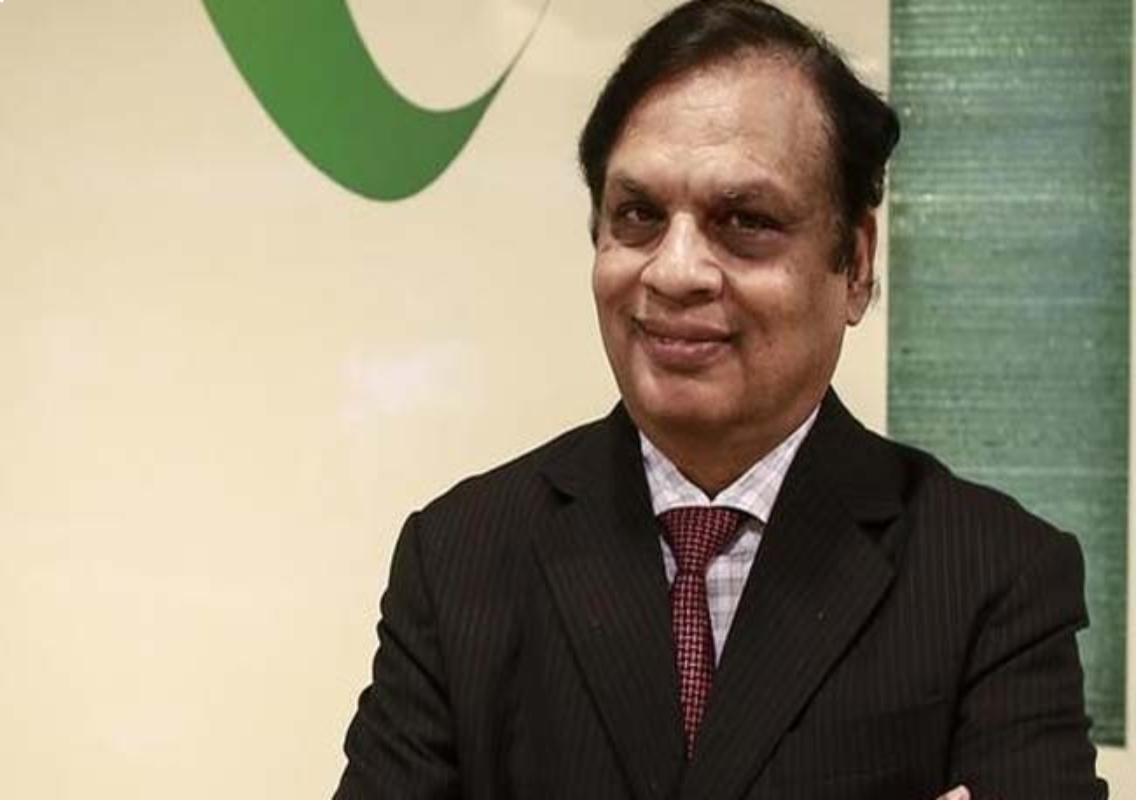
Mumbai: The National Company Law Tribunal (NCLT), Mumbai, has declared former Videocon Industries promoter Venugopal Nandlal Dhoot bankrupt over outstanding dues of ₹12,668.06 crore owed to the State Bank of India (SBI). The decision follows the rejection of a repayment proposal submitted by Dhoot, bringing his personal insolvency resolution process to an end and allowing the bank to pursue bankruptcy proceedings against him.
The tribunal passed the order on November 5, 2026, after considering SBI’s bankruptcy petition under Section 123 of the Insolvency and Bankruptcy Code (IBC), 2016. The outstanding amount includes interest and penalties calculated up to September 30, 2026.
A bench comprising Judicial Member Vinay Goel and Technical Member Charanjeet Singh Gulati admitted the petition, stating that it complied with the requirements prescribed under the IBC.
The NCLT also appointed insolvency professional Asish Narayan as the bankruptcy trustee. Dhoot’s estate will now vest in the trustee for administration and distribution among creditors in accordance with the provisions of the law.
The order represents a significant development in the long-running insolvency proceedings involving the Videocon Group and its former promoter.
SBI dues exceed ₹12,668 crore
The bankruptcy proceedings arise from loans extended by SBI and its erstwhile associate banks to Videocon Industries and other group-related businesses.
Venugopal Dhoot had furnished personal guarantees for credit facilities provided to Videocon Industries. These included rupee term loans, facilities originally extended to Videocon Telecommunications Ltd. (VTL) and working capital borrowings.
Following defaults on the loans, SBI invoked Dhoot’s personal guarantees through demand notices issued on February 2 and February 20, 2018.
According to SBI’s petition, the total outstanding liability of ₹12,668.06 crore comprised three major components:
| Loan facility | Outstanding amount |
|---|---|
| Rupee term loan | ₹9,322.10 crore |
| Videocon Telecommunications facility | ₹1,437.76 crore |
| Working capital facility | ₹1,908.19 crore |
| Total | ₹12,668.05 crore |
The figures above are rounded from the individual amounts reported. The petition’s overall admitted claim was ₹12,668.06 crore.
The liability includes interest and penalties, making it substantially larger than the original credit facilities.
The personal guarantees are central to the proceedings because they provide the legal basis for SBI to pursue Dhoot personally for obligations connected with the loans extended to the Videocon companies.
Videocon Group entered insolvency proceedings in 2018
The financial difficulties of the Videocon Group led to corporate insolvency proceedings several years before the latest bankruptcy order.
Videocon Industries was admitted to the Corporate Insolvency Resolution Process (CIRP) on June 6, 2018, following a petition filed by SBI.
The insolvency proceedings were subsequently consolidated with those involving 12 other Videocon Group companies.
The objective of the corporate insolvency process was to identify a resolution plan that could address the group’s financial liabilities and provide a route for the businesses to be taken over or restructured.
On June 8, 2021, the NCLT approved a resolution plan submitted by Twin Star Technologies Ltd. for the Videocon Group.
However, Dhoot challenged the approval before the National Company Law Appellate Tribunal (NCLAT). The appellate tribunal dismissed his appeal on January 5, 2022.
Although the corporate insolvency process resulted in the approval of a resolution plan for the group, SBI continued to pursue the separate personal insolvency proceedings against Dhoot because of his guarantees.
This distinction is important: the insolvency resolution of a company and the personal bankruptcy of an individual guarantor are separate legal processes under the IBC.
Dhoot’s ₹600 crore repayment proposal rejected
Before the bankruptcy order, Dhoot had an opportunity to propose a repayment arrangement through the personal insolvency resolution process.
SBI initiated personal insolvency proceedings against him under Section 95 of the IBC. The NCLT admitted the application on April 8, 2026, and commenced the personal insolvency resolution process.
During these proceedings, Dhoot proposed repaying ₹600 crore over 36 months.
The proposal was linked to a proposed real estate development project in Siliguri, West Bengal. The expected repayment was to be funded through the development and associated cash flows from the project.
However, the proposed amount represented only approximately 0.42% of the admitted dues, according to the tribunal order.
The resolution professional also identified significant concerns regarding the proposal.
The plan had not been prepared in consultation with the resolution professional, as required under Section 105 of the IBC. Its implementation depended on several uncertain factors, including future property development, regulatory approvals and cash flows that could not be independently verified.
Another important concern was the absence of any upfront payment.
Creditors consequently declined to approve the proposal, leaving the repayment arrangement without the necessary support.
On July 17, 2026, the NCLT rejected the repayment plan under Section 114 of the IBC and terminated Dhoot’s personal insolvency resolution process.
The tribunal’s decision allowed creditors to proceed with bankruptcy proceedings under the applicable provisions of the Code.
SBI files bankruptcy petition against Dhoot
Following the rejection of the repayment proposal, SBI moved ahead with the next stage of the legal process.
The bank filed its bankruptcy petition on September 24, 2026, within the prescribed three-month period following the NCLT’s order terminating the personal insolvency resolution process.
The petition was filed under Section 123 of the IBC.
After examining the application, the Mumbai bench of the NCLT admitted it on November 5, 2026.
The tribunal stated that the petition fulfilled the statutory requirements and considered it appropriate to admit the application.
This order formally moves Dhoot’s case from the personal insolvency resolution stage to bankruptcy proceedings.
The decision also gives the appointed trustee responsibility for administering the individual’s estate and dealing with creditors’ claims in accordance with the law.
Bankruptcy trustee appointed to administer Dhoot’s estate
The NCLT appointed insolvency professional Asish Narayan as the bankruptcy trustee.
Under the tribunal’s directions, Dhoot’s estate will vest in the trustee immediately for administration and distribution among creditors.
The trustee will be responsible for carrying out several statutory duties.
These include:
- Obtaining Dhoot’s statement of financial position within seven days of the order.
- Notifying creditors within 10 days.
- Issuing a public notice inviting claims from creditors.
- Administering the estate in accordance with the IBC.
- Distributing available assets among creditors according to the applicable legal framework.
- Submitting a preliminary report to the NCLT and the committee of creditors within 90 days of the bankruptcy commencement date.
- Filing quarterly progress reports thereafter.
The statement of financial position is particularly important because it provides information about the individual’s financial circumstances, including assets and liabilities.
The trustee’s responsibility will be to examine the estate, identify available assets, consider creditor claims and manage the distribution process in accordance with the law.
The proceedings will therefore move into a stage focused on the administration of Dhoot’s estate and the recovery process for creditors.
What the bankruptcy order means for SBI and other creditors
The NCLT’s order provides SBI with a formal route to pursue recovery through the personal bankruptcy framework.
The bank had already invoked Dhoot’s personal guarantees after the Videocon Group defaulted on its borrowing obligations. The rejection of the ₹600 crore repayment proposal meant that the creditors did not accept the proposed settlement as a viable resolution.
The bankruptcy process now places the administration of Dhoot’s estate under the appointed trustee.
However, the declaration of bankruptcy does not mean that the entire outstanding amount of ₹12,668.06 crore will automatically be recovered. Actual recovery will depend on the assets available, the claims admitted and the distribution process prescribed under the IBC.
The case also highlights the importance of personal guarantees in corporate lending. Promoters and other individuals who provide guarantees for company loans may face personal financial consequences when the borrowing company defaults.
For banks, such guarantees can provide an additional legal avenue for recovery beyond proceedings against the corporate borrower.
The Videocon case is a significant example of how corporate insolvency proceedings can extend into separate personal insolvency and bankruptcy actions against guarantors.
With the NCLT appointing a bankruptcy trustee, the focus will now shift towards identifying and administering Dhoot’s estate and distributing available assets among creditors under the law.