Nepal’s flood death toll has risen to 1,355, with 4,996 people still missing, including 589 foreign nationals. Rescue teams continue operations, while authorities struggle to identify bodies. India and China are assisting, as Nepal also seeks to protect tourism
Published Date – 7 September 2026, 05:10 PM
Kathmandu: The death toll from the devastating flash floods in Nepal surged to 1,355 on Monday as more bodies were recovered from the affected areas, authorities said.
Rescue teams continued to search for 4,996 people, including at least 589 foreign nationals, who remain missing, while 13,396 people have been rescued so far, Nepal’s National Disaster Risk Reduction and Management Authority (NDRRMA) said.
The flash floods, triggered by an ice-rock avalanche near the Nepal-Tibet border on August 26, devastated towns and villages in northern and central Nepal. The Bhotekoshi River, which flows south from the Himalayan border region, carried the floodwaters downstream, sweeping away homes, vehicles, roads and bridges and damaging hydropower projects.
The disaster also killed at least 43 people on the Chinese side, while more than 500 people remain missing in Tibet, according to Chinese media reports.
In Nepal, 363 bodies have been recovered in Chitwan district, 222 in Nawalparasi East, 221 in Nawalparasi West, 197 in Nuwakot, 169 in Rasuwa, 75 in Gorkha, 70 in Dhading and 38 in Tanahu, according to the NDRRMA.
Identification of bodies has emerged as a massive challenge. Only 98 bodies had been identified as of Monday and handed over to their families, according to the NDRRMA.
Most bodies recovered after being swept downstream were severely damaged or decomposed, while some were recovered only in parts. Police have said that bodies carried far from the disaster sites and those that remained in water and mud have made identification particularly difficult.
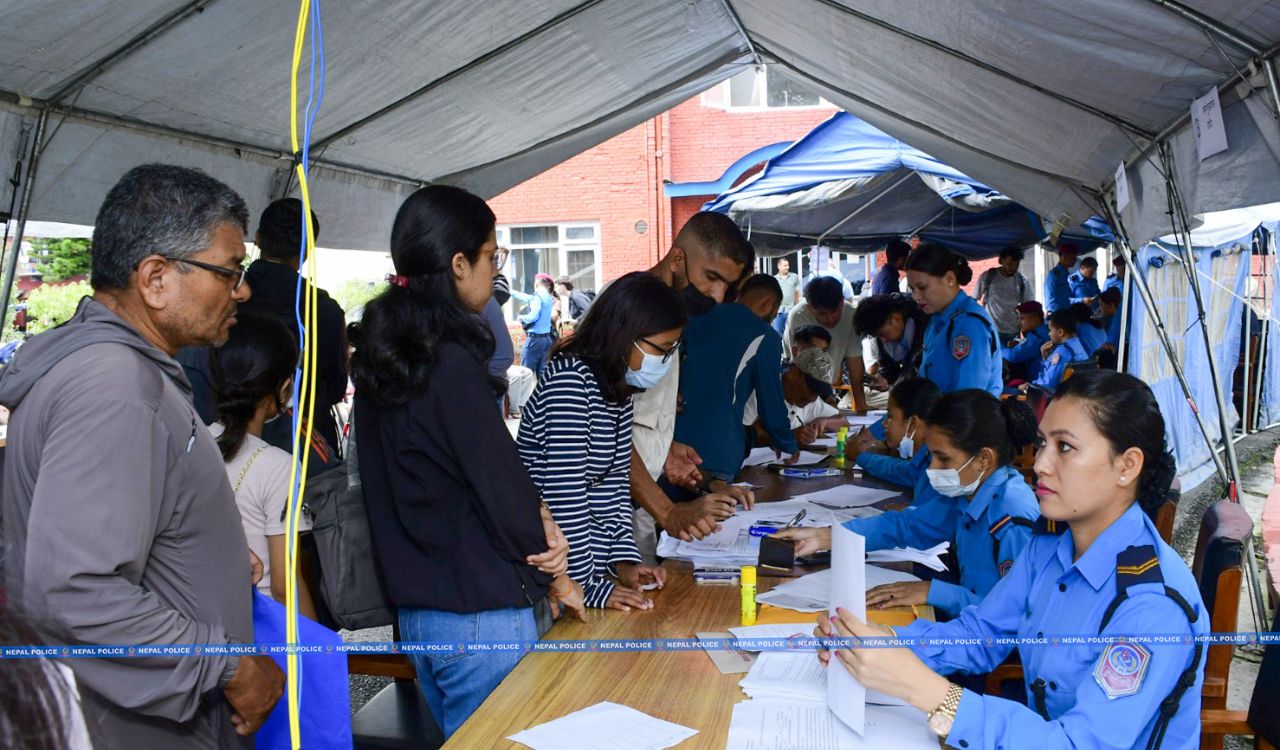
Nepal Police has been collecting DNA samples from relatives of missing people to help identify unclaimed bodies and human remains recovered after the floods. More than 1,000 unidentified bodies have been buried after DNA samples were collected to facilitate their identification in the future, officials said.
Hospitals struggled to cope with the growing number of unidentified bodies. Large crowds continued to gather at medical facilities, carrying photographs of missing relatives and scrutinising images of the dead displayed on the walls.
Nepal on Monday observed a national day of mourning on the 13th day after the disaster, as the government declared September 7 a national day of mourning to honour the victims of the catastrophic floods. The mourning was observed in keeping with the traditional Hindu practice of marking the 13th day following a death.
“Our thoughts are with the bereaved families and all those affected. India stands with Nepal in this difficult time and will continue to support Nepal’s efforts towards search, rescue and relief,” the Indian Embassy in Nepal said in a post on X.
Major rescue operations are underway at hydropower projects in flood-affected districts, where hundreds of men are believed to be trapped in tunnels.
Teams of experts from India and China are assisting their Nepali counterparts in these operations.
Australian tunnel expert Arnold Dix, who helped rescue 41 workers from India’s Silkyara tunnel in 2023, is also assisting in the search for people believed to be trapped inside the Chilime hydropower project tunnel.
Meanwhile, Nepal has stepped up efforts to reassure international tourists that the country remains open for travel, as it seeks to prevent the recent flash floods from derailing its crucial autumn tourism season and undoing a fragile recovery in the sector.
Tourism Minister Khadak Raj Poudel has launched a social media campaign under the hashtag “Nepal Calling”, telling foreign tourists that the country remains open and its Himalayan trekking routes are ready to receive visitors.
“Nepal is still open… Our Himalayan trekking routes are still waiting for you,” he said in a video message posted on social media.
Tourism contributes about 6.7 per cent to Nepal’s GDP directly and indirectly and provides more than one million jobs. A fall in the number of foreign tourist arrivals could have a wider economic impact, affecting hotels, trekking agencies, guides, porters, airlines, restaurants and transport operators.