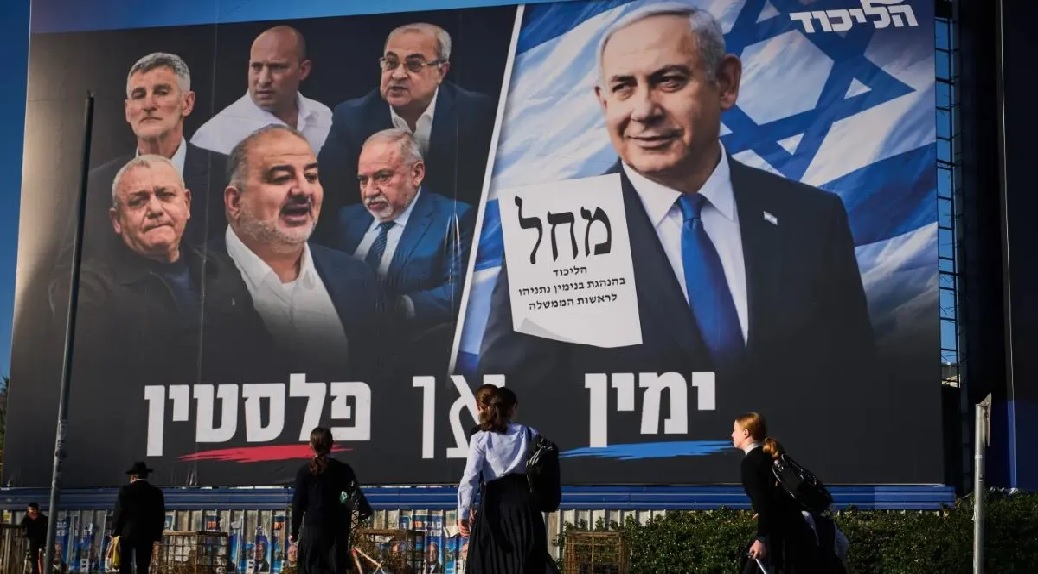
New Delhi. The eyes of the whole world are on the elections to be held in Israel next week on October 27. After the attacks led by Hamas on October 7, 2023, serious questions have been raised regarding war and security in the country. Now voters will decide whether Prime Minister Benjamin Netanyahu should be given another term or open the way for change in the country's politics. The election polls show Netanyahu's nationalist Likud party and his main rival, the centrist Yashar! led by Gadi Eysenkot! There are indications of a tough fight between the parties.
How is the government formed in Israel?
Voters in Israel do not directly elect the Prime Minister, but vote for political parties. After this the parties try to form a government by forming a coalition. The country's 120-member parliament is called the Knesset. Till now no single party has got majority in Parliament on its own. Therefore, it is necessary to gather support from different parties to form the government after the elections. This time too, alliances and mutual agreements between parties can play an important role in deciding the direction of the government.
Netanyahu is the leader who has been Prime Minister for the longest time
Benjamin Netanyahu is 77 years old and is Israel's longest serving Prime Minister. He is the head of the Likud party and has dominated the country's politics for a long time. Despite events like war, political crisis, controversies and the attacks of 7 October 2023, he has been trying to remain in power. His supporters consider his record in the fields of national security and economy important. His close relationship with US President Donald Trump is also an important issue for his supporters. Trump has also supported Netanyahu.
Netanyahu accused of security lapses and legal matters
Netanyahu's opponents say he bears responsibility for the failures in security and government policies before the October 7, 2023 attacks. He also criticizes the Prime Minister for his conduct of the war. In 2024, the International Criminal Court issued an arrest warrant against Netanyahu on charges of war crimes and crimes against humanity. Furthermore, he has been facing a legal dispute in Israel that has been going on for several years. He is facing charges of fraud, breach of trust and taking bribe. Netanyahu has denied all the allegations.
Eysenkot is a former military chief and a big rival of Netanyahu.
66-year-old Gadi Eizenkot has been a former chief of the Israeli Army. He was born into a working-class family of Jewish immigrants from Morocco. He served in the army for nearly 4 decades and gradually rose to the highest military rank. After coming into politics in the year 2022, he is now a centrist Yashar! Leading the party, which has been described as the largest opposition party in the country. His son and two nephews were also killed during fighting in Gaza following the October 7 attacks. This personal loss has also affected his political and public image.
Eizenkott has differences with Netanyahu on war strategy
Eysenkot had joined Netanyahu's war cabinet as an observer. However, he resigned after about 8 months. His allegation was that the Prime Minister did not have a clear strategy for the war. He then presented himself as a centrist alternative to Netanyahu, although his stance remains hard on security issues. Eizenkot is credited with formulating Israel's so-called 'Dahiya Doctrine'.
The 'Dahiya Doctrine' involves the use of overwhelming and disproportionate military force in areas from where fighters launch attacks. If he succeeds in forming a coalition and forming a government, he could become Israel's first Prime Minister of Mizrahi origin. The Mizrahi community includes Jews from North Africa and the Middle East. This community has historically faced discrimination from the dominant class of European origin.
Former Prime Minister and right-wing leader Naftali Bennett also in the race
Naftali Bennett, 54, is a leader with right-wing and religious views. He, along with centrist leader Yair Lapid, is leading a joint electoral alliance named 'Beykhaad' i.e. 'Together'. Bennett opposes the creation of an independent state of Palestine and supports the creation of Jewish settlements in the occupied West Bank. Before reaching the Knesset in 2013, Bennett had been Netanyahu's chief of staff. He also heads the Yesha Council, an organization of local administrative bodies within Israeli settlements. His conservative Yamina party won 7 seats. With the help of these seats, he formed a coalition with the support of leftist and Arab parties.
Differences with Netanyahu, tough stance on Palestine
Bennett took over as Prime Minister in 2021 under a power-sharing agreement. Yair Lapid was also involved in this arrangement. However, despite taking a tough stance towards the Palestinians like Netanyahu, Bennett has serious differences with him. There have been disagreements between the two leaders over decisions related to national security and Netanyahu's fight against Israel's legal system. It will also be important how much success the joint coalition of Bennett and Lapid achieves in consolidating anti-Netanyahu votes in the elections.
Radical right-wing leader Itamar Ben-Gvir also clapped
Itamar Ben-Gvir, 50, is Israel's National Security Minister. He is known for his extreme right-wing views and controversial statements. He has been convicted in several cases, including one related to supporting a terrorist organization. He heads an ultra-nationalist party called 'Otzma Yehudit', or 'Jewish Power'. The good performance of his party in the last elections had helped him get a place in the cabinet. Ben-Gvir, a lawyer by profession, gained recognition by defending in court right-wing Jewish extremists accused of violence against Palestinians.
Advocating the exodus of Palestinians and settlements in Gaza
As a teenager, Ben-Gvir was refused conscription by the army because of his extremist views. He was also a follower of Meir Kahane, a racist-minded rabbi who advocated expelling Palestinians from Israel, Gaza and the West Bank. Ben-Gvir has supported a plan for a so-called 'voluntary' exodus of approximately two million Palestinians from the Gaza Strip. He has also advocated the resettlement of Jewish settlements in Gaza. His views reflect the strict policies of the right wing in Israeli politics. The seats his party gets after the elections can affect the government's policies and the direction of Netanyahu's coalition.
Mansoor Abbas remains the voice of the Arab community
52-year-old Mansour Abbas is an Israeli leader of Palestinian-Arab origin and a dentist by profession. He comes from northern Israel and leads an Islamist party named 'Ra'am'. In the year 2021, his party became the first Arab-led party to join the Israeli government. This was an important development in Israeli politics, as it increased the role of Arab political parties in forming coalition governments.
Abbas's strategy has been to focus on local problems rather than larger and controversial issues such as the Israel–Palestine conflict. He gives priority to curbing crime in Arab communities and other issues related to the common people. He believes that in this way his party can get more seats in the Parliament and the chances of making agreements with other parties to form the government in future can increase.
Jewish leader also got an important place in Raam
Taking his strategy forward, Abbas has placed former police commander and centrist Jewish leader Yoav Segalowitz on the second position on Ra'am's electoral list. This indicates the party's efforts to focus on local issues and garner wider support. Abbas has been a member of the Knesset since 2019. After the elections, his party's seats could prove crucial for forming the government, especially if no major party gets a clear majority.
Why will the outcome of Israeli elections be important?
Israel's upcoming election is not just a battle to choose the Prime Minister, but it can also decide the country's security policy, decisions related to the Gaza war, attitude towards Palestinians and the direction of domestic politics. Netanyahu's supporters are expressing confidence in his experience and security record, while his opponents are raising issues of lapses in war management and security. Eizenkot, on the other hand, is presenting himself as an alternative leadership. The parties of leaders like Bennett, Ben-Gvir and Abbas may also play an important role in post-election coalition politics.