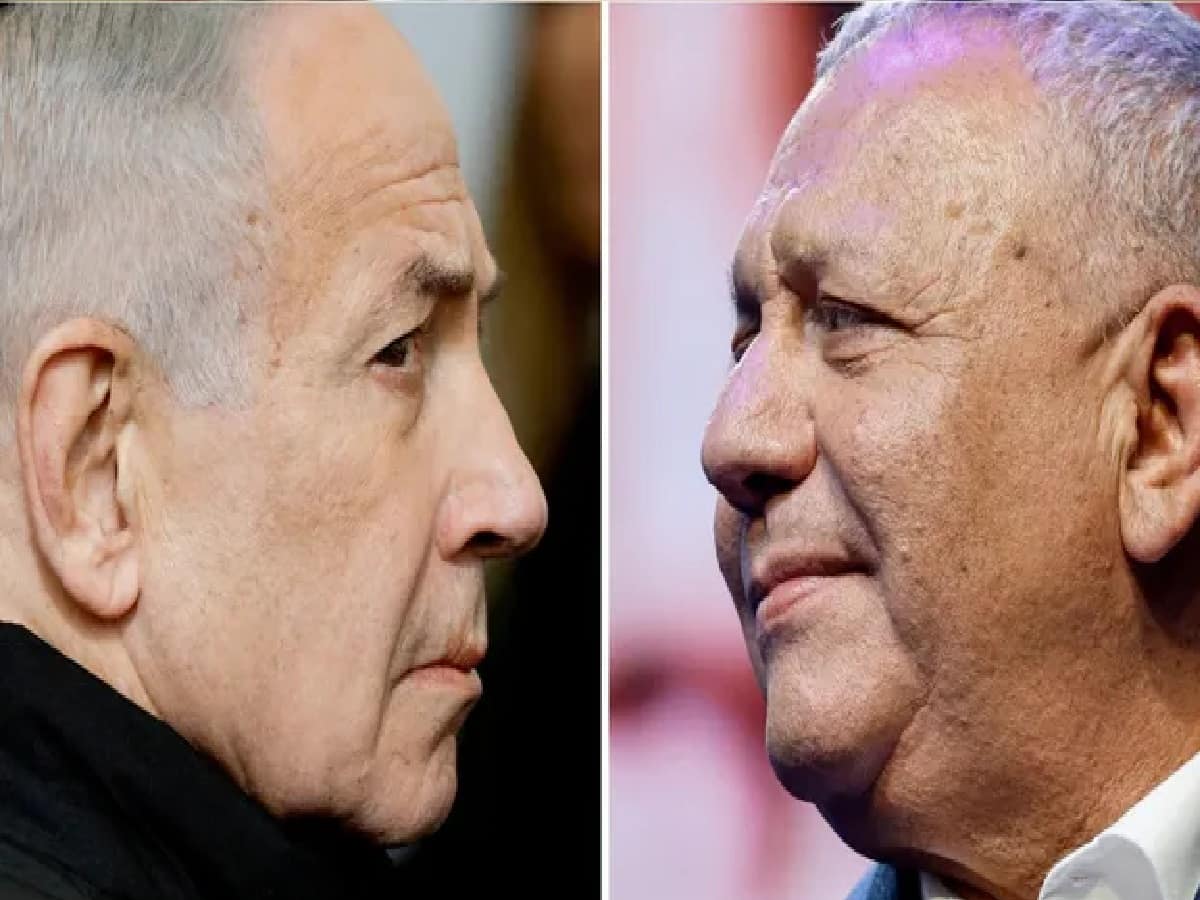
At present, a very big, sensitive and topic of discussion among the readers interested in international affairs from Tel Aviv and Jerusalem to Lucknow and Kanpur, including Uttar Pradesh and the entire country, related to the complex geo-politics of the Middle East, the deadlock in government formation in the Israeli Parliament and the new equations of power sharing is coming to the fore. Israeli politics is once again embroiled in a deep political deadlock, and a major development has come to light amid the ongoing tussle over government formation after the elections. According to the reports of Israeli media organizations 'The Times of Israel' ('The Times of Israel') and 'Channel 13' ('Channel 13'), Prime Minister Benjamin Netanyahu is preparing to make an important proposal for sharing of power to Yashar Party Chairman Gadi Eisenkot. If Netanyahu puts this proposal before Eisencott, then there can be a rotation agreement between the two leaders, under which both the leaders will be able to hold the post of Prime Minister one by one; The most surprising thing is that in this possible agreement, Netanyahu is said to be ready to become the second Prime Minister after Eisencott. Let us know in detail what is the story behind the scenes revealed in the report of the government broadcaster 'Kan', what is the majority mathematics of the Israeli Parliament and the deadline of December 6, what is the stance of Avigdor Liberman, Yair Golan and Naftali Bennett and with what conditions Gadi Eiseenkot has given a sharp reaction to the current proposal of Likud. The story behind the scenes, the majority mathematics of 61 seats in Parliament and the deadline of December 6. This proposal of power sharing has been conveyed to Gadi Aizencott through informal channels. Political analysts assess that the informal route was chosen so that Netanyahu's Likud Party could easily get away from it if necessary, while according to officials of the Prime Minister's Office, there is no unanimity regarding the terms of this proposal even within Netanyahu's close circle and the Likud Party. If we understand the mathematics of power in the Israeli Parliament (Knesset), the recent election results have not given a clear majority to any coalition, due to which political instability remains. The magic figure of 61 seats is required to form the government, while the four-party Aisencott alliance currently has 48 seats. To reach a majority, Aizencott faces the option of forming a government with the support of Arab-led parties, ultra-Orthodox parties, or both; On the other hand, Aizencott's time for government formation is ending on December 6, and if an agreement is not reached by then, he can ask the President for an additional 14 days. Doubt in the opposition camp, pressure from Naftali Bennett and three main conditions of Eisecoatl There is deep doubt in the opposition camp about this alleged proposal of Netanyahu. Yisrael Beiteinu party chairman Avigdor Lieberman warned on social media platform Eisencott has assured his allies Liberman and Democrats Party Chairman Yair Golan that they will not form a government with Netanyahu without their consent; However, the pressure within the coalition is also not less, because the Chairman of the 'Baychad' party, Naftali Bennett, has advocated forming a unity government with Likud and according to 'Channel 13', if Eizenkot forms the government without exhausting all avenues of talks with Netanyahu, then Bennett may vote against him. On the other hand, Gadi Eiseenkot himself is not convinced by Netanyahu's proposals and on Friday he clearly said that he is open to the option of a unity government, but he accused the Likud party of not taking the talks seriously, saying that only five meetings have taken place between the teams of the two parties in the last two weeks. Eiseenkot, putting forward his main conditions to Likud, has demanded the formation of a State Commission of Inquiry to investigate the security lapses that led to the Hamas attack on October 7, 2023, on which Likud is not ready, along with this he wants to exclude extremist elements from the government and discuss a law making military or national service mandatory for all citizens. Rejecting Likud's current proposal, Eiseenkot strongly stated that this is the same old government and the same old partners with no changes and no conscription law, and they will not cooperate under any such pretense, although the door is still open if Likud is ready for a serious partnership and agreement; It is clear that the real conflict in the current politics of Tel Aviv is more about lack of trust than seats, which will decide whether Israel gets a stable unity government or the country gets trapped in the political whirlpool again.