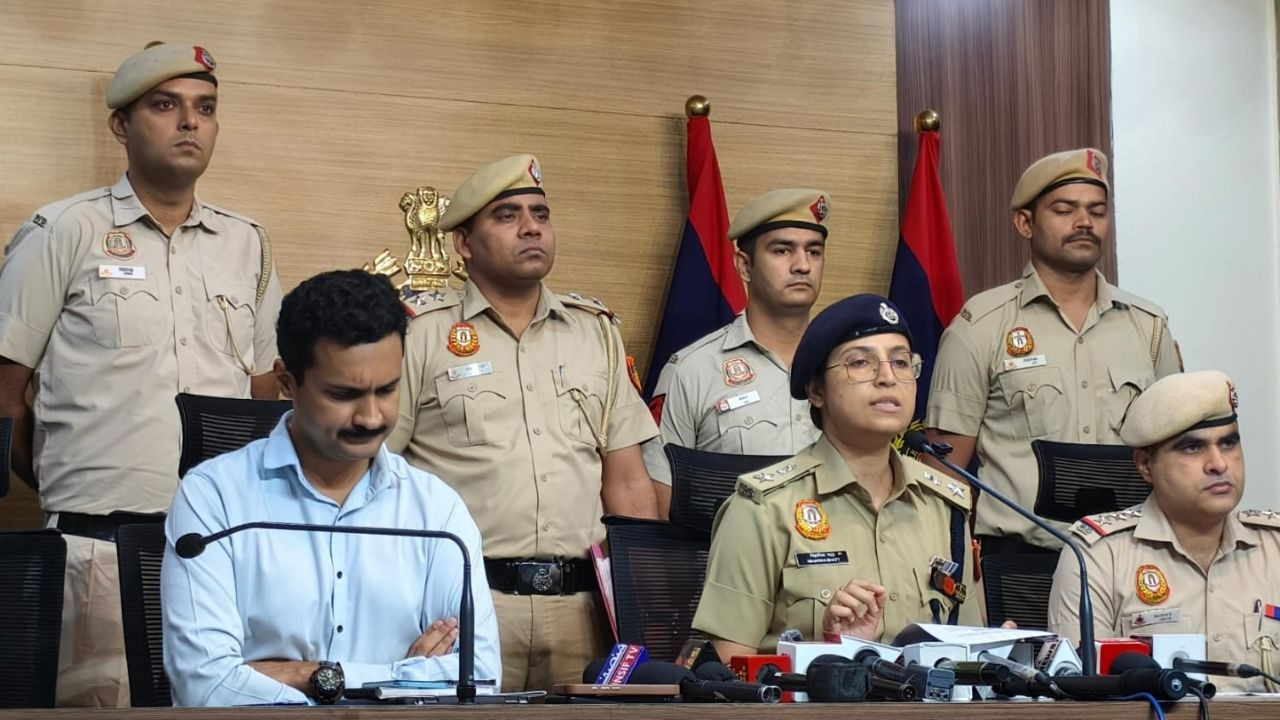
New Delhi:In the world of cyber fraud, fraudsters have now made the Common Service Center (CSC) set up for government facilities as their new weapon. Cyber North team of Delhi Police has exposed one such network and arrested three accused from three different districts of Uttar Pradesh. The accused are accused of providing bank accounts, CSC wallets and SIM cards to cyber fraudsters and diverting the defrauded amount to different accounts. During the press conference at Delhi Police Headquarters, North District DCP Niharika Bhatt said that under the supervision of Additional DCP Ram Dalesh Meena, the team of ACP Special Dhatarwal and Cyber SHO Rohit Gehlot has exposed a cyber fraud which used to target small account holders. Police investigation has so far revealed transactions worth more than Rs 2.50 crore.
DCP Niharika Bhatt said that the matter came to light when a 72-year-old man was trapped in the name of changing his name in the electricity connection. The swindler posed as an employee of an electricity connection company and sent a suspicious APK file to the elderly man’s mobile phone on the pretext of making an additional payment of just Rs 13. The name of the file was ‘Tata Power Name Change’. The old man considered it correct and installed it in his mobile. After this, Rs 1,99,003.54 was withdrawn from his Punjab National Bank account.
1.99 lakh game on the pretext of 13 rupees
According to the police, the victim had started the process of getting a solar electricity connection from Tata Power and changing the name on the old electricity connection and meter. Meanwhile, on July 18, he received a call. The caller introduced himself as involved in the name change process and said that Rs 13 would have to be paid to complete the work. After this the APK file was sent on WhatsApp. As soon as the elderly man downloaded the file and followed the instructions, cyber criminals stole his bank account. On receiving the complaint, the police started investigation by filing an e-FIR in Cyber Police Station North.
Chase for thousand kilometers, three arrests in 24 hours
The matter was not limited to fraud of just one bank account. When the police started investigating the route of money, the layers of a big network of cyber fraud started being revealed. Technical monitoring: Call detail records, IMEI of mobile, IP logs and banking transactions were examined. The police team continuously monitored about 100 suspicious mobile numbers and their associated IMEIs. The clues led to Shahjahanpur, Hardoi and Lakhimpur Kheri in Uttar Pradesh. After this, the police team traveled about 1,000 kilometers and conducted raids in three different districts and arrested three accused within 24 hours.
CSC was running the wallet in the name of one and the other was running it.
Investigation revealed that the defrauded amount first reached a CSC merchant through PayU payment gateway and then was transferred to a CSC wallet registered in the name of Ashish Kumar Janseva Kendra. According to the police, the wallet was in the name of Ashish Kumar. But he was not actually running any public service centre. During interrogation, he allegedly revealed that he had given his CSC wallet and its password to Amit Kumar.
Used to keep customers’ SIMs and then used to cheat
After the arrest of Amit Kumar, another shocking method of the network came to light. According to the police, he used to collect CSC wallets, passwords and bank accounts as well as change the mobile numbers associated with them. Investigation also revealed that some SIM cards of customers who had ported their mobile numbers were allegedly kept with them and misused. Through these SIM cards and accounts, CSC wallet was operated and the fraudulent amount was sent here and there. Amit had allegedly given the information about CSC wallet to his partner Umesh Chandra and in return he was charged five percent commission of the amount.
WhatsApp chat opened the next episode of the network
Umesh Chandra was arrested in a raid in Mandwa of Lakhimpur Kheri. During interrogation, he allegedly told that he had given the wallet information to a person named Ram Das. There was communication between the two through WhatsApp. Digital records related to WhatsApp chats and transactions have also been found from the mobile phones of the accused. The police are now trying to reach other people involved in the network through these clues.
‘Money trail’ of more than Rs 2.50 crore
When police examined the bank documents recovered from the accused, they found transactions worth more than Rs 2.50 crore from the accounts. At least five cyber fraud complaints registered in different states have been linked to these accounts. Police fear that this network is not limited to defrauding only one elderly person. It has come to light that the fraudulent amount was being forwarded through CSC Wallet through bill payment and other means. Now the remaining members of the network and the victims are being traced through forensic examination of digital devices and banking records.
Big recovery from the accused
Police have recovered five mobile phones, 20 SIM cards, nine passbooks, six checkbooks, 15 debit/credit cards and a biometric fingerprint machine from the possession of the three accused. The arrested accused have been identified as Ashish Kumar (24), Amit Kumar (23) and Umesh Chandra (37). All three hail from different districts of Uttar Pradesh and have different educational backgrounds. The police are now connecting the links of this entire network. Efforts are on to reach out to Mule account holders, CSC wallet operators, SIM suppliers, beneficiaries and other cyber fraudsters through examination of recovered mobiles, SIM cards, bank documents and digital evidence. That is, this game which started in the name of 13 rupees has reached a cyber fraud network worth crores of rupees in the investigation of the police.