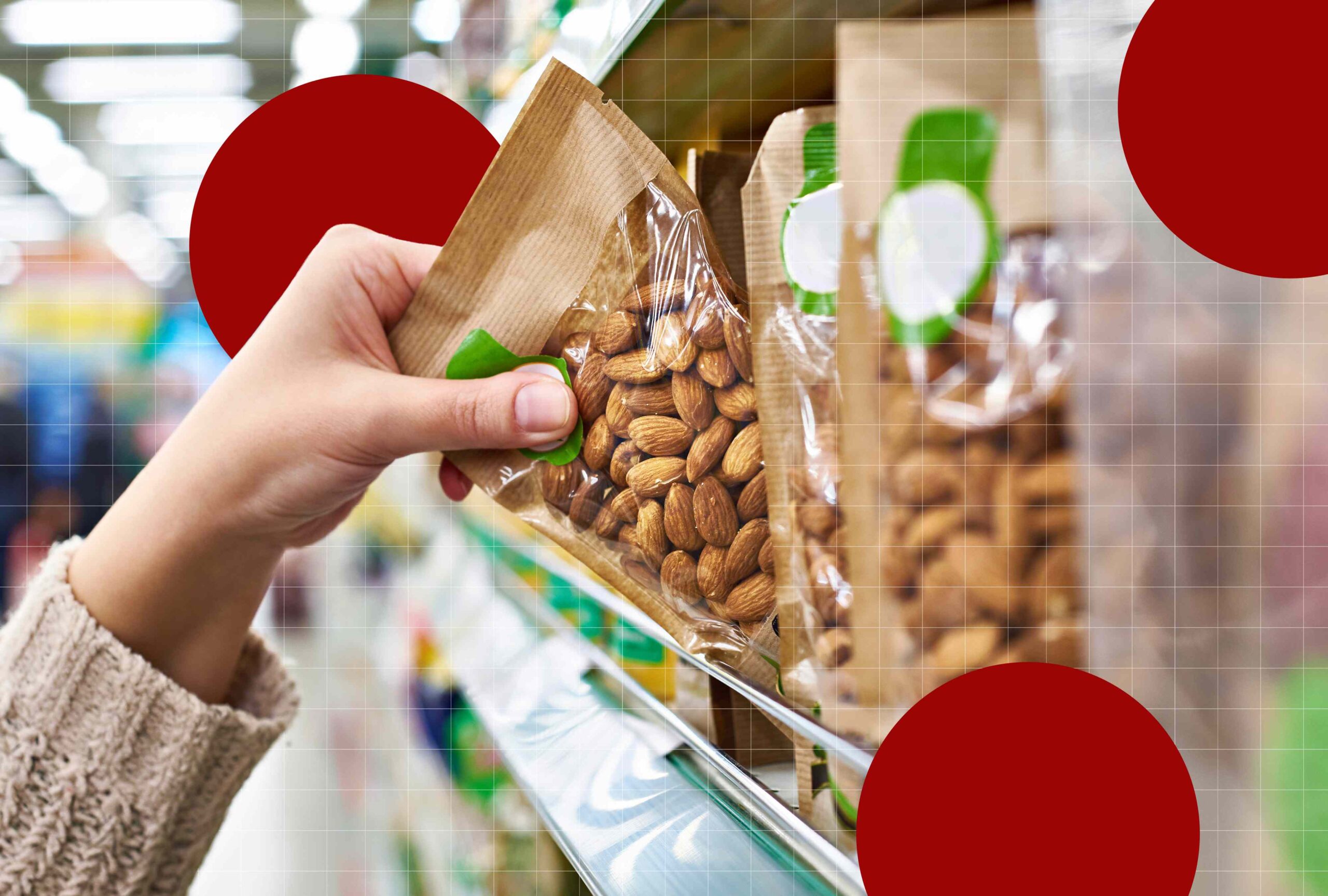
Learn what to look for when buying nuts, plus how to store them to maximize freshness.
Reviewed by Dietitian Casey Wing, RD, CD
Key Points
- Avoid nuts with a sticky or oily surface, as this signals spoilage and potential health risks.
- Store nuts in airtight containers and refrigerate or freeze them to slow oxidation and preserve freshness.
- Choose single-ingredient nuts in opaque packaging to limit exposure to light and maintain quality.
There’s nothing quite as frustrating as looking forward to a healthy snack, grabbing a handful of nuts and taking a bite only to find out that they’ve gone bad. Because many of the visual signs that nuts are no longer fresh or safe to eat can be deceptive, it can be difficult to avoid this disappointment. But we checked in with experts, who revealed an easy-to-spot red flag.
Whether you’re buying nuts at the grocery store or grabbing a bag out of your pantry, the experts say a sticky or slick exterior can signal poor quality, as well as spoilage that can pose potential health hazards—here’s why.
Why You Should Avoid Nuts with an Overly Oily Exterior
To understand why an excessively oily exterior can signal poor quality and potential health hazards, it helps to look at what makes nuts so nutritious in the first place.
“Nuts are a great source of healthy fats, fiber, magnesium and vitamin E,” says Elaina Efird, RD. “Studies conclude that adding nuts into your diet is associated with better cholesterol levels and a reduced risk of cardiovascular disease. Nuts are also a quick, grab-and-go snack and tend to be incredibly satiating due to their fiber and fat content.”
However, those healthy fats are what make nuts vulnerable to spoilage. When exposed to warmth, light and air, unsaturated fats undergo oxidation. Over time, this chemical reaction breaks down the nut’s structure, forcing natural fats to migrate to the surface. And as they degrade, they also tend to lose their crisp texture and become rubbery instead.
Here are more specific reasons why it’s best to avoid consuming nuts that show signs of excessive oil on the surface, according to the experts.
It Could Signal Rancidity
When internal fats oxidize and migrate to the surface, they don’t just ruin the flavor profile; they can also affect quality and safety. “Nuts are naturally high in fats, particularly unsaturated fats, which can oxidize over time when exposed to oxygen, heat and light,” explains Darin Detwiler, LP.D., MAEd., a leading food-safety expert. “This process, known as rancidity, produces unpleasant odors and flavors and can generate chemical breakdown products that raise concerns about food quality and potential health effects.”
It Might Indicate Nutritional Breakdown
Nuts packed in clear bags are particularly susceptible to oxidation. “Light is a catalyst for food spoilage because light photons accelerate fat degradation,” says Matthew BaronCEO of a wholesale nuts and dried fruit company. “Specifically, it breaks down the healthy unsaturated fats inside nuts, seeds and dried fruit—killing [some of] what makes these foods good for you.”
They Could Have Reduced Shelf Life
Baron says nuts processed with added vegetable or seed oils tend to deteriorate more quickly, noting that single-ingredient nut products typically have a far-out expiration date. “Look at the ingredients—you want a bag that has one ingredient,” recommends Baron, noting, “Roasted in canola oil or vegetable oil are the worst for quality, taste and shelf life.”
There’s Risk of Contamination
“Stored under improper conditions, particularly excessive moisture and humidity, nuts can support the growth of certain molds, including Aspergillus species, which may produce aflatoxins—potent toxins associated with liver damage and an increased risk of liver cancer,” warns Detwiler. “These toxins can remain present even when visible mold is absent, and ordinary cooking does not reliably eliminate them.”
Detwiler stresses that “an expiration or best-by date does not automatically mean a product has become unsafe, but neither does an acceptable appearance, smell or taste guarantee safety.” Consumers should immediately discard nuts displaying mold, unusual darkening, shriveling, rancidity or evidence of moisture intrusion.
Other Tips for Selecting and Storing Nuts
To protect your wallet and your health, keep these expert-backed guidelines in mind during your next grocery trip:
- Look for single-ingredient products. Choose raw or dry-roasted nuts where the nut itself is the only ingredient listed.
- Avoid clear packaging. Choose opaque bags and canisters when available. If clear packaging is the only option, reach for bags stored further back on shelves to limit exposure to light.
- Store in airtight containers. Once you’ve opened store packages, immediately transfer the nuts into airtight containers. Both Efird and Baron agree that cutting off air exposure can help maintain freshness.
- Refrigerate or freeze for long-term storage. While pantry storage works for short-term use, cold environments drastically slow down oxidation. Efird advises keeping nuts that you don’t plan to consume immediately in the fridge or freezer to extend shelf life and preserve flavor and texture.
Our Expert Take
Experts say nuts with an excessively oily exterior almost always indicate spoilage, particularly oxidation, which can reduce their nutritional benefits and ruin flavor and texture. To avoid waste and maximize safety and quality, they recommend selecting single-ingredient nut products in opaque packaging and storing them in airtight containers in the refrigerator or freezer.