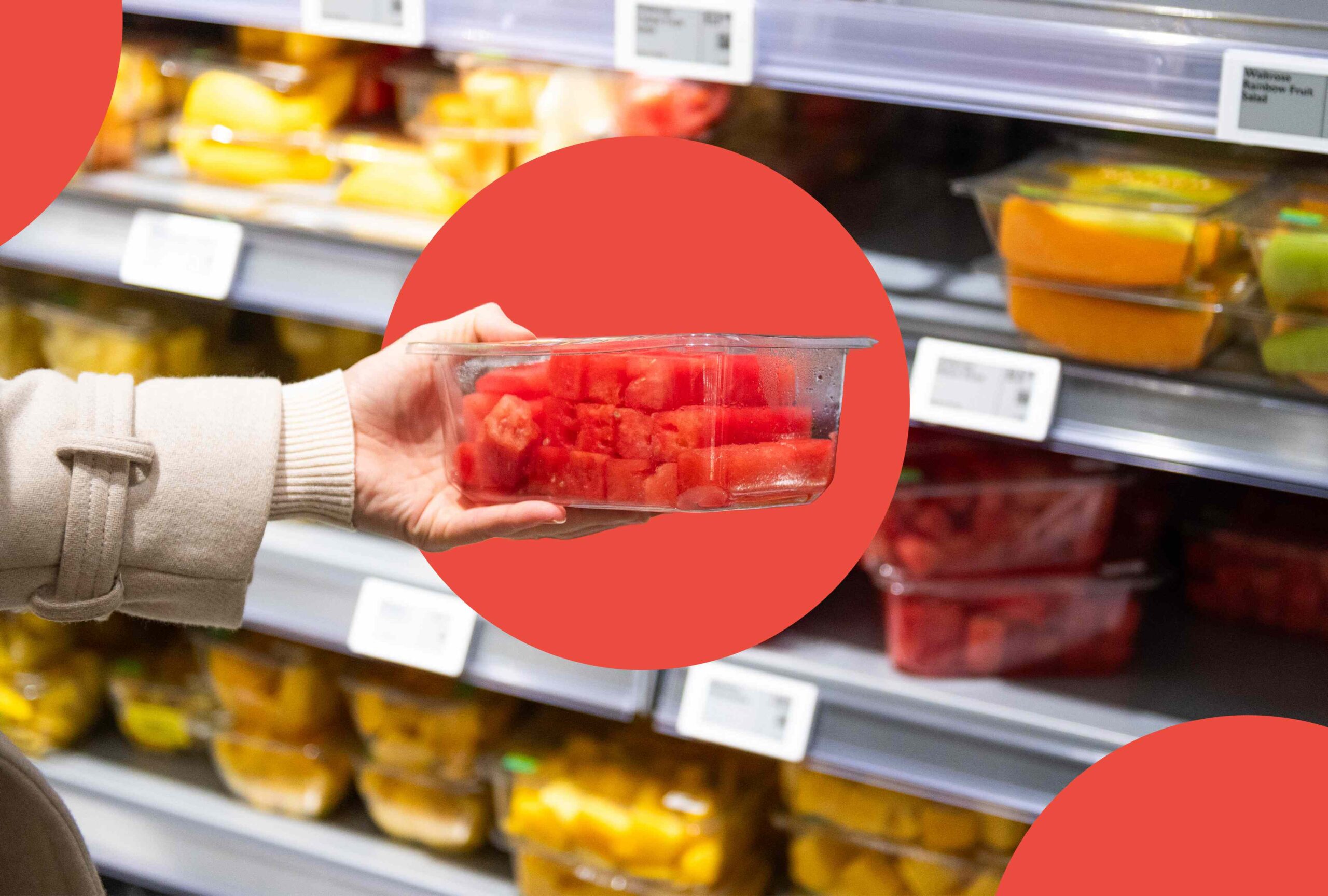
The pre-cut fruit section makes eating more fruit convenient. But do you know the red flags to look for?
Reviewed by Dietitian Jane Leverich, M.S., RDN
Key Points
- Avoid pre-cut fruit with damaged packaging, excess liquid, discoloration, or an off texture.
- Choose pre-cut fruit with vibrant color, firm pieces, sealed packaging, and a recent sell-by date.
- Keep pre-cut fruit cold, shop the refrigerated section last, and refrigerate it promptly at home.
Been on the road and can’t remember your last piece of fruit? Hosting a party and need enough to feed a crowd? Or just craving a juicy, ready-to-eat snack? The pre-cut fruit section is one of the sweetest and most convenient spots in the grocery store. Plus, it takes the arm work out of having to peel and cut the trickiest, prickliest or heaviest fruits like pomegranates, pineapples and melons.
But before you head to the checkout with a container of pre-cut fruit, how can you tell if it’s past its prime? We asked dietitians to share four red flags to watch for when buying pre-cut fruit, what high-quality cut fruit should look like and their best tips for shopping and storing it so it stays fresh and flavorful.
Pre-Cut Fruit Red Flags
1. Damaged Packaging
When you get to the pre-cut fruit section, the first thing to check is the packaging. If you pick up a container and notice the seal isn’t fully intact or it’s leaking, that’s a red flag.
“Avoid containers with broken seals, cracks, leaks, or unusual bulging,” says Amy Davis, RDN. “Damaged packaging can expose the fruit to contaminants or unsafe temperatures, while bulging may indicate gas production from microbial activity. Since pre-cut fruit doesn’t have its natural protective peel or rind intact, proper packaging is especially important for food safety.”
While you’re inspecting the packaging, check the date too. “I also encourage shoppers to check the use-by date when one is provided. A date isn’t a magical food safety switch, but it can help you choose fruit that’s more likely to be fresh and at its best quality,” adds Grace Derocha, RDN, CDCES.
2. Excess Liquid
Next, take a look at the bottom of the container. Is the fruit sitting in a pool of liquid? Some shelf-stable packaged fruit, such as diced pears, peaches or mandarin oranges, is packed in juice or syrup, and that’s normal. But in the refrigerated pre-cut produce section, where fruit is typically sold without added liquid, an unusually large amount of pooling juice can be a sign that the fruit is breaking down.
Cutting fruit breaks through its protective outer layer, which lets moisture and nutrients escape making it easier for microorganisms to grow, says Derocha. “If the fruit is sitting in a lot of liquid, it may be breaking down and losing freshness. Excess liquid can support bacterial growth, so choose another container,” says Yasi Ansari, MS, RDN, CSSD. While a little natural juice is normal, choose another container if the fruit is swimming in liquid, especially if you notice other signs of spoilage.
3. Discoloration & Off Texture
Excess liquid can be a sign that fruit is losing its freshness, so take a closer look at its color and texture. Does it look slimy, mushy or broken down? Those are signs that the fruit may be spoiled.
Fresh pre-cut fruit should look colorful, vibrant and appetizing, says Derocha. “If you notice fuzzy mold, unusual dark spots, or fruit that appears to be breaking down, that’s a sign to choose another container.”
That said, some browning is normal. “Some browning is simply a natural enzymatic reaction when cut fruit is exposed to oxygen, and it doesn’t automatically mean the fruit is unsafe,” she notes. However, if you spot mold on soft, cut fruit, don’t try to pick out the affected pieces and eat the rest. It’s safest to toss the entire container.
Even if it’s not spoiled, fruit that’s lost its fresh appearance may not taste its best. “Faded color or translucent edges are other indicators that the fruit is past its prime. This loss of vibrant color is a signal that oxidation and nutrient loss have occurred. The fruit will likely have a watery taste and mushy texture, along with a slightly decreased nutritional value,” adds Davis.
4. Stored at Improper Temperatures
Finally, pay attention to how the fruit is displayed. Pre-cut fruit should be stored at 40 degrees Fahrenheit or below, says Davis. “If pre-cut fruit is displayed at room temperature, it’s best to pass, since warmer temperatures can cause bacteria to multiply rapidly.”
Because cut fruit has lost its natural protective barrier, keeping it cold is especially important. Harmful bacteria like Salmonella, Listeria and E. coli can contaminate fresh-cut produce. Refrigeration helps slow bacterial growth, but it doesn’t eliminate the risk of contamination.
What Great Pre-Cut Fruit Should Look Like
Now that you know the red flags, here’s what to look for instead:
- Fresh-looking color. Fruit should have its natural color and look ripe and appetizing, says Ansari.
- Pieces that hold their shape. Derocha recommends looking for fruit pieces that hold their shape and look fresh and juicy. Avoid pieces that look dried out, shriveled or mushy, adds Davis.
- Intact packaging. Choose a clean container with a fully sealed lid and no cracks, leaks or unusual bulging.
- A cold display case. Only buy pre-cut fruit from a refrigerated display.
- A recent date. Ideally, choose fruit with a recent packaging date and plenty of time remaining before its best-by date, adds Davis.
- Trust your senses. Appearance alone can’t guarantee safety, so be mindful before taking your first bite. If something looks or smells off, don’t eat it, says Ansari.
Shopping & Storage Tips
Along with knowing the red flags and green flags, here are a few more shopping and storage tips dietitians recommend keeping in mind as you stroll the aisles:
- Shop the refrigerated section last. Pick up your pre-cut fruit toward the end of your grocery trip so it spends less time outside refrigeration, and keep it cold on the way home, especially during the warmer months, says Derocha.
- Buy only what you’ll actually eat. Pre-cut fruit generally has a shorter shelf life than whole fruit, so purchase an amount you can realistically eat within a few days, says Davis.
- Pay attention to the clock. Don’t leave pre-cut fruit at room temperature for more than two hours, or one hour when temperatures exceed 90 degrees Fahrenheit. Whether you’re hosting a summer barbecue or packing a lunch, keeping fruit chilled helps reduce the risk of foodborne illness, says Derocha.
- Eat or refrigerate it promptly. Once you’re home, refrigerate the fruit at 40 degrees F or below. If you plan to eat it right away, that’s fine, too. Just don’t leave it sitting out for an extended period.
- Consider cutting your own. Ansari recommends buying whole fruit, washing it under running water and cutting it with a clean knife on a clean cutting board. You can prepare a few days’ worth ahead of time, store it in a sealed container in the refrigerator and enjoy it within a few days.
Our Expert Take
Pre-cut fruit is a convenient way to eat more produce, but it’s worth taking a closer look before putting it in your cart. Dietitians recommend avoiding containers with damaged packaging, unusual amounts of liquid, signs of spoilage or fruit that isn’t kept properly chilled. Instead, look for fresh-looking fruit, intact packaging and a cold display case. Once you’ve found a good container, keep it refrigerated, buy only what you’ll realistically eat and avoid leaving it at room temperature for more than two hours. And if you’d rather have more control over freshness, consider buying whole fruit and cutting it yourself.