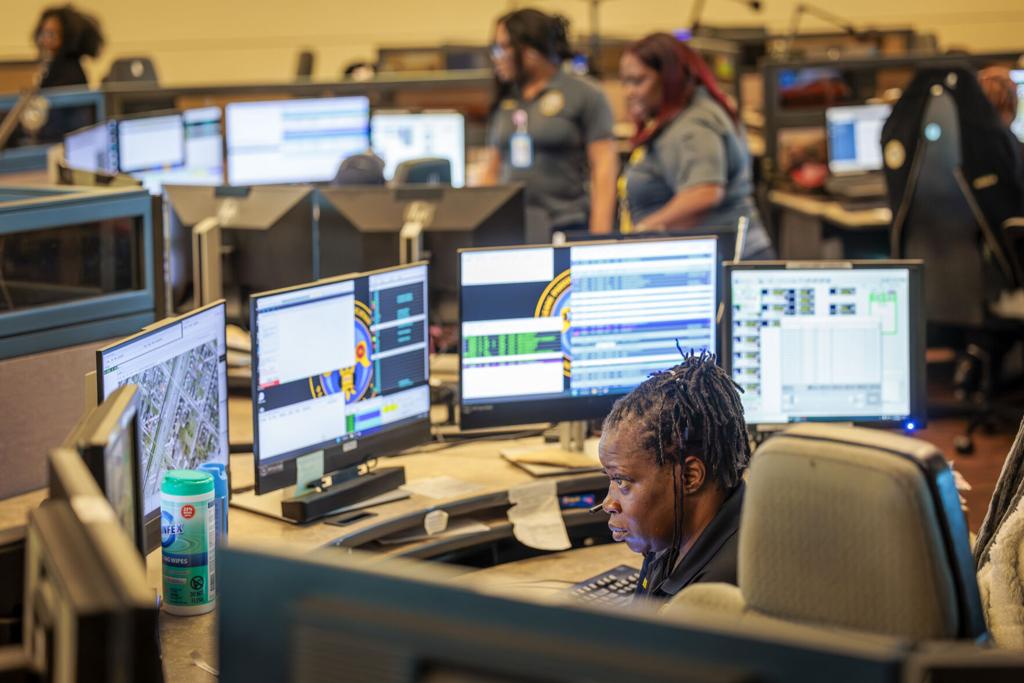
Artificial intelligence is making its way into one of the most critical public services in the United States. New Orleans has begun testing an AI-powered system that helps answer certain 911 calls, marking a significant step toward modernizing emergency response. While the move has sparked excitement about faster response times, it has also raised important questions about reliability, bias, and public safety.
Credits: International Business Times
AI Will Filter Calls, Not Replace Human Dispatchers
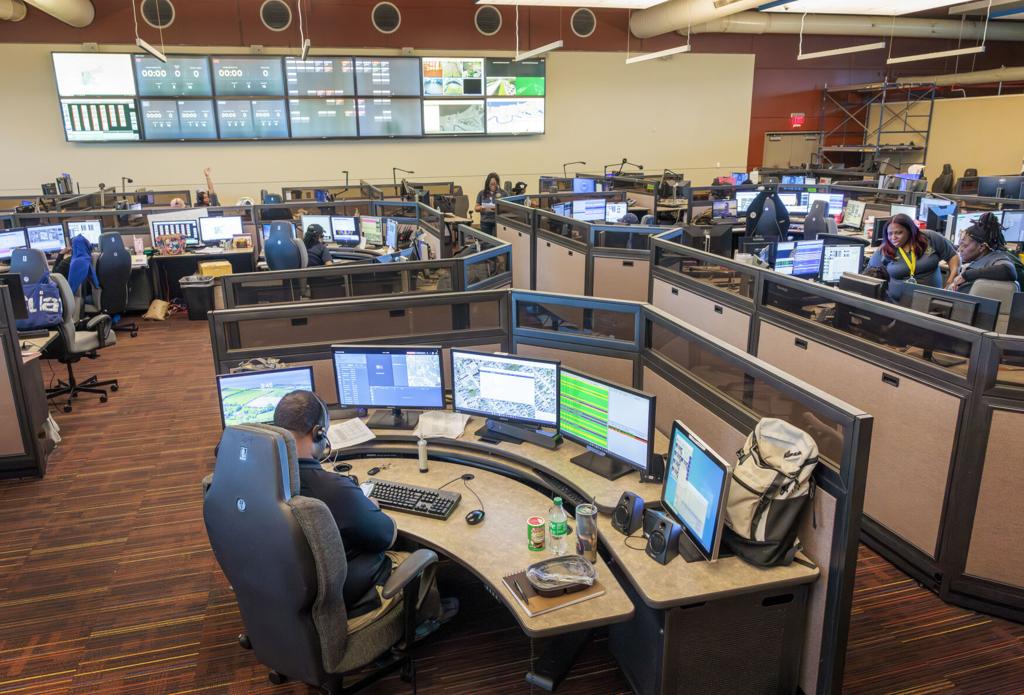
The Orleans Parish Communication District (OPCD) has introduced Carbyne’s AI Emergency Call Triage system to improve how emergency calls are managed. The city receives well over 1,000 emergency calls every day, and officials say handling sudden spikes in call volume has become increasingly difficult.
The AI system is not intended to replace human dispatchers. Instead, it serves as a first layer during large-scale incidents that generate dozens or even hundreds of similar calls. For example, if a major traffic accident, fire, or weather event occurs, many residents may call 911 seeking updates rather than reporting a new emergency.
When this happens, callers may first be connected to the AI assistant, which asks whether they are calling about the ongoing incident. If they confirm that they are, the system can provide available updates or information. If they indicate they are reporting a different emergency, the call is immediately transferred to a human dispatcher.
This approach allows dispatchers to spend more time responding to urgent emergencies instead of repeatedly answering identical questions about the same event.
Building on Earlier AI Success
The new 911 pilot follows the city’s rollout of AI for its 311 non-emergency service earlier this year. According to OPCD, nearly half of all 311 calls are simple requests for information, making them ideal candidates for automation.
Officials believe extending similar technology to emergency call management—while keeping humans firmly in control of actual emergency dispatching—could significantly improve efficiency during periods of unusually high demand.
Carbyne’s AI Emergency Call Triage is designed to analyze incoming calls, recognize when multiple callers are reporting the same incident, and route those callers appropriately. This helps reduce congestion in the emergency call system and shortens wait times for people facing life-threatening situations.
Rather than replacing emergency operators, the AI acts as a digital traffic controller, ensuring that human dispatchers remain available for callers who need immediate assistance.
Faster Responses Could Save Lives
Emergency communication centers across the United States often struggle with staffing shortages and increasing call volumes. During natural disasters, severe storms, large public events, or major accidents, dispatch centers can become overwhelmed within minutes.
Supporters argue that AI can help reduce this pressure by automatically identifying duplicate reports and providing basic information without tying up human operators.
The technology may also help improve emergency response times by allowing dispatchers to focus on incidents requiring immediate action. Even shaving seconds off response times can make a significant difference in medical emergencies, fires, or violent crimes.
If the New Orleans pilot proves successful, similar systems could be adopted by emergency call centers in other cities facing the same operational challenges.
AI Still Comes With Serious Risks
Despite its potential benefits, AI-assisted emergency services remain controversial. Public safety experts caution that emergency response is too important to rely entirely on automated systems.
One concern is speech recognition accuracy. AI systems may struggle to understand callers with strong regional accents, different dialects, speech impairments, or callers experiencing panic, making it difficult to correctly interpret what is happening.
Another issue involves algorithmic bias. If AI models are trained using historical emergency or policing data, they could unintentionally reinforce existing biases. Experts have previously warned that predictive policing systems trained on historical crime data may disproportionately focus on neighborhoods that have historically been over-policed, potentially creating unfair outcomes.
Cybersecurity is another important consideration. Because emergency communication systems are critical public infrastructure, they could become attractive targets for cyberattacks. Any AI deployed in these environments must be protected with robust security measures and continuous monitoring.
For these reasons, New Orleans officials emphasize that human oversight remains central to the system. AI is intended to support dispatchers—not replace their judgment.
Credits: NOLA
A Glimpse Into the Future of Emergency Response
The New Orleans pilot reflects a broader trend of AI entering essential public services. As governments look for ways to improve efficiency without compromising safety, AI is increasingly being used to automate repetitive tasks while leaving critical decision-making to trained professionals.
Whether AI becomes a standard feature of emergency dispatch centers will largely depend on how accurately, fairly, and securely these systems perform in real-world situations. For now, New Orleans is treating AI as an assistant rather than a replacement—using technology to help manage overwhelming call volumes while ensuring that human dispatchers remain responsible for handling genuine emergencies.