
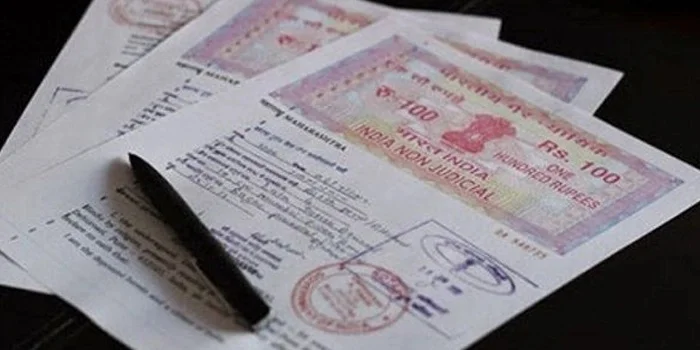
New Property Registry Rules: Aadhaar mandatory for identification, relationship identification, and more: 5 new rules:

UP Property Registration New Rules: The Uttar Pradesh government has issued an important administrative instruction on property registration and related administrative processes. Under this new notification, the government has made it clear that the details of relationships recorded on the Aadhaar card (such as the name of the father, husband, or guardian) will no longer be considered final or conclusive proof of a legal relationship.
According to a report by our colleague CNBC TV 18, a notification in this regard has been issued by Uttar Pradesh Inspector General of Registration Neha Sharma. We’ve instructed all registration offices and Assistant Inspectors General across the state to strictly follow these new guidelines.
Let us know about these 5 new rules that the department has made mandatory to prevent legal problems in property registries and government schemes.
5 new rules made mandatory for administrative evaluation
Uttar Pradesh government has made it mandatory to follow these 5 rules during official valuation to avoid legal complications in property registration, government schemes and administrative processes:-
Rule 1 (Proof of Identity and Address): Aadhaar Card should be accepted exclusively as valid proof of identity and address.
Rule 2 (Not conclusive on relationships): The details of family or parents recorded on the Aadhaar card cannot be considered as conclusive or legally binding evidence of any relationship.
Rule 3 (Family Verification): In applications, schemes, or legal documents that require mandatory verification of family relationships, the authorities cannot make the final decision based on the Aadhaar card alone.
Rule 4 (Checking valid documents): Departments must verify relationships using standard, legally recognised documents in accordance with existing rules. Under this, only a birth certificate, a copy of the family register, a succession certificate or a relationship certificate issued by competent courts/authorities will be considered valid.
Rule 5 (Secondary Information): Any mention of the name of a parent or spouse on the Aadhaar card should be viewed only as a secondary informational reference rather than as established legal evidence.
What is the basic purpose of the Aadhar card?
This instruction of the Uttar Pradesh government is in line with the clear guidelines of the Unique Identification Authority of India and the Ministry of Electronics and Information Technology. The order clarifies that the primary purpose of the Aadhaar card is only to establish an individual’s identity and address, and not to authenticate their lineage or marital status. This is why the family information written on the Aadhaar card, such as C/o (Care of), S/o (Son), D/o (Daughter), or W/o (Wife), is only informational.
Countrywide strictness regarding the standards of documents
This state-level instruction from the Uttar Pradesh government is part of the nationwide measures to enforce documentation standards. Let us tell you that during the recently organised ‘Passport Seva Diwas’, senior officials of the Ministry of External Affairs (MEA) had also underlined a similar legal limit. He had clearly clarified that an Indian passport is just a travel document and cannot be considered as final or conclusive proof of citizenship.

Comments are closed.