


The South Korean automotive giant Hyundai discontinued the popular D-segment sedan Elantra in 2022. However, as the love and appreciation for sedans is coming back, the company could be bringing it back to India. Recently, a few images of the Hyundai Avante (Elantra is called the Avante internationally) have been shared online. And these images give us a hint of what the next generation of the Elantra could look like.
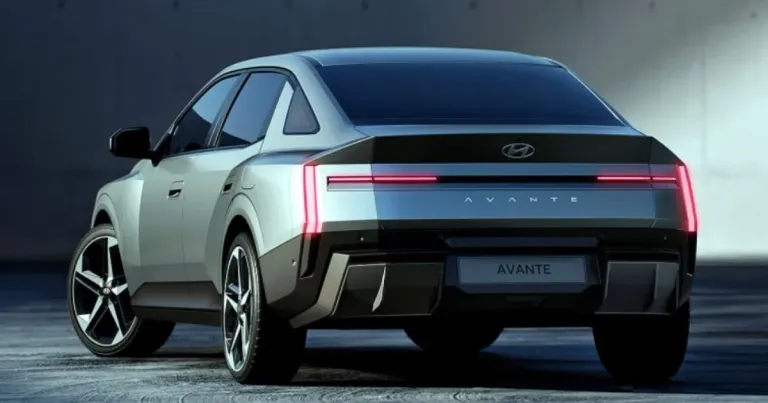
From the images of the Hyundai Avante or next-generation Elantra, we can see that this time around it will boast a completely new exterior design. The company has adopted its new “Art of Steel” design philosophy, which gives the sedan a much sharper and more futuristic appearance than before.
At the front, the new Elantra gets H-shaped LED daytime running lights along with a redesigned grille and a lower, wider stance. The front fenders have also become more muscular, which give this sedan a much sportier look.
Moving to the side, the overall three-box sedan silhouette is clearly evident. However, Hyundai has added a longer bonnet, very sharp body lines with multiple creases, and new door handles, which are a mix of traditional pull-type and flush-type handles. The images also show the sedan fitted with newly designed directional 18-inch diamond-cut alloy wheels.
Additionally, with the large windows and a divided third-quarter window, the Elantra looks very unique from the side. As for the rear, the sedan also gets new and sleek H-shaped LED tail lamps that match the front. There is also a much more aggressively redesigned rear bumper along with an aerodynamic diffuser, which gives the car a wider and more sporty appearance.
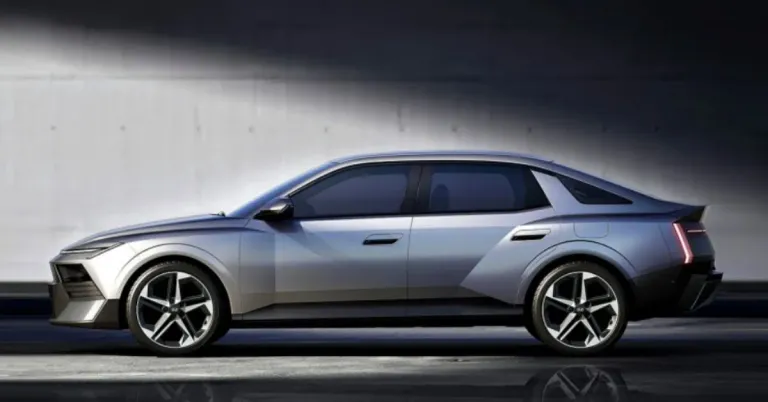
Apart from the styling, Hyundai has also increased the size of the new Elantra. It will now be 4,765 mm long, which will be 55 mm longer than the outgoing model. The wheelbase has also been increased by 30 mm to 2,750 mm, and the width has also grown by another 30 mm. Hyundai has claimed that the cabin space has increased, and it will now offer more room for passengers.
On the inside, the dashboard has been completely redesigned, and it has been made a lot more driver-focused. Hyundai has also used furniture-inspired materials and trim pieces across the dashboard and door panels, which will make the cabin feel more premium than before.
The new Elantra will also become one of Hyundai’s first models to get the company’s latest software-defined vehicle technology. It will come equipped with Hyundai’s new Pleos Connect infotainment system, which runs on the Android Automotive operating system. Depending on the variant, there will be a 14.6-inch or a 12.9-inch display in the centre.
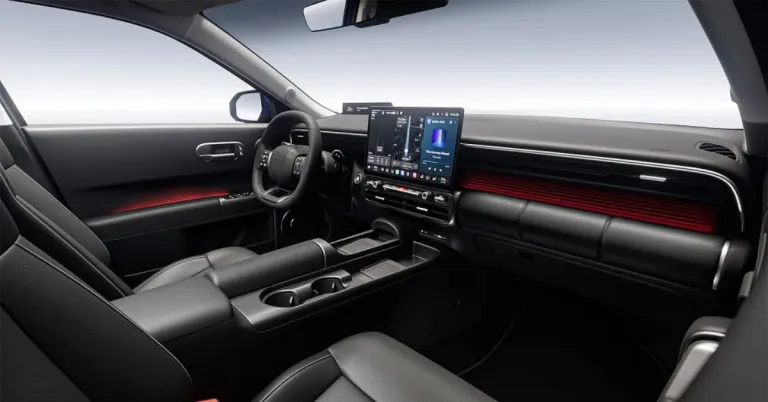
The biggest highlight will be Hyundai’s new Gleo AI assistant. It will support natural conversations and can control vehicle functions, answer questions, recommend travel destinations, and even hold everyday conversations with occupants. Other notable highlights will include a Bang & Olufsen premium sound system, a built-in dash camera, over-the-air software updates, Hyundai Digital Key 2, Walk Away Lock, dual wireless phone chargers, and 100W USB-C charging ports.
The upcoming Elantra will also get Navigation-based Smart Cruise Control, Highway Driving Assist 2, Forward Collision Avoidance Assist 2, Lane Keeping Assist 2, Blind Spot Monitor, Pedal Misoperation Safety Assist, and a total of 10 airbags.
Coming to the powertrain side of things, Hyundai will offer the new Elantra with both petrol and hybrid powertrains. The petrol version will offer a 2.0-litre engine, which will make 149 bhp. When compared to the previous-generation 1.6-litre petrol engine, it will offer an additional 26 bhp of power.
As for the hybrid model, it will now make 157 bhp. Hyundai has increased the output of the electric motor, improved the battery capacity, and optimised the transmission to deliver better performance as well as higher efficiency.
The hybrid will also get Smart Regenerative Braking 3.0, which will use navigation data to automatically control regenerative braking. It will also come with a Predictive Control System that analyses road conditions and destinations to optimise battery usage.
Source
Comments are closed.