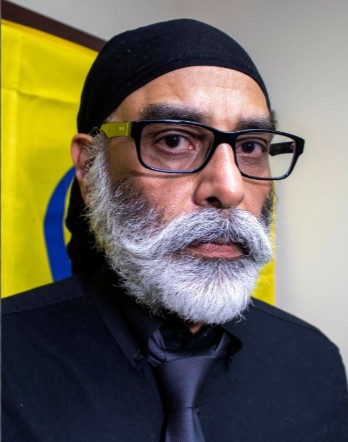
Nikhil Gupta has urged a US federal court to impose a 12-year prison sentence, arguing that the 24 years and five months sought by federal prosecutors would be excessive and would not adequately account for his personal circumstances, alleged pressure from his co-accused Vikash Yadav and the absence of any criminal history. In a sentencing memorandum filed before the US District Court for the Southern District of New York, Gupta’s lawyers have asked the judge to accept the Probation Department’s recommendation of 144 months in prison, followed by three years of supervised release.
The defence submission, filed on 13-11-2026, comes in response to the US government’s request for 293 months’ imprisonment, the highest term in the applicable sentencing guidelines range of 235 to 293 months. Gupta is due to be sentenced on 20-11-2026.
Gupta pleaded guilty on 13-02-2026 to conspiracy to commit murder-for-hire, murder-for-hire and conspiracy to commit money laundering in connection with the plot against Khalistan separatist leader Gurpatwant Singh Pannun in New York. The defence says Gupta does not dispute the seriousness of the offence and accepts that his conduct warrants imprisonment. It argues, however, that the sentence must reflect his individual role and circumstances and should not be greater than necessary.
A central part of the defence argument is that Gupta was drawn into the plot by Yadav, whom he believed to be connected to Indian intelligence and capable of using official influence against him and his family. According to the memorandum, individuals identifying themselves as Gujarat Police had visited Gupta’s home in India and left their names with his teenage son. Gupta had not been charged with any offence in India, but was concerned about the visit and subsequently approached Yadav.
The defence says Yadav told Gupta that a criminal case against him had been taken care of and assured him that he would not be troubled again. Yadav allegedly offered to resolve the matter in exchange for Gupta arranging a killing in New York. The lawyers say Yadav repeatedly described the matter as “all clear”, told Gupta that “nobody will ever bother you again” and claimed to have made the Gujarat police contact disappear after speaking with “the boss”. Messages sent on 12-05-2023 and 23-05-2023 allegedly referred to Gupta’s criminal case having been taken care of and Yadav having spoken to his superior about the Gujarat matter.
The memorandum says the US Department of Justice has since been unable to identify any such criminal charge in India. The defence argues that the case Yadav claimed to be resolving did not exist and that Gupta had no way of knowing this at the time. It says the circumstances created a fear that cooperation was necessary to protect himself and his family.
The lawyers also rely on Gupta’s belief that Yadav represented the Indian government. They point to the government’s description of Yadav as an employee of the Cabinet Secretariat, which houses the Research and Analysis Wing, and say Gupta believed that a request from someone with such apparent institutional authority carried the weight of the state. The defence also refers to Yadav’s alleged claim that he was a senior field officer and had served in India’s largest paramilitary force. It argues that this distinguishes Gupta’s culpability from that of Yadav, who allegedly directed the operation from India and remains a fugitive.
To support its argument that Gupta’s fear of official pressure was genuine, the defence cites a declaration filed by Pannun’s lawyer in a separate civil case. The lawyer had stated that at least ten Indian attorneys approached about assisting with a lawsuit against the Indian government had declined, with those giving reasons citing the danger of appearing to support such a case. The defence argues that this was part of the context in which Gupta believed he could not refuse Yadav’s request. These assertions form the defence’s account of Gupta’s state of mind and have not been established as findings by the court.
On the question of the money involved, the defence says Gupta did not personally benefit from the proposed payment for Pannun’s killing. It states that the $100,000 discussed was intended for the purported hitman and that the $15,000 advance was handed directly to the undercover officer in Manhattan by an associate of Yadav. According to the defence, none of the money passed through Gupta’s hands or was controlled by him, and there is no evidence that he expected to receive any part of it. The lawyers say Gupta was not paid to arrange the murder. Instead, they argue, Yadav had offered to resolve the matter involving the purported Gujarat police contact.
The defence has also challenged the sentencing calculation used by prosecutors and the Probation Department, arguing that it overstates Gupta’s role in the offence. It says the money-laundering charge is based on the same $15,000 advance payment already considered under the murder-for-hire charges and should not be used to push the overall sentencing range higher. The lawyers emphasise that the money was intended for the purported hitman, was delivered by an associate of Yadav and did not pass through Gupta’s hands. They argue that the sentencing calculation does not adequately account for the fact that Gupta did not stand to gain financially from the operation.
The defence says that even under its alternative calculation, Gupta faces a substantial prison term. It disputes the prosecution’s request for an additional enhancement for obstruction of justice, arguing that the court’s rejection of Gupta’s account during earlier proceedings does not establish that he deliberately lied. The lawyers maintain that the 144-month sentence recommended by the Probation Department would be sufficient punishment and deterrence, while taking account of his personal circumstances and the role they attribute to Yadav.
The lawyers have separately opposed the two-point enhancement for obstruction of justice sought by prosecutors. The government says Gupta submitted a false sworn affidavit in support of his earlier motion to suppress his post-arrest statement, including claims that DEA officers had not identified themselves or informed him of his rights and that he had not been given his glasses to read the rights form.
The defence argues that the court’s decision to reject Gupta’s account during the suppression proceedings does not, by itself, establish that he deliberately lied. It says the judge credited the testimony of the law enforcement officer and found Gupta’s account about his glasses not credible, but did not make a separate finding that he had intentionally committed perjury. The lawyers argue that the enhancement requires a finding of deliberate and material false testimony, rather than a finding that one account was less credible than another. They also say Gupta’s affidavit concerned his recollection of the lighting in the vehicle, whether he had his glasses and what he had been told during an arrest in a foreign country.
The defence further argues that the affidavit did not affect the outcome of the case because Gupta eventually pleaded guilty. It says the Probation Department itself described the case as extraordinary because it had applied both the obstruction adjustment and the three-level reduction for acceptance of responsibility. Gupta’s lawyers argue that his guilty plea and acceptance of responsibility should continue to be recognised.
The defence also challenges the prosecution’s references to the killing of Hardeep Singh Nijjar in Canada. It says Gupta was not involved in Nijjar’s killing and learned about it only after Yadav sent him a video of the killing on 18-06-2023. The memorandum says Gupta reacted by expressing a wish that he had personally been involved and asking to “go to the field”. It acknowledges that Gupta subsequently told the confidential source that Nijjar had been discussed as a target in Canada and referred to the killing in conversations urging the New York operation to proceed. However, it characterises these statements as “mere puffery” and argues that they do not establish his participation in the Canadian killing.
The defence points out that Gupta was not charged with Nijjar’s murder and that a separate indictment filed by the US Department of Justice on 01-07-2026 in California named nine defendants in connection with the Nijjar plot, without naming Gupta or Yadav as defendants or co-conspirators. It argues that the Canadian killing does not form part of the sentencing calculation in Gupta’s New York case. The memorandum also says the original indictment against Gupta in June 2023 contained no allegations about Canada or an Indian official, and that references to the Nijjar killing and the alleged Indian government employee were added in a later indictment.
The defence also disputes the prosecution’s account of a video call on 12-06-2023, which prosecutors say showed Gupta turning his camera towards approximately three other men in a conference room. According to the defence, the prosecution has conflated two separate conversations from that day, and the recording of the relevant call is incomplete and does not show other men. It says a separate audio-recorded call demonstrates that Gupta was intoxicated and that the only other voices audible in the background were those of women in his apartment.
Gupta’s lawyers further refer to his alleged discussions about a target in Nepal or Pakistan. The memorandum says he forwarded location information to individuals he referred to as “soldiers”, but argues that he had no such operatives and no actual capacity to carry out the plan. The defence describes the communications as “mere puffery” and says Gupta has no knowledge of any assassination resulting from them.
The memorandum also points to communications on 22-06-2023 in which Gupta allegedly instructed that, if Pannun was not alone, those involved should confirm that the target was inside his home before entering and should not harm women or children. The defence presents this as evidence that Gupta attempted to limit the harm, although it acknowledges that he continued to participate in the plot.
Untreated alcohol dependence is another major ground cited for a reduced sentence. The defence says Gupta’s drinking began in 2010 and had escalated to heavy daily consumption by 2022. It argues that the drinking intensified during the period in which Yadav approached him and pressed him to participate in the operation, amid what Gupta believed was a threat to his family. The memorandum says Gupta acknowledged being intoxicated during some of his communications and that his alcohol consumption affected his judgement.
According to the defence, Gupta had voluntarily sought outpatient treatment for alcohol dependence in Delhi before his arrest but could not complete the programme after being taken into custody. It says he would welcome treatment if it were made available. The Probation Department has also cited his untreated alcohol dependence, saying that addressing it could reduce the risk of reoffending, and has recommended substance-abuse treatment as a condition of supervised release.
The defence says Gupta has no criminal history in any country and belongs in Criminal History Category I. It argues that he does not present a meaningful risk to the public, has no training in firearms, weapons or martial arts, and would be able to return to India and receive support from his family. It also notes that he is an Indian citizen with no lawful immigration status in the United States and would likely be deported after serving his sentence. The lawyers say that the availability of family support, employment, counselling and treatment in India would help him reintegrate after release.
The memorandum also responds to Pannun’s victim impact statement. The defence says the court must take the victim’s fear and the lasting harm of being targeted in a murder-for-hire plot seriously, but argues that Gupta’s sentence should be based on his individual conduct rather than serve as a rebuke to the Indian government or an answer to wider historical and political grievances. It says Gupta did not direct the broader dispute described in the victim’s statement and that the court should not sentence him for conduct he did not control.
The lawyers point to Pannun’s description of Gupta as a “foot soldier acting at the behest of an Indian State”, arguing that this supports their contention that the motive and direction of the plot lay with others and that Gupta did not stand to gain personally. The defence says it is not asking the court to minimise the victim’s fear or the seriousness of the planned killing, but to assess Gupta’s own role.
The memorandum argues that 12 years in prison would constitute substantial punishment and provide adequate deterrence. It cites other murder-for-hire cases in which defendants received shorter sentences, including a 114-month sentence in a New York case, an 87-month sentence in a Northern District of New York case, and sentences of 180 months and 120 months for two defendants in a separate plot against Iranian dissident Masih Alinejad. In the New York case, the defence says the defendant had initiated contact, paid a deposit, urged the purported hitman to proceed and named a second target. The defence says Gupta’s recommended 144-month sentence would exceed that term. It also argues that the available sentencing data do not provide a sufficient group of defendants with the same guideline and criminal history category to justify imposing a sentence at the top of the range.
Gupta’s time in custody is another factor cited by the defence. He was arrested in the Czech Republic on 30-06-2023 and extradited to the United States on 14-06-2024. By the time of sentencing, he will have spent more than three years and four months in continuous custody. The defence says he spent approximately eleven and a half months in Czech custody, frequently in solitary confinement, before being transferred to the Metropolitan Detention Center in Brooklyn. It asks the court to take the Czech period into account and recommend that the Bureau of Prisons credit his sentence from the date of his arrest. The Bureau of Prisons determines the applicable custody credit.
The lawyers also cite conditions at the Brooklyn detention facility, including a gang-related fight on 06-09-2026 involving at least 20 inmates on the seventh floor of the west building where Gupta is housed. They say he was caught in the middle of the fighting before reaching cover. The memorandum refers to reports of two stabbing deaths in the summer of 2024, a fight in February 2025 in which at least ten inmates were stabbed or slashed, two further deaths in 2026 and lockdowns at the facility. It also cites the Bureau of Prisons’ formation of an urgent action team in 2024 to address staffing shortages, contraband and other problems.
Gupta has reported persistent and severe abdominal pain and says he has not received adequate medical attention. The defence says he was able to consult a gastroenterologist by videoconference on 01-10-2026 but had not received diagnostic tests or treatment by the time the memorandum was filed.
The defence has also placed Gupta’s family circumstances before the court. He is 55 years old and has lived in India throughout his life. His father died of bone cancer on 10-02-1985, when Gupta was 13, and the defence says the instability surrounding Operation Blue Star and the violence of that period disrupted his father’s treatment. Gupta began working at the age of 14 while continuing his education at night to support the family. He has been married since 1994 and has two adult children. His mother is 75 and lives in Delhi, while his wife has mobility and spinal problems following two accidents.
More than 40 people, including family members, friends, former colleagues, business associates and people who worked around his home, have submitted letters in support of Gupta. The defence says six letters came from immediate family members and another 39 from extended family, friends, colleagues and people in his neighbourhood. The letters describe his charitable activities, including financial and emotional support for five children in orphanages each year since 1991, assistance to people facing financial difficulty and help for families requiring medical treatment. The memorandum also says he donated to animal welfare organisations and used his savings to support people during the COVID-19 pandemic.
Gupta has submitted a personal letter to the court expressing regret over his actions and saying he wishes he could undo his mistakes. He says he has reflected on the consequences of his conduct, practised yoga and meditation in custody and tried to help other inmates. The defence says he pleaded guilty to all three counts before trial and accepted responsibility. It also discloses one prison disciplinary incident in September 2024 involving possession of a mobile phone, for which he surrendered the device and received a suspended sanction.
In its conclusion, the defence asks the court to adopt the Probation Department’s recommendation of 144 months’ imprisonment followed by three years of supervised release. The statutory maximum is ten years each on the two murder-for-hire counts and 20 years on the money-laundering count, with the Probation Department recommending concurrent terms. The defence argues that the proposed sentence would account for the seriousness of the offence while also considering Gupta’s personal circumstances, lack of criminal history, alleged pressure from Yadav, alcohol dependence, time already spent in custody and the support available to him after release.