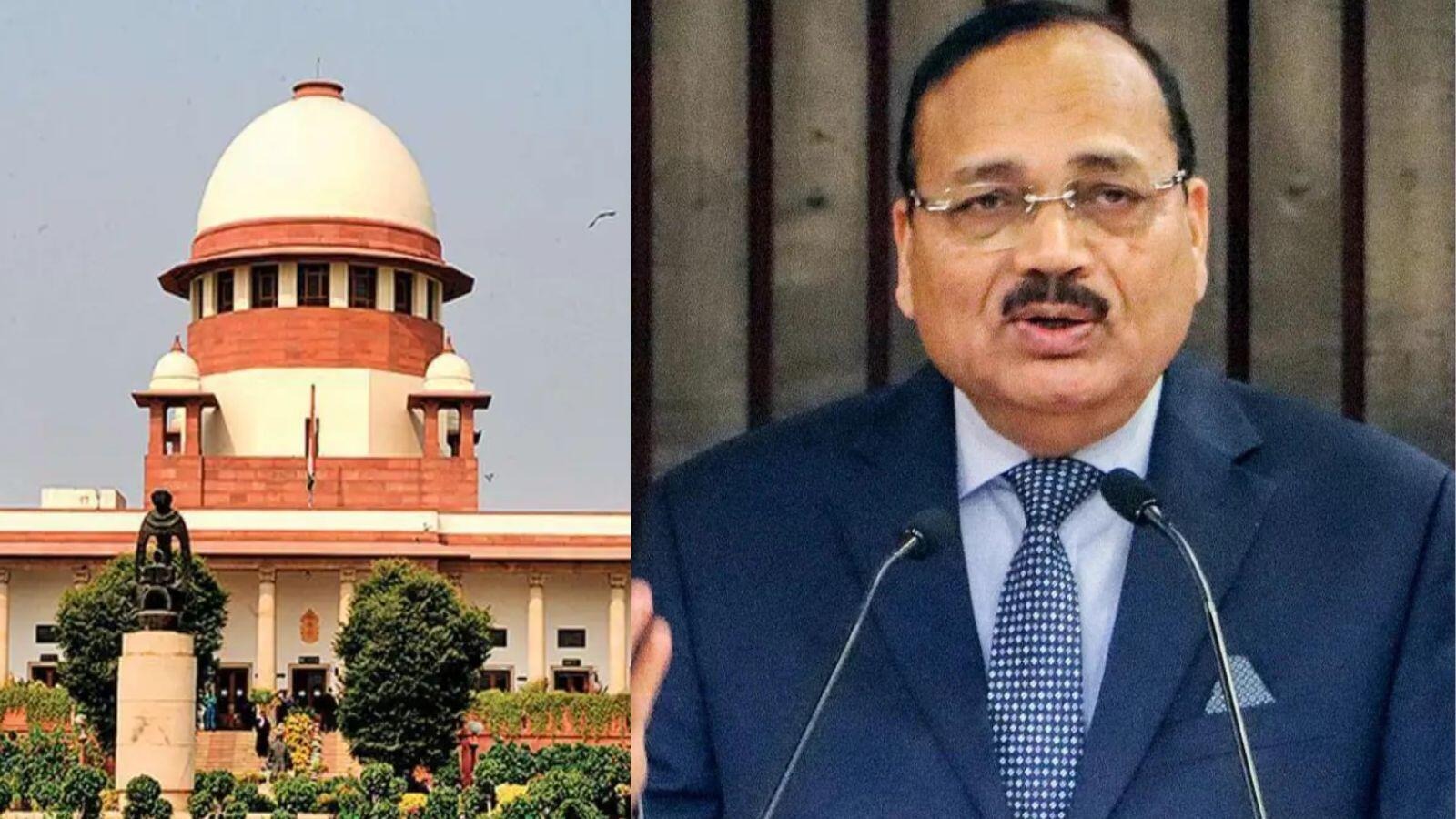
The Supreme Court of the country has put forward a very clear, strong and far-reaching message to the entire country and the world regarding the ongoing tension between environmental protection and unbridled development. Recently, during an important legal seminar and judicial program, Justice Surya Kant, Judge of the Supreme Court of India, made a very poignant and powerful statement outlining the priorities of the country’s judiciary. He bluntly said that in this modern era, any kind of so-called development at the cost of nature cannot be accepted at all. In today’s era, when the country is rapidly moving forward on the path of industrialization, urbanization and infrastructure development, deforestation, pollution of rivers and JCB machines running on the crest of mountains have badly destroyed the natural balance. CJI Surya Kant emphasized that even if the wheel of development runs at its full speed, the clean breathable air, potable water and green earth of our future generations should not be in danger. This stand of the Supreme Court is a clear proof of how serious and sensitive the country’s largest court is on the issues of environment and ecological balance, and that it is not at all in favor of allowing any development model at the cost of killing the environment.
Supreme Court is the ‘banyan’ of environmental justice, judiciary becomes the voice of the weak and silent nature
Continuing his address, Justice Surya Kant compared the Supreme Court of the country to a huge and dense ‘banyan tree’, which with its cool shade provides protection to every section and element of the society which is unable to protect itself. Explaining in depth, he said that just as the banyan tree provides its shade to every passerby without any discrimination, in the same way the Supreme Court is a strong pillar of environmental justice which becomes the voice of the silent nature, the voiceless wildlife and the common citizens who are victims of pollution and industrial exploitation. Whenever the courts receive petitions related to deforestation, destruction of wildlife habitat or uncontrolled pollution, the judiciary also includes the right to environment within the ambit of the right to life granted to citizens under Article 21 of the Constitution. He felt proud that the Indian Judiciary has from time to time given such historic and tough decisions which have played a huge role in saving the environment of the country. Be it the pollution crisis of Delhi-NCR, banning unplanned construction in the Himalayan regions, or directions to revive rivers, the Supreme Court has always discharged its role as a watchdog of the environment with full devotion and determination.
Resolve to save green heritage for future generations and judicial accountability
In today’s time, when the whole world is struggling with global warming, climate change and severe changes in the weather cycle, then this thinking of the judiciary brings a big relief and a ray of hope for the entire human civilization. Justice Surya Kant has forced all the policy-makers, industrialists and common citizens of the country to think that if we do not protect our nature and environment today, then the coming generations will never forgive us. It has now become the collective moral responsibility not only of the courts but of the entire society to curb the trend of deforestation and indiscriminate exploitation of natural resources in the name of development. This statement of the Supreme Court is a beautiful example of Judicial Activism where law and justice are not limited to files only, but they stand as a shield to save the existence of our earth. In the times to come, this strong and balanced stance of the judiciary on environment related matters will compel industries and governments to sincerely implement Environment Impact Assessment (EIA) while making every development plan. Overall, this message of the Supreme Court teaches every Indian that living in harmony with nature is true progress, and without this, real and sustainable development of any nation is not possible.