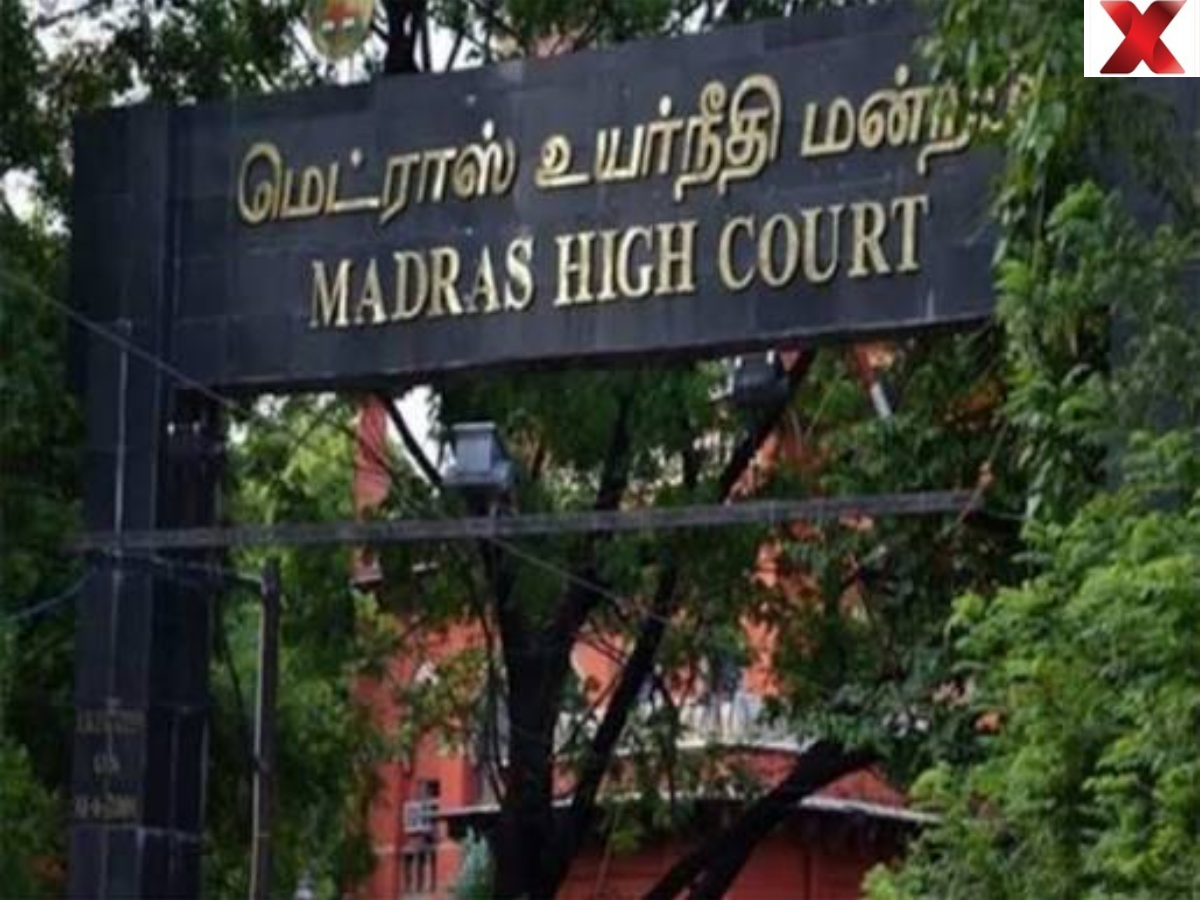
The Madras High Court has allowed the Rashtriya Swayamsevak Sangh (RSS) to conduct route marches at 128 locations across Tamil Nadu on October 25 and November 1, criticising the state police for repeatedly rejecting applications on grounds that had already been rejected by the courts. Justice V Lakshminarayanan directed the police to finalise the timings, routes and venues by Monday, October 19. The court said the dates for the marches were final, although modifications could be made in districts where several processions were planned.
The ruling comes amid a prolonged legal dispute between the RSS and the Tamil Nadu government over permission for the organisation’s processions.
‘No Novel Reasons’: High Court Questions Police Rejections
During the hearing on Friday, the court criticised the police for relying on reasons that had previously been rejected in judicial orders.
“They have not come up with any novel reasons for rejection. They have consistently given the very reasons which this Court found as lame,” the judge observed.
The RSS state secretary had approached the Director General of Police on October 3, seeking permission for marches between 3 pm and 7 pm, followed by public meetings. The proposed processions were to feature uniformed volunteers led by a music band.
Police authorities had rejected several local applications, citing restricted routes, places of worship belonging to other communities, a rationalist leader’s statue, traffic congestion, loudspeakers and law and order concerns.
The court directed the police to settle logistical issues with organisers instead of rejecting applications over objections that could be resolved through discussions.
Why the RSS Marches Have Triggered a Long Legal Battle
The dispute dates back to 2022, when the High Court laid down conditions for RSS route marches. Subsequent legal proceedings saw the order restored by a Division Bench, while the Supreme Court dismissed the state’s appeal on April 11, 2023.
In October 2023, the High Court again allowed a batch of petitions, observing that roads are secular spaces accessible to everyone, irrespective of religion, caste or creed.
Following further Supreme Court directions, the High Court framed guidelines in 2024 to prevent repeated litigation over permissions.
However, the judge noted that the dispute had continued despite those guidelines. The court had previously described the prolonged legal battle as a “Vikram and Betal” saga, suggesting that the matter seemed to have no conclusion.
Police Cannot Use Restrictions to Deny RSS Its Right to March
The court also reiterated that the right to form associations under Article 19(1)(c) of the Constitution cannot be curtailed arbitrarily. Restrictions must have a lawful basis, and the Tamil Nadu Police Act cannot be used to extinguish the RSS’s right to conduct marches.
During the hearing, the judge orally remarked that it was a “shame” that both sides had returned to court over the same dispute. He also warned the RSS that blindly following police advice “may land you in jail”.
The court compared the misuse of its guidelines to using a “scalpel” not to operate but to kill the patient.
October 25 and November 1 Dates Final, Police Must Settle Routes
The RSS must comply with the High Court’s conditions, with its submitted list of routes, meeting venues, organisers and participant numbers to be annexed to the order. The organisation has also filed an affidavit undertaking compliance.
Both sides broadly agreed that districts planning numerous marches, including Kanyakumari and Coimbatore, could distribute them across the two dates. Local police officers will meet organisers to resolve logistical concerns.
The court also urged the RSS to apply early for future Vijayadashami processions, noting that the festival’s date is known in advance. It directed the police to process applications with a view to granting permission rather than searching for defects.
The order follows Thursday’s hearing, when the court questioned the police’s reliance on mosques along proposed routes and concerns about minority communities. It had also noted that while the RSS sought permission at 128 locations, the police were willing to permit marches at only 58.
Sudeep Singh Rawat is a Copy Editor at NewsX Digital with over five years of experience in digital journalism. He covers national and international news, with a focus on politics, crime, technology, public affairs, and trending topics. Before joining NewsX Digital, he worked with Business Standard, The Sunday Guardian, and other digital media organisations. His reporting focuses on breaking news, enterprise stories, and explainers that inform readers through accurate, balanced, and context-driven journalism.
The post ‘No Novel Reasons’: Madras High Court Slams Police Over RSS March Ban, Clears 128 Locations, What Led to the Court’s Strong Remarks? appeared first on NewsX.