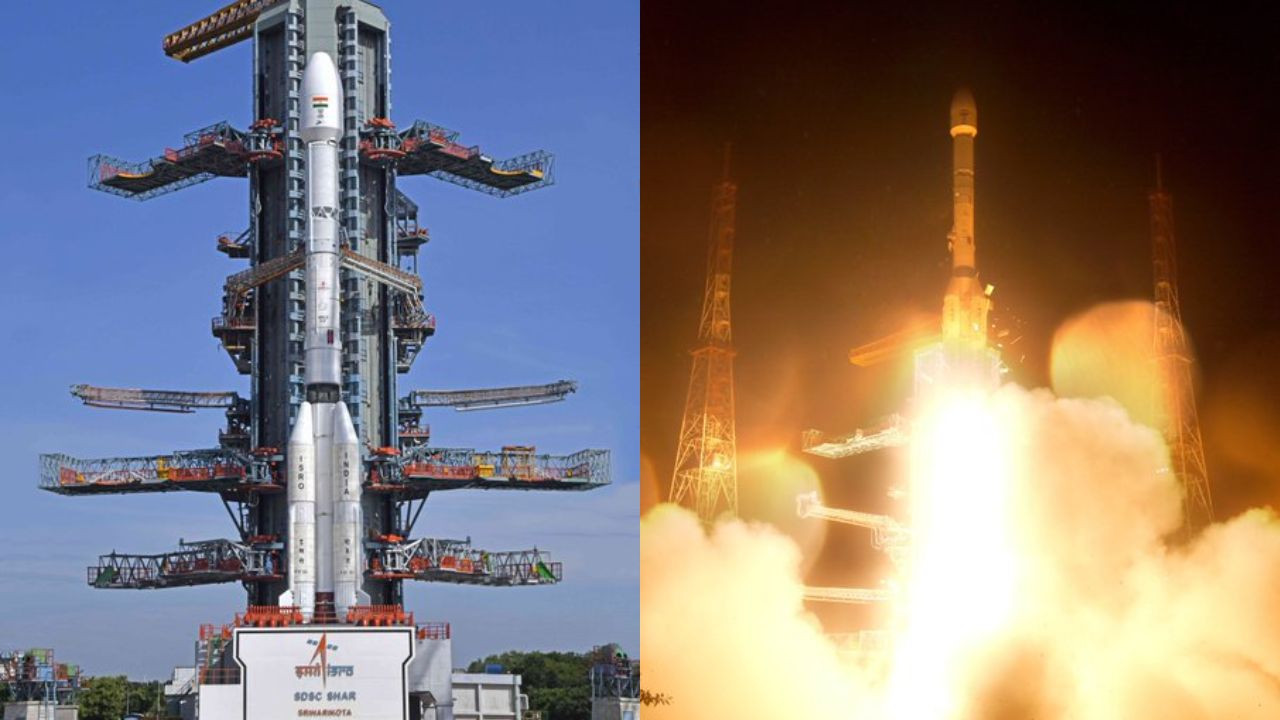
New Delhi:Indian Space Research Organization (ISRO) has registered a major achievement in the space sector. On the morning of 4 September 2026, the GSLV-F17 rocket successfully launched the EOS-05 satellite into space from the Satish Dhawan Space Centre. It is also known as GISAT-1A. This satellite weighing about 2,367 kg was sent from the second launch pad at 2:55 am. This is the 19th flight of GSLV and is considered to be the heaviest payload so far.
what will eos-05 do
EOS-05 is a satellite of India, which has been designed to continuously take pictures of the Earth from geosynchronous orbit. It will remain in its orbit at an altitude of about 36,000 kilometers from the Earth and will keep a constant eye on the Indian subcontinent.
Generally, remote sensing satellites orbit the Earth at low altitude and there may be a lag of a few days in taking pictures of an area. But EOS-05 will be able to provide images of the entire Indian territory approximately every 30 minutes. For sensitive and important areas this difference can be up to five minutes. A 700 mm telescope has been installed in it, which will collect information in visible, near-infrared and short-wave infrared bands.
Satellite will help in rapidly monitoring disasters like floods, cyclones and forest fires. The condition of crops, soil moisture and health of vegetation in the agricultural sector can be ascertained. Apart from this, it will also provide important information for environmental monitoring and national security.
Comeback after the failure of 2021
The EOS-05 mission is being seen as an important comeback after the GSLV-F10 mission of 2021. In that mission, due to a malfunction in the cryogenic stage, GISAT-1 i.e. EOS-03 could not reach the scheduled orbit. GSLV-F17 is a three-stage rocket. Its height is 51.7 meters and total weight at the time of flight is about 420.5 tonnes. The rocket will deliver the satellite to a sub-geosynchronous transfer orbit, from where EOS-05 itself will reach its designated orbit.
This mission can strengthen India's space surveillance capability. The data obtained continuously from this will be very useful in works related to disaster management, agricultural planning and security. Due to its past failures, GSLV has sometimes been humorously referred to as the 'Naughty Boy'.