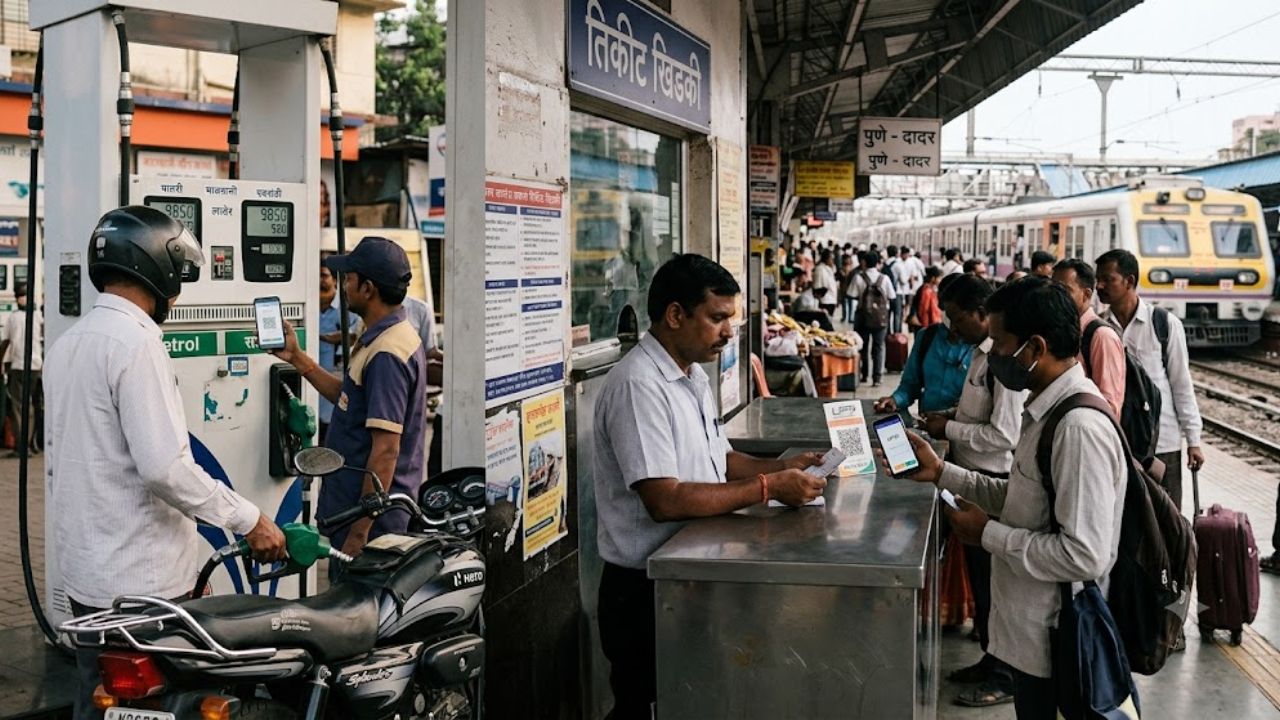
- From October 15, 2026, transactions through UPI will no longer be free
- Transactions above Rs 2,000 will be charged from ₹5 to ₹300
- The rules which were till now only for big businessmen are now applicable to common citizens as well
UPI Transaction Charges 2026: When inflation is already rising in the country, now the central government has decided to levy charges on UPI payments as well. This means that UPI payments are no longer free. Transactions above ₹2,000 will be charged. Importantly, if a common man pays petrol, electricity or any bill above ₹2,000 through UPI, he will now be charged ₹5 per transaction.
Till now, UPI charges were limited only to big merchants, but this new decision by the government has increased the burden on the common man as well. According to the National Payments Corporation of India (NPCI) FAQ, this rule will come into effect from October 15, 2026.
Huge craze of Amazon Now in India! Orders doubled; Crossed $1 billion in sales
Separate arrangements for petrol, electricity and some other services
Instead of the usual 0.4% Merchant Discount Rate (MDR), certain essential services have been charged a fixed fee of up to ₹5. This includes categories like petrol pumps, telecom, insurance and railways. This means, if the bill for these services exceeds ₹2,000 and you are paying through UPI, each payment will be charged ₹5.
This ₹5 provision will also apply to electricity, water and piped gas bills. A rate of 0.02% has been fixed for mutual fund and stock market payments, capped at ₹300. However, MDR will not be levied on certain auto-debit payments.
Why did the government change this rule?
According to NPCI, running the UPI network, maintaining servers and preventing fraud costs approximately ₹20,000 crore annually. Government support has played a significant role in UPI's success so far. In August 2026, approximately 2,451 crore transactions were made using UPI, with a total value of approximately ₹29.9 lakh crore.
RBI's big masterstroke before Repo Rate decision! 3.93 lakh crore withdrawn from banks; What will affect your pocket?
Where did this rule come from?
The Taxation and Other Laws Amendment Bill 2026 was passed by Parliament in the monsoon session. Then, on September 14, the government issued a notification providing legal protection against charges on UPI payments up to Rs 2,000 and RuPay debit card payments. The UPI Steering Committee was tasked with fixing the rates for payments above Rs 2,000.
But a big question remains unanswered
It is not yet clear whether GST will be levied on MDR, the share of revenue generated by banks, UPI app and NPCI, and what action will be taken against any shopkeeper who charges consumers.