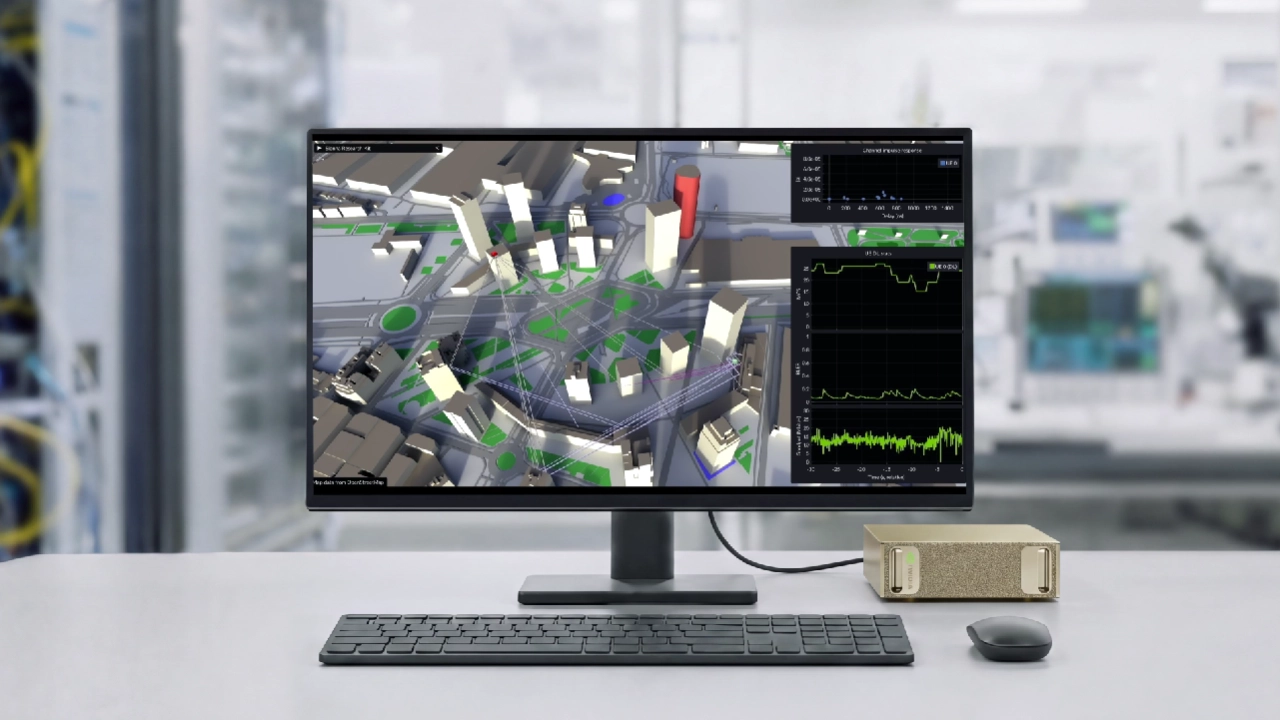
NVIDIA 6G research: NVIDIA is highlighting new research into AI-powered wireless networks, with experiments reporting faster robotic task completion, improved signal reception, and lower radio access network (RAN) power consumption. The findings, published on November 6, 2026, demonstrate how researchers are using NVIDIA’s open-source software to explore technologies that could shape future 5G and 6G networks.
The research update includes results from King’s College London, SoftBank, ETH Zurich, the University of Leeds and Spain’s Center Tecnològic de Telecomunicacions de Catalunya (CTTC). Among the reported findings are a 52.6% reduction in robotic task completion time, a maximum 60.5% improvement in uplink throughput under tested interference conditions and a 45.6% reduction in RAN power consumption.
NVIDIA also says adoption of its AI Aerial and Sionna software has grown tenfold over the past year. Its open-source 5G and 6G tools have crossed one million downloads, with more than 8,000 research and academic institutions worldwide using the platforms. The reported findings come from separate research experiments, including work involving experimental 5G infrastructure. They offer a look at how artificial intelligence could help researchers develop wireless systems that respond more intelligently to changing conditions.
NVIDIA AI Aerial and Sionna: The Tools Behind the Research
NVIDIA’s research ecosystem combines AI software, wireless simulation, and tools for testing radio systems. Two important components are NVIDIA AI Aerial and NVIDIA Sionna.
- AI Aerial provides software and development tools for building and experimenting with AI-native radio access networks. These systems use artificial intelligence as part of wireless network operations.
- Sionna provides open-source tools for wireless research, including communication-system simulation and AI-based experimentation.
Together, these platforms allow researchers to investigate how networks transmit and receive signals, manage radio resources,s and connect devices in different environments. They can also test ideas through simulations before moving towards experiments involving actual wireless equipment.
NVIDIA says global developer adoption of AI Aerial and Sionna has grown ten times in one year. The company also reports more than one million downloads of its open-source 5G and 6G tools, alongside adoption across over 8,000 academic and research institutions. NVIDIA open-sourced its Aerial wireless software in 2025, building on its existing Sionna research tools. The November 6 announcement focuses on the experiments researchers have conducted using this wider ecosystem.
King’s College London Uses AI to Help Robots React Faster
One of the more practical experiments comes from King’s College London, where researchers investigated how wireless communication affects robotic task completion. A robot arm equipped with a camera needs to understand its surroundings before performing an action. When its artificial intelligence runs on a nearby server or in the cloud, the robot must transmit information over a wireless connection. Sending full images repeatedly can add processing and communication overhead.
The researchers explored goal-oriented semantic communication as an alternative. The system sends compact descriptions of objects, their positions,ns and their relationships. This allows the robot to communicate the information needed for its task without repeatedly sending unnecessary visual data. In fruit-packing and cube-stacking experiments involving deliberately introduced faults, the approach reduced robotic task completion time by up to 52.6%. The researchers also reported improved task success compared with sending periodic images.
The result is relevant to connected robots operating in workplaces and warehouses, where delays can affect how quickly machines respond to changing situations. However, the 52.6% figure measures the time required to complete specific robotic tasks.
SoftBank and ETH Zurich Improve Wireless Signal Reception
Wireless receivers must recover information from incoming signals, even when interference and changing radio conditions make transmission difficult. Poor reception can lead to errors and retransmissions, affecting how reliably devices communicate. SoftBank explored the use of a neural receiver integrated into NVIDIA Aerial CUDA-Accelerated RAN (ACAR). The company tested the system using a commercial 5G smartphone under controlled interference conditions.
According to the research, the neural receiver delivered higher uplink throughput than a conventional receiver across the tested settings. SoftBank reported a maximum improvement of 60.5%. This finding suggests that AI-based receivers could help improve wireless performance when radio conditions become challenging. However, the 60.5% figure represents the maximum uplink-throughput improvement under the tested interference conditions.
ETH Zurich researchers investigated another approach using NVIDIA Aerial Testbed. They tuned neural receivers using local measurements from their operating environments. The resulting receivers reduced block error rates by more than one-third compared with selected pretrained versions. In practical terms, this could help wireless systems adapt to their surroundings. Better signal recovery could be useful in environments where interference and radio conditions change frequently.
NVIDIA 6G research: University of Leeds Reports 45.6% Lower RAN Power Consumption
Energy efficiency is another important challenge for future wireless networks. As networks support more connected devices and AI-powered applications, operators will need ways to manage power consumption without compromising connectivity. Researchers at the University of Leeds developed a system that predicts network demand 10 minutes ahead. It uses these forecasts to decide when base stations can enter sleep mode and when they need to become active again.
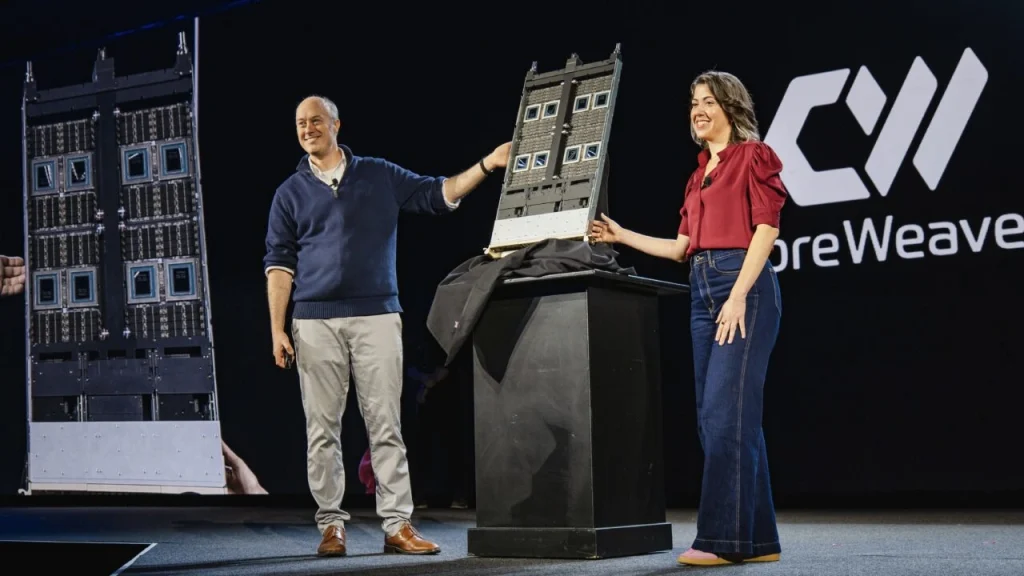
Before switching off a base station, the system checks whether neighboring active stations can continue serving the affected devices. It also monitors changing network conditions so that additional capacity can be restored when required. The researchers tested the approach using a portable 5G network-in-a-box powered by NVIDIA DGX Spark, alongside a digital twin used to validate decisions against real wireless equipment.
The experiment reported a 45.6% reduction in RAN power consumption compared with a full-power experimental baseline, while maintaining device connectivity. This could eventually help telecom operators reduce the electricity required to run radio access infrastructure during periods of lower demand. However, the figure applies specifically to RAN power consumption in the tested experimental setup.
CTTC Cuts a Wireless Network Simulation Workflow to 10–20 Minutes
Researchers also need to test how proposed network designs behave before deploying them. Simulations allow teams to examine scenarios involving large numbers of connected devices, interference, and changing radio conditions without immediately investing in expensive field trials. However, detailed wireless simulations can require substantial computing time. CTTC in Spain is addressing this challenge by integrating GPU-accelerated radio channel models into its open-source 5G-LENA network simulator.
The models calculate how wireless signals travel between antennas and devices. These calculations become increasingly demanding as simulated networks grow. In an early evaluation, the GPU-accelerated approach reduced a particular simulation workflow that previously took approximately three hours to between 10 and 20 minutes, depending on the integration. NVIDIA says the approach preserved the expected statistical behavior and network performance.
Faster simulations could allow researchers to test more network configurations, compare different designs and investigate demanding scenarios sooner. This could make the development process more efficient. However, the reported time reduction applies to the specific GPU-accelerated workflow evaluated by CTTC.
What NVIDIA’s Research Could Mean for Future 6G Networks
Together, the five research projects highlight different ways AI could influence future wireless infrastructure. Robots could communicate more efficiently, receivers could recover signals under difficult conditions, and base stations could adjust power consumption according to demand.
Faster simulations could also help researchers evaluate network designs before they move towards physical deployment. These improvements matter because future networks will need to support more than conventional smartphone communication. Connected robots, autonomous systems, industrial equipment and AI applications could all place different demands on wireless infrastructure. For telecom operators, energy management and reliable connectivity are particularly important. For researchers, open-source tools provide a shared environment to experiment, compare results and develop new approaches.
The reported improvements come from separate research projects, each using its own equipment, testing conditions and performance measurements. Some of the work involves experimental 5G infrastructure being used to investigate technologies relevant to future networks. Their results cannot be combined into a single promise about future network speeds, latency, or electricity savings. For Indian mobile users, the research is worth watching because future telecom infrastructure could eventually benefit from more efficient network management and improved wireless communication. But NVIDIA’s November 6 update does not announce an Indian 6G deployment, commercial availability,y or a launch timeline.
Frequently Asked Questions
Has NVIDIA launched a 6G network?
No. NVIDIA’s November 6, 2026 announcement reports research progress using its open-source wireless software. It does not announce the launch of a commercial 6G network.
What are NVIDIA AI Aerial and Sionna?
AI Aerial and Sionna are NVIDIA software platforms and tools used for wireless research and development. They help researchers experiment with AI-powered radio access networks, wireless communication, and network simulations.
How much did the University of Leeds reduce network power consumption?
Researchers reported a 45.6% reduction in radio access network power consumption compared with a full-power experimental baseline, while maintaining device connectivity. This does not represent total telecom network electricity savings.
Did SoftBank achieve 60% faster internet speeds?
No. SoftBank reported a maximum 60.5% uplink-throughput improvement using a neural receiver under controlled interference conditions. This is not a general consumer internet speed improvement.
How did King’s College London improve robotic performance?
Researchers used goal-oriented semantic communication to send compact descriptions of objects and their positions instead of repeatedly transmitting full images. The approach reduced robotic task completion time by up to 52.6% in specific fruit-packing and cube-stacking experiments.
What did CTTC achieve with GPU acceleration?
CTTC reduced a particular wireless network simulation workflow from approximately three hours to 10-20 minutes using GPU-accelerated radio channel models. This result does not apply to every network simulation.
When will commercial 6G networks launch?
NVIDIA’s November 6 research update does not provide a commercial 6G launch date. The findings demonstrate ongoing research and development rather than commercial network availability.
The Bottom Line
NVIDIA’s latest research update shows how open-source AI and wireless tools are helping researchers investigate the next generation of mobile networks. The reported results include 52.6% shorter robotic task completion time, up to 60.5% higher uplink throughput in SoftBank’s interference tests, more than one-third fewer block errors in ETH Zurich’s receiver experiments, and 45.6% lower RAN power consumption in the University of Leeds test.
CTTC’s work also demonstrates how GPU acceleration can shorten a particular network simulation workflow from around three hours to 10–20 minutes. These are meaningful research developments. The findings come from separate experimental projects, including work involving 5G research infrastructure. The next challenge is translating these controlled results into reliable systems that can operate across real-world telecom networks.
(Source)