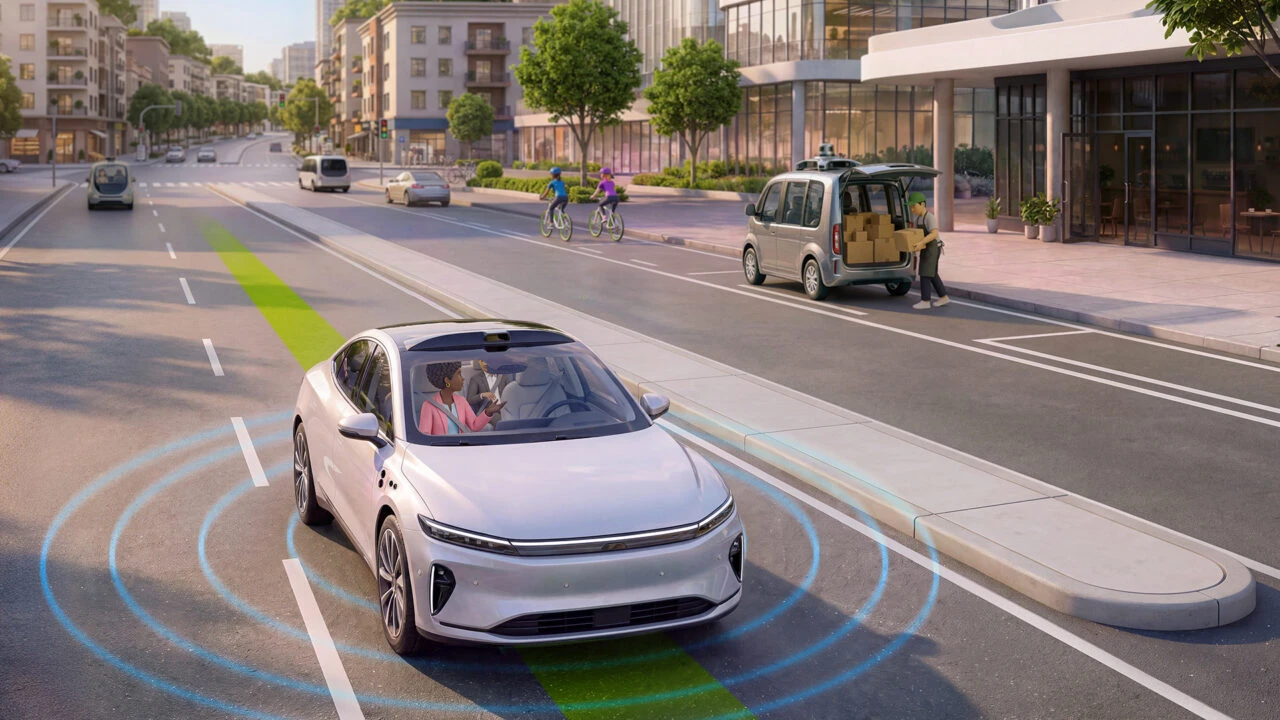
NVIDIA detailed a three-computer robotaxi pipeline combining DGX training, Omniverse simulation, and DRIVE Hyperion vehicle computing in its September 10, 2026 article. Model development occurs on NVIDIA DGX systems, where growing volumes of fleet data are converted into increasingly capable driving models. NVIDIA’s DRIVE Hyperion 10 reference architecture pairs dual DRIVE AGX Thor SoCs with 14 cameras, nine radars, three lidars and 12 ultrasonic sensors.
Uber uses DRIVE Hyperion, Waymo partners with NVIDIA on autonomous computing, and Tesla uses NVIDIA supercomputers for neural-network training, according to NVIDIA, as do traditional automakers including Mercedes-Benz and Hyundai.
NVIDIA positions this technology as a shared compute substrate, allowing the company to supply the underlying architecture across competing operators, according to its September 10 announcement. NVIDIA claims every major robotaxi program operating at commercial scale today uses some part of its modular stack, a claim that remains attributed to the company. A common infrastructure layer could reduce duplicated development effort across them.
Infrastructure Ownership as Strategic Leverage
What NVIDIA is selling, fundamentally, is picks and shovels to companies competing with one another. Goldman Sachs Research projects the global robotaxi market at roughly $400 billion by 2035, with around 6 million commercial vehicles. Whether those projections ultimately materialize remains subject to significant market uncertainty.
Betting on a single winning operator is not the strategy. NVIDIA supplies training compute, simulation infrastructure, reasoning models, safety validation frameworks, and in-vehicle compute to several competing fleets simultaneously.
The NVIDIA Halos Safety Foundation, Alpamayo Open Reasoning Vision Language Action Models, and AlpaSim Simulation Framework all serve that broader platform ambition.
NVIDIA has already become the common compute platform for AI data centers, used by companies that compete intensely in cloud services, model development, and consumer applications. Extending that role into robotaxi deployment follows the same pattern.
Competitors build differentiated software stacks, operational expertise, and regional market presence, and NVIDIA builds the layer underneath all of them.
What the Partner List Actually Reveals
NVIDIA’s underlying hardware platforms support autonomy development across Wayve, Pony.ai, and Waabi without replacing their distinct software stacks.
Operational fleet management remains distinct from these computational foundations. Deep integration with NVIDIA’s libraries and workflows could increase switching costs over time.
The distinction matters because NVIDIA provides infrastructure; it does not operate robotaxi services, dispatch vehicles, manage depots, or handle rider support.
Whether that foundation becomes truly indispensable depends on how tightly developers integrate their proprietary technology with NVIDIA’s libraries, SDKs, and workflows.
Why Standardization Accelerates Fleet Scaling
Scaling a fleet means delivering the same safe, reliable performance across thousands of vehicles.
Counterpoint Research frames the industry’s next challenge as scaling commercial fleets, including safety, utilization, regulation, and economics, and separately projects $168 billion in robotaxi services and 3.6 million vehicles by 2035. NVIDIA’s argument aligns directly with that framing. Training, simulation, and standardized in-vehicle compute become more important as fleets expand.
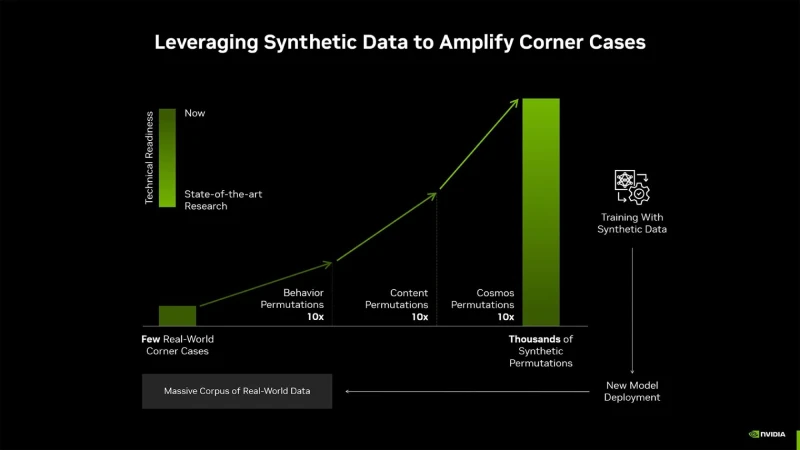
Addressing each phase of the lifecycle, from model development through validation to real-time processing, is what this three-computer model accomplishes.
The robotaxi ecosystem spans Asia, Europe, the Middle East and North America. Regional operators face different regulatory regimes, road conditions and customer expectations. A common infrastructure layer does not erase those differences, but it does reduce the duplicated effort across them.
Mercedes-Benz and NVIDIA are collaborating with Uber on a robotaxi ecosystem based on the new S-Class, built on DRIVE Hyperion, full-stack DRIVE AV L4 software and Alpamayo open models. Stellantis, Wayve and Uber are pursuing L4 driverless mobility services. Lucid, Nuro and Uber are developing a global service using DRIVE AGX Thor.
Hyundai and Kia are expanding their NVIDIA collaboration, with NVIDIA also exploring expanded work with Motional.
The Question That Remains Unanswered
Will NVIDIA become what it already became to AI data centers? The company is clearly betting yes. Its partner list is broad enough to suggest real adoption. Some use training, some use simulation, and some use in-vehicle compute. That modularity functions as a deliberate design feature, lowering the barrier to entry and permitting developers to adopt individual components without committing to the complete stack.
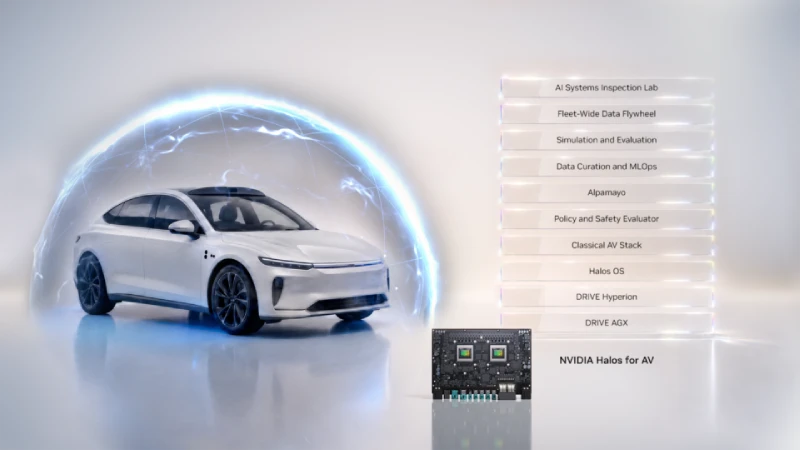
The more interesting tension sits between infrastructure standardization and software differentiation. NVIDIA says major robotaxi programs use different parts of its compute stack, although not every partner uses the complete three-computer architecture. Vehicle design, operational efficiency, regional relationships, pricing, safety records, and rider experience remain operator-specific.
The intelligence layer, increasingly, converges on shared tools. That convergence may accelerate deployment timelines across the industry. It may also concentrate strategic leverage in a single supplier. Resolution will arrive as fleets scale from hundreds to thousands, and as the robotaxi market either delivers on its projections or recalibrates them downward.
(Source)