
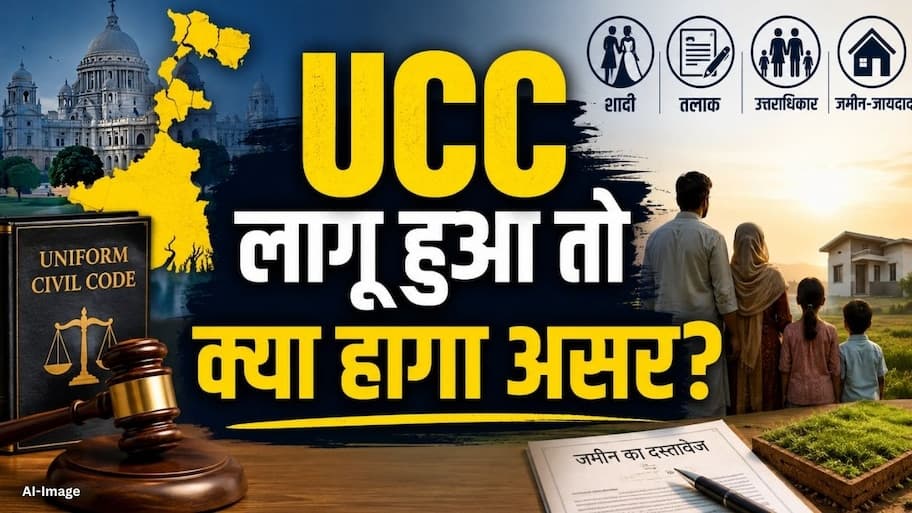
One country, one law: Suvendu government is bringing historic UCC bill, know what effect it will have on live-in and property rules!

Today (29 June 2026) is going to be recorded in the pages of history in the politics of West Bengal. The new Bharatiya Janata Party (BJP) government of the state is preparing to present the much-awaited bill related to the country’s most talked about and ideologically sensitive ‘Uniform Civil Code-UCC’ in the special session of the Assembly. This big decision of Chief Minister Suvendu Adhikari has started a new debate from the state politics to the general public. The Bharatiya Janata Party had promised in its ‘Sankalp Patra’ during the 2026 assembly elections that UCC would be implemented in Bengal within six months of the formation of the government. After Uttarakhand, Gujarat and Assam, West Bengal is going to become the next state in the country where there will be uniform civil law for all citizens. Let us understand the ground reality from the perspective of an expert reporter as to what will be the direct impact on the social and family fabric of Bengal after the implementation of this historic law. Uniformity in rules of marriage: No matter the religion, there will be law. After the implementation of Uniform Civil Code (UCC), the first and biggest impact will be on the personal rules related to marriage. In the present system, people of different religions marry under their respective personal laws (such as Hindu Marriage Act or Muslim Personal Law). But after the arrival of UCC, the minimum legal age of marriage (21 years for boys and 18 years for girls), complete ban on more than one marriage (end of polygamy) and mandatory government registration of marriage will be equally applicable to all communities. This will bring transparency in the legal processes related to marriage. The rules of divorce and maintenance will be very strict. Till now, the methods of taking divorce and the system of alimony given to women are different in different religions of the country. As soon as the UCC comes under the ambit of law, the legal process of divorce will become the same for husbands and wives of all religions. The most important change will be regarding the rights of women and children. In the event of divorce, the rules for maintenance and alimony to be given to the wife and children will be made very strict and uniform, so that women of any category cannot be harassed. Son and daughter will have equal rights in property, rules of will will also change. If this bill is passed in the Assembly, then there will be a revolutionary change in the old rules related to inheritance and distribution of ancestral property: Equal rights: Son and daughter will have exactly equal legal rights on father’s property, whether the daughter is married or unmarried. Uniform framework: The same legal procedure has to be followed for making a will, adoption and transfer of property. Possibility of exemption for tribals: According to government sources and the model of Uttarakhand, keeping in mind the cultural diversity of Bengal, tribal communities can be kept out of the scope of this law. Registration of live-in relationship is mandatory: Negligence can lead to jail! The most modern and discussed topic in the proposed UCC draft of West Bengal is the law made regarding ‘Live-in Relationship’. According to the new rules, if any adult couple decides to live together without getting married, then they will have to go to the local prescribed authority and get it compulsorily registered. Not only this, if in future they end this relationship due to mutual consent or any dispute, then it will be necessary to get an official registration of that ‘breakup’ or termination of the relationship. The government argues that this rule will provide legal protection to women living in live-in, their rights will be protected and any kind of criminal or fraudulent cases can be curbed. Why is there political turmoil in Bengal? While the Suvendu Adhikari government is calling it a historic step towards women’s empowerment and the resolve of ‘one country, one constitution’, the opposition (TMC) has launched a scathing attack on it. Trinamool Congress leaders allege that the government is attacking religious and cultural diversity through this law. However, the government is talking about implementing it on the floor of the Assembly only under the legal process (recommendations of a committee headed by a judge). Along with this, the government is also introducing ‘Anti-Social Activity Bill’ to improve public order, due to which the politics of Bengal is going to heat up further in the coming days.

Comments are closed.