
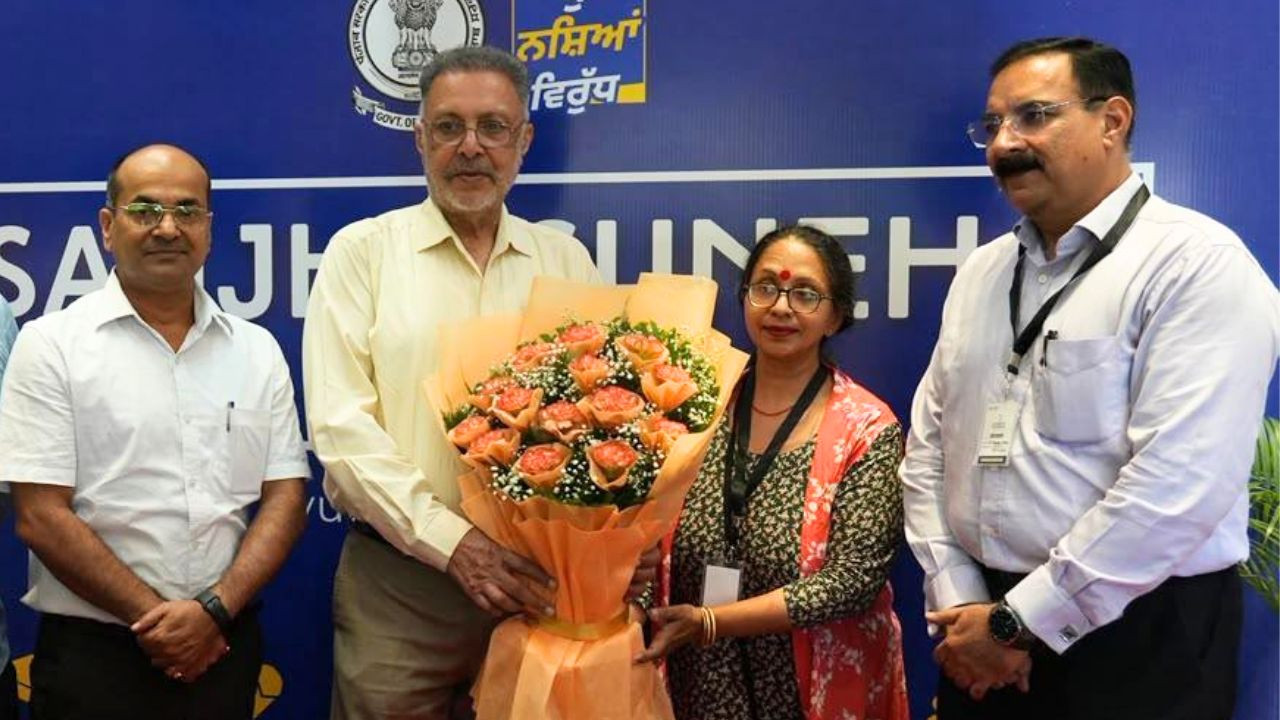
One roof, one resolution: Sanjha Suneha conference gave new strength to ‘war against drugs’

Chandigarh: Strengthening the sentiment that the fight against drugs requires participation of the entire society, the Punjab Government organized a unique program named ‘Sanjha Suneha – United Punjab’. It aims to establish sustainable partnerships between government agencies, community leaders, civil society organizations and social media influencers to effectively tackle the drug problem in the state.
Big fight for drug free Punjab
The conference, on the occasion of International Day Against Drug Abuse and Illicit Trafficking, was organized by the Data Intelligence and Technical Support Unit (DITSU), which is the technical backbone of the comprehensive anti-drug campaign in Punjab. More than 80 representatives from more than 40 organizations participated in the event. These organizations are working in the fields of education, mental health, de-addiction, child protection, youth welfare, women empowerment, community outreach and sports.
On this occasion, Punjab Health and Family Welfare Minister Dr. Balbir Singh stressed on the collective participation of society and people in the fight against drug addiction. He said that the Punjab Government has adopted a comprehensive strategy of enforcement, treatment and rehabilitation and prevention under the ‘War on Drugs’ campaign. “To empower the youth, we have also implemented this campaign in schools and colleges, encouraging sports and also guiding parents and teachers to come forward in the fight against drugs,” he said.
“A united Punjab is Rangla Punjab. For the real success of the anti-drug campaign, it is necessary to make it a mass movement. Every section of the society, from NGOs, educational institutions, community leaders to drug-affected families, should be involved in it. With this objective, more than 40 NGOs are participating in today’s program. This will give the ‘shared message’ the form of a common platform and collective resolve, where experiences, ideas and innovations will take the form of real change.”
He also informed about the efforts of the government to strengthen de-addiction services, expand rehabilitation facilities and spread awareness among the youth to protect them from drug addiction.
The conference provided an important platform for open discussion and sharing of ideas among various organizations working at the grassroots level. These organizations are working in the field of treatment, prevention and awareness to build a healthy and prosperous Punjab.
The organizations participating on this occasion include Ananya Birla Foundation, Slam Out Loud, Center Square Foundation, Laadli Foundation, Aditya Birla Education Trust, Samarthya, Labhya, Kalgidhar Trust, United Way Delhi, Hans Foundation, Act Human, Sarvaprem Foundation, Mehar Foundation, Manas Ki Jaat Sabhe Ek Seva Society, Brahma Kumaris, Magic Bus, Initiators of Change, Roundglass Foundation, Youth Football Club Roorke Kalan, Representatives from SPYM, Karuna Shakti Foundation, Udayan Care, TYCIA, Swami Vivekananda Medical Mission and Manasa Foundation shared their experiences.
The participants discussed key topics – prevention, health and wellness in schools and colleges, support for children in need of care and legal matters, and youth empowerment through sports and other activities.
Digital influencers like Simranjot Makkar, Karman Kaur Miglani, Sultan Randhawa, Simran Kaur Khalsa and Kuldeep Ghai participated in the special discussion on the topic “Awareness through Social Media”. The influencers discussed the role of social media in building public opinion and emphasized on spreading positive messages in the interest of society and motivating people who are addicted to drugs to adopt a drug-free life.
During the sessions, participants identified various areas of collaboration, including strengthening referral systems, expanding mental health support in educational institutions, increasing outreach to needy sections and greater youth engagement through sports, skill development and community participation.
participants’ views
Manish Kumar, Team Leader, SPYM (Delhi) said, “The biggest challenge for de-addiction is to make people aware of the harmful effects of drug addiction. We mainly provide information to the government on areas where there is demand for services (like opening de-addiction centers or organizing awareness camps) and ensure regular follow-up after rehabilitation, so that cases of relapse are minimized.”
Dr. Neelam Sodhi, head of Ludhiana-based Zilla Foundation, said, “Drug addiction becomes a means to deal with the challenges of life. Zilla Foundation is working with the aim that parents can understand their children better and children can understand themselves better. This has a direct relation with drug abuse, because when difficulties or challenges come in life, people do not adopt drugs as a coping mechanism to deal with them.”

Comments are closed.