
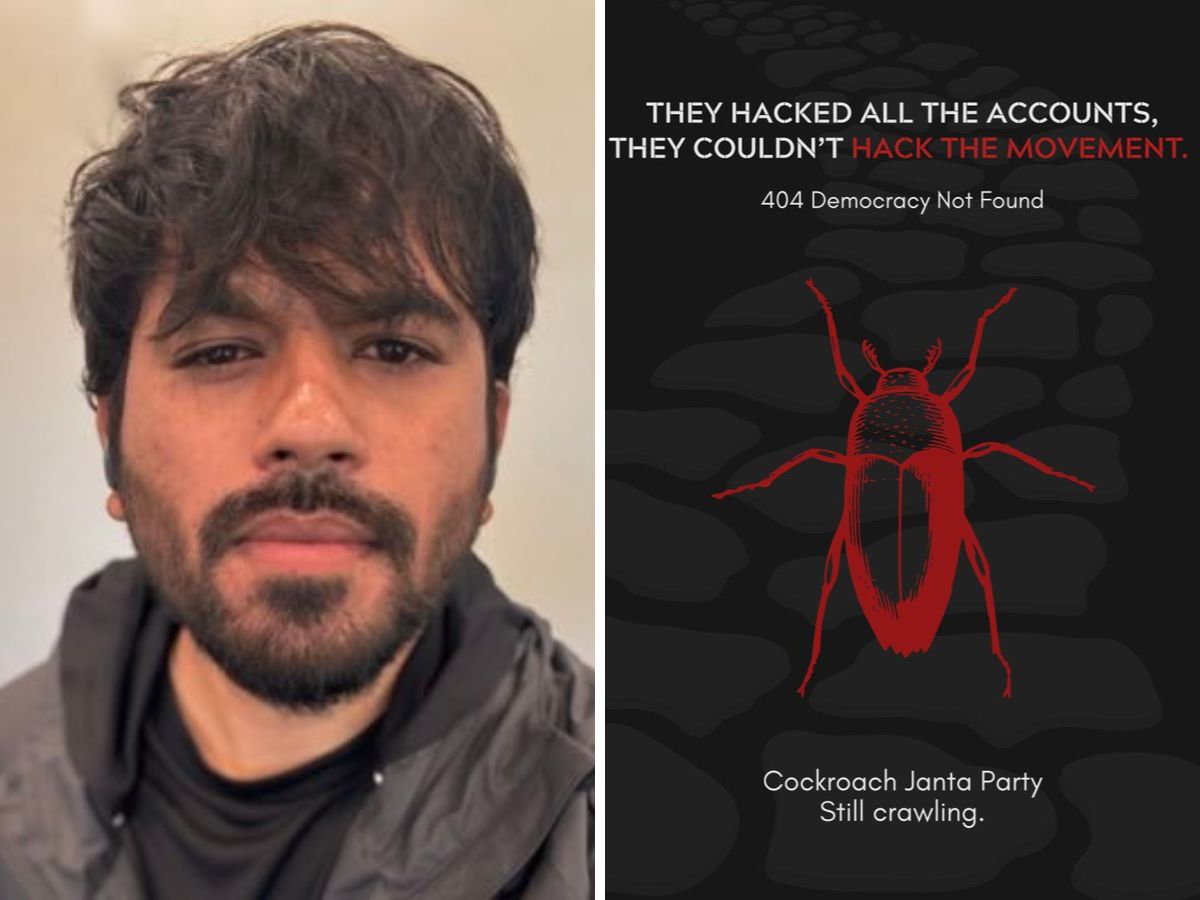
Only 9% Followers From India: BJP targets viral ‘Cockroach Janta Party’, alleges major support from Pakistan

New Delhi: A fresh political controversy has erupted over the viral “Cockroach Janata Party” (CJP) campaign after the Bharatiya Janata Party (BJP) alleged that a large section of the outfit’s social media following originates from Pakistan.
Union Minister Sukanta Majumdar claimed on Saturday that 49% of the group’s social media followers were from Pakistan, while only 9% were based in India.
BJP Raises Concerns Over Online Influence Operations
The BJP’s remarks came as the satirical digital movement continued gaining traction online through memes, videos and posts focusing on unemployment, education policy and alleged examination paper leaks.
‘Cockroach Janta Party’
Kerala BJP president Rajeev Chandrasekhar described the campaign as a “classic cross-border influence operation” aimed at targeting Prime Minister Narendra Modi and destabilizing India through coordinated online narratives.
In a post on social media platform X, Chandrasekhar warned about the growing role of bots, artificial intelligence and organized digital campaigns in shaping public opinion.
Campaign Linked to Education Controversy
The “Cockroach Janta Party” trend emerged after controversy surrounding remarks reportedly made by Chief Justice of India. Surya Kant during a court hearing related to senior designation for a lawyer.
The movement later expanded into a broader online campaign demanding the resignation of Union Education Minister. Dharmendra Pradhan over the alleged NEET-UG 2026 paper leak and other issues in the education sector.
“I am pained to read…”: CJI Surya Kant clarifies ‘jobless cockroaches’ remark; says youth was never targeted
Founder Alleges Crackdown on Digital Platforms
CJP founder Abhijeet Dipke alleged that the organization faced coordinated action across digital platforms. According to his claims, the group’s Instagram pages, X accounts and website were either hacked, withheld or taken down.
Dipke also claimed he received threats following the campaign and accused authorities of targeting the satirical movement instead of addressing concerns related to examination irregularities.
The controversy has now intensified political debate over online activism, digital influence operations and the role of social media in shaping public discourse.

Comments are closed.