
For countries, including India, dealing with the Taliban, distinguishing between engagement and recognition provides room for pragmatic diplomacy without abandoning concerns over human rights
Published Date – 8 September 2026, 11:01 PM
Illustration: GuruG
By Brig Advitya Madan
Five years after the Taliban entered Kabul, Afghanistan presents an uncomfortable paradox. The regime remains unrecognised by most of the world, yet countries that reject formal recognition increasingly deal with it as a political reality. The question is no longer whether the Taliban will endure. It is whether continued diplomatic distance, by itself, serves the strategic interests of countries such as India.
The images of Afghans clinging to a departing American aircraft in August 2021 remain emblematic of the end of the two-decade Western intervention. The Taliban, overthrown in 2001 after the September 11 attacks, returned to power after rebuilding an insurgency against the political order established in Kabul. Five years later, they have consolidated their authority.
What’s Different
Haibatullah Akhundzada, operating from Kandahar, exercises decisive authority as Emir. The regime has imposed strict rules on gender segregation, dress, and women’s participation in public life. Girls remain barred from secondary and higher education, while women face severe restrictions on employment and movement. These policies are not peripheral to Taliban rule; they are central to its conception of governance.
Yet present-day Afghanistan is not simply a replay of the 1990s. Large-scale fighting has sharply declined, and the Taliban have established a degree of internal security. They have also acted against Islamic State Khorasan, while al-Qaeda’s operational profile inside Afghanistan has remained comparatively subdued. Domestic revenue collection has improved, and the regime has invested in roads, mosques and mining, including its interest in copper, gold and lithium.
These developments should not be mistaken for prosperity or normalisation. GDP per capita remains under pressure from population growth, return migration, poverty and inflation. Afghanistan continues to depend heavily on humanitarian assistance even as international funding declines. Restrictions on women carry an economic cost as well: excluding a large part of the population from education and employment weakens household incomes, public services and the country’s future human capital.
Changing Geopolitics
The more consequential change, however, is geopolitical. Afghanistan is no longer waiting for the West. Russia formally recognised the Taliban in 2025. China, Iran, the Gulf states, Turkey, Central Asian countries and India have developed working relationships with Kabul, driven by security, trade, mining, connectivity and migration. China has particular interests in minerals and regional security, while Afghanistan’s location offers Central Asian states potential routes to southern markets.
But an important distinction is often lost in this debate: engagement is not recognition. Maintaining diplomatic channels, conducting trade, discussing security, providing humanitarian assistance, or accepting Taliban representatives need not amount to granting the regime full political legitimacy. For countries dealing with Afghanistan’s realities, this distinction provides room for pragmatic diplomacy without abandoning concerns over human rights.
Pakistan’s experience illustrates why such engagement can also be driven by security imperatives. Islamabad, once a historical supporter of the Taliban, has become an increasingly hostile neighbour. It accuses Kabul of sheltering the Tehrik-e-Taliban Pakistan. Border closures, military strikes and trade disruptions have deepened the economic costs for Afghans and complicated an already difficult regional environment.
The Western dilemma is consequently becoming sharper. Non-recognition preserves political distance and signals disapproval of the Taliban’s human-rights record. But if diplomatic isolation reduces regular access to Kabul, it can also leave greater space for Russia, China and regional powers to shape Afghanistan’s future. European countries have engaged Kabul on migration, while Washington has maintained security contacts over terrorism. Diplomatic relations, after all, do not necessarily signify approval; states routinely maintain relations with governments whose policies they strongly oppose.
Five years of Taliban rule have demonstrated two things: isolation has neither moderated the regime nor diminished its control, while engagement has not transformed its ideology
The alternative, therefore, is not unconditional recognition. It is calibrated engagement backed by verifiable expectations. Five years of sanctions and financial restrictions have not produced a reversal of the Taliban’s core restrictions on women and girls. But engagement need not mean surrendering leverage.
It can create channels through which outside powers press for counterterrorism guarantees, economic opening and greater space for women and girls, while expanding trade and employment. A more functional Afghan economy could also reduce incentives for migration, extremism and dependence on illicit networks.
India’s Strategy
For India, the stakes are particularly direct. Afghanistan affects India’s continental connectivity, terrorism concerns, relations with Pakistan and access to Central Asia through Iran’s Chabahar route. New Delhi has already moved from the caution of 2021 towards pragmatic engagement. The question is how far that engagement should go.
India need not rush towards formal recognition. Instead, it should deepen practical engagement while making its core interests explicit. Counterterrorism assurances, protection of Indian diplomatic and development personnel, predictable trade and transit arrangements, and credible commitments against using Afghan territory for activities directed at India should form part of that engagement. Greater space for women and girls should remain an important diplomatic objective, even if it cannot be treated as a precondition for every interaction.
Formal recognition, if considered eventually, should therefore be treated as a separate strategic decision rather than the inevitable conclusion of engagement. Recognition could provide India with greater diplomatic presence and a more direct channel for seeking security assurances and pursuing economic interests. But offering it without conditions could also diminish leverage on terrorism and human rights.
Five years of Taliban rule have demonstrated two things at once: isolation has neither moderated the regime nor diminished its control, while engagement has not transformed its ideology. India does not have to choose between endorsement and rejection. Its task is more difficult — and more consequential: to preserve influence without surrendering leverage.
As Afghanistan re-enters regional geopolitics through trade, security and connectivity, India cannot afford either complacency or disengagement. The objective should be neither to legitimise the Taliban nor to pretend that they can be ignored, but to remain present, pragmatic and capable of shaping the choices that will determine Afghanistan’s future.
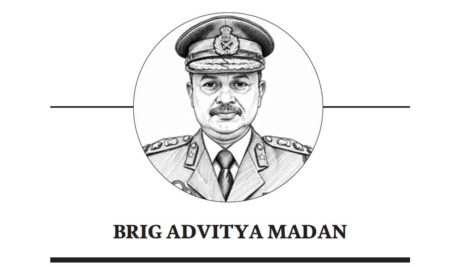
(The author commanded 15 Punjab in Lebanon under the United Nations Flag, commanded 27 Sector as DIG in Churachandpur, Manipur, and was Brigadier Operational Logisitcs in HQ Western Command. He is currently an analyst on geopolitics, strategic, international, and defence affairs)