
Education has expanded opportunities for Indian women, but inadequate skills, unpaid care work, safety concerns and informal jobs continue to limit economic empowerment
Published Date – 12 October 2026, 01:05 AM
By Mokshitha MR, Dr Manasi Dash, Dr Viji B
Education is undeniably central to the modern labour market, but its impact is not uniform. It varies significantly depending on the years of schooling and the type of training received. Research consistently demonstrates that better-educated individuals earn higher wages and experience lower unemployment rates.
However, studies also reveal the complex relationship between women’s education and their participation in paid employment, often showing a U-shaped pattern: high employment rates for women with little or no education, a decline among those with some primary education, and a subsequent increase among women with higher secondary and university qualifications (Kanjilal-Bhaduri & Pastore, 2018).
Pressing Question
Resting on two pillars of SDG 4—Quality Education and SDG 5—Gender Equality— the ‘Beti Bachao, Beti Padhao’ (BBBP) Scheme was launched in 2015 to prevent gender-biasedsex-selective elimination, ensure the survival and protection of the girl child, and promote the girl child’s education and participation. It has seen measurable improvements over the last 11 years.
The Sex Ratio at Birth (SRB) has climbed from 918 in 2014-15 to 929 in 2024-25, and the Gross Enrolment Ratio (GER) for girls in secondary education has increased from 75.51% to 83.4%. Institutional deliveries rose from 61% in 2014-15 to over 97.3% by 2023-24, indicating improved access to healthcare.
The scheme has also enhanced women’s economic participation through various skill development programmes and awareness campaigns such as ‘Selfie with Daughters’ and ‘Beti Janmotsav’. These indicators signal progress in protecting girls and facilitating access to education. However, the pressing question remains: Is education alone enough to guarantee economic participation and can better education lead to better living?
The BBBP aimed to leverage education as a powerful tool for empowerment, promoting healthier lifestyles, boosting productivity, and driving economic growth. Educated women entering the formal workforce should lead to enhanced incomes and improved per capita income for our nation. Nevertheless, the reality remains stark: even with rising education levels, women’s economic participation has failed to keep pace.
Gender Gap
According to the Global Gender Gap Report (2026), India ranks 143rd in Economic Participation and Opportunity, 112th in Educational Attainment (including primary, secondary, and tertiary), and 136th in Health and Survival, out of 145 countries.
A significant factor contributing to this disparity is the misconception that education guarantees employment. The availability of vocational training is crucial to ensuring that educated individuals become employable. According to the Press Information Bureau (2026), only 51.4 per cent of women aged 15-59 who have received formal vocational training are in the workforce, compared with 83.3 per cent of men.
Shockingly, around 24.75 per cent of the female labour force have received some form of vocational training, leaving a staggering 75.25 per cent without essential skills. Furthermore, overall female labour force participation was critically low at 32.4 per cent in 2025, compared with 77.6 per cent for men.
According to studies based on Periodic Labour Force Survey (PLFS) data, the overwhelming burden of caregiving responsibilities plays a significant role, with 44 per cent of women citing ‘child care/personal commitments’ as the primary reason for stepping back from economic activities. Among those who do participate, an astonishing 78.2 per cent find themselves in vulnerable employment in the informal sector, often driven by necessity rather than choice.
This predicament stifles their potential for high-skilled jobs and undermines their bargaining power in the workforce. UNFPA (2025) shows that the youth gender gap in labour force participation is not primarily due to differences in education, caste, religion, or income in India; rather, it is largely due to structural and gender-specific effects, especially related to marriage. The literature also highlights hindrances such as socio-cultural norms, economic constraints, inadequate infrastructure and safety concerns.
Informal Employment
A report published by NITI Aayog in 2026 found that only 3 per cent of women are in formal employment, while 71 per cent work in informal employment or are part of the NEET (Not in Education, Employment or Training) segment. The high rate of informal employment poses challenges beyond individual circumstances; it threatens the overall economic health of the nation. Informal labour lacks vital benefits such as social safety nets and pensions, resulting in lower tax revenues and larger government losses.
In response, the government has launched several programmes, including the Employees’ Provident Fund Organisation, the e-Shram Portal, the Udyam Portal, and the Pradhan Mantri Shram Yogi Maan-dhan Yojana to address these issues. However, many women remain unable to access these benefits, highlighting the critical importance of NGOs. These organisations are crucial in connecting eligible populations to government schemes, ensuring they receive the support they need.
To realise the goals of Viksit Bharat 2047, a comprehensive approach is non-negotiable. The focus must extend beyond education to include vocational training, measures to address care responsibilities, and supportive infrastructure that actively fosters women’s economic participation. This multifaceted strategy is essential for bridging the gap between education and employment, driving us toward a more equitable workforce.
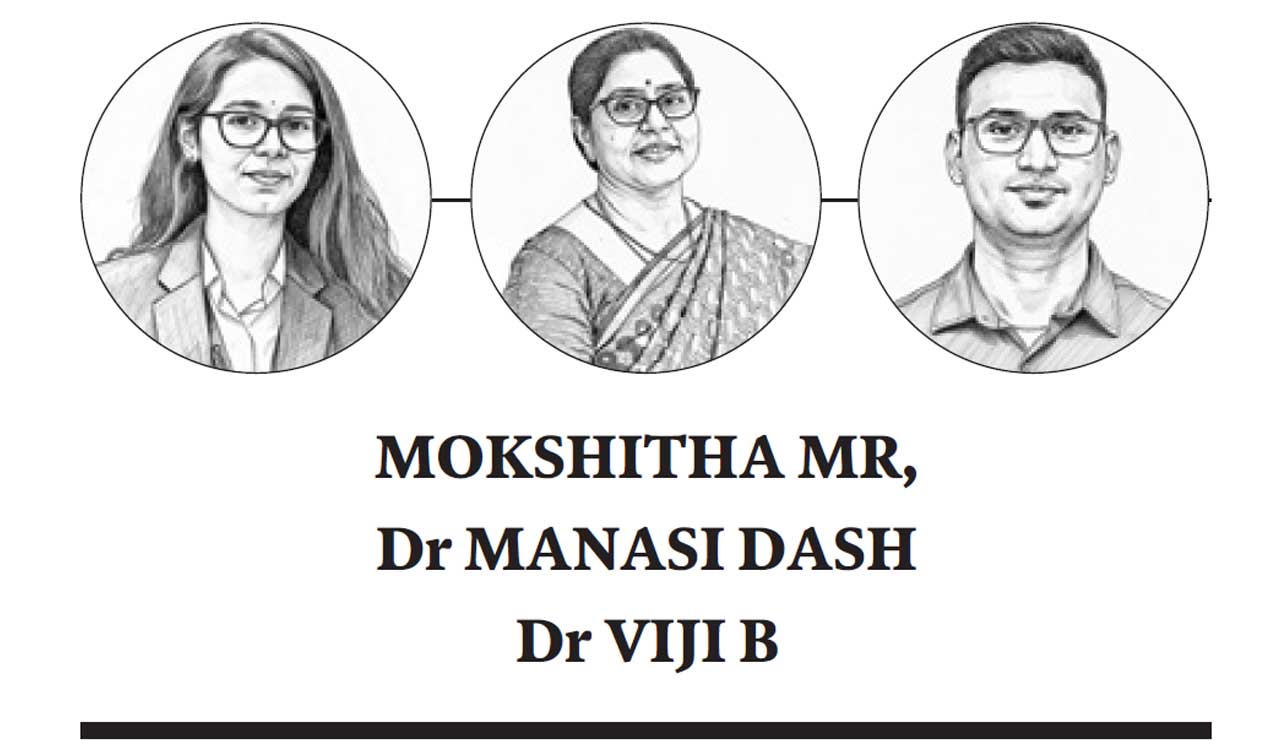
(Mokshitha MR is pursuing BA Economics, and Dr Manasi Dash and Dr Viji B are Assistant Professors, Department of Economics, Christ University, Bengaluru)