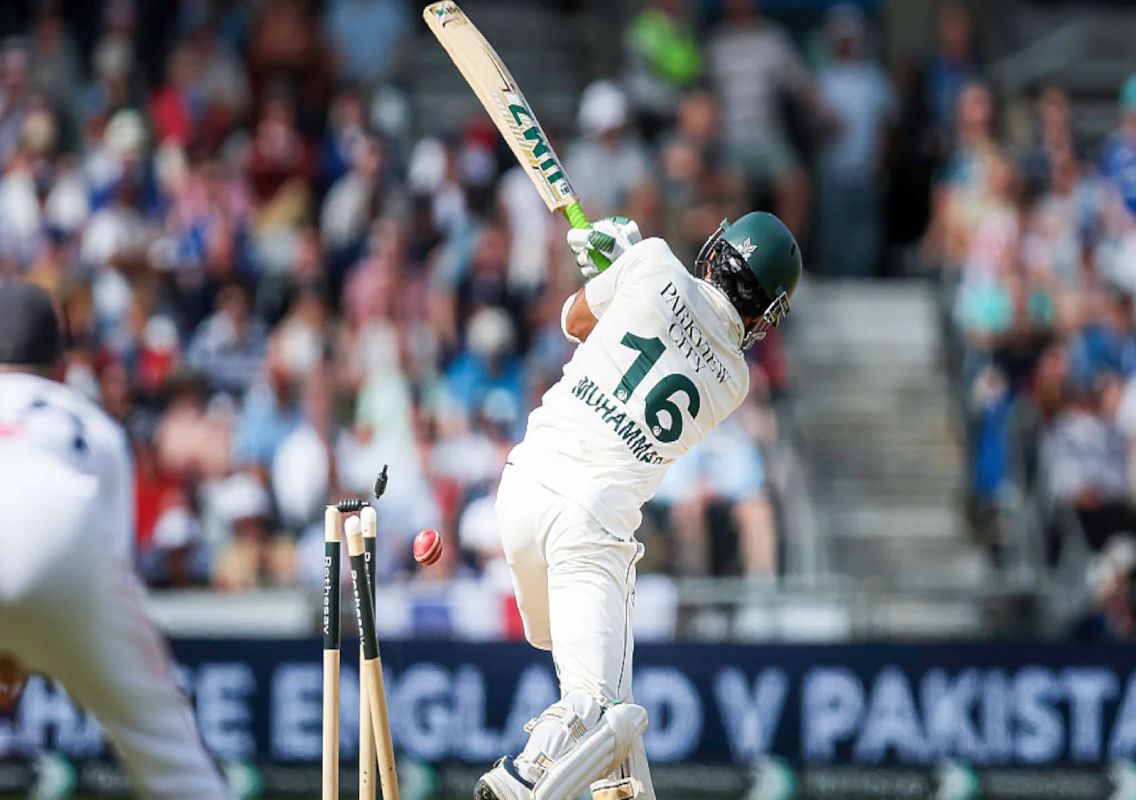
Leeds: Pakistan endured a disastrous start to their latest Test campaign against England, suffering a crushing innings-and-103-run defeat at Headingley while also registering an unwanted record for the first time in Test history. The visitors lost their first wicket without a run on the board in both innings, becoming the first team ever to record the feat seven times overall.
The defeat was comprehensive, with Pakistan dismissed for 171 in their first innings and then bowled out for only 135 in the second. England, meanwhile, produced a dominant all-round performance to complete victory inside three days and earn important points in the ICC World Test Championship 2025-27 cycle.
The result also gave Joe Root a winning start to his second stint as England’s full-time Test captain, while Pakistan’s position in the WTC standings took another blow.
Pakistan enter unwanted record books
Pakistan’s historic low came from an unusual pattern across their two innings.
In the first innings, Azan Awais was dismissed lbw by Ollie Robinson when Pakistan’s score was still 0. The same situation repeated in the second innings when Imam-ul-Haq was dismissed without scoring after England began their chase for wickets.
Although losing the first wicket at 0 is far from unprecedented in Test cricket, doing so in both innings of the same match is extremely rare.
Pakistan have now experienced the unwanted occurrence seven times, the most by any team in Test cricket. England are second on the list with five such instances, followed by Australia with four. India have experienced it twice, while New Zealand have done so once.
The latest occurrence therefore added another unwanted statistic to a Test match that Pakistan will be keen to forget.
England’s pace attack destroys Pakistan
Pakistan’s batting struggles were evident from the opening innings.
After being asked to bat first, they were bowled out for 171, giving England’s bowlers an early advantage. Robinson and Josh Tongue shared all 10 wickets between them, with Robinson taking 5/51 and Tongue returning figures of 5/46.
England then capitalised on their opportunity with the bat.
Their middle order produced four important half-centuries, with Jordan Cox scoring 73, Joe Root making 66, Harry Brook contributing 91 and Dan Lawrence adding 51.
The collective effort allowed England to build a massive first-innings total and establish a 238-run lead over Pakistan.
Pakistan’s Ali Usman did his best to restrict England, taking 5/95, but the damage had already been done.
Robinson produces match-winning spell
Ollie Robinson was the standout performer of the match.
After taking five wickets in Pakistan’s first innings, the England seamer continued to trouble the visitors when they returned to bat in the second innings.
He eventually finished the match with extraordinary figures of 8/80earning the Player of the Match award.
Robinson’s performance was central to England’s victory.
He consistently found ways to challenge Pakistan’s batters and repeatedly broke partnerships before they could develop into meaningful resistance.
His eight-wicket haul also underlined England’s dominance with the ball across the match.
Jofra Archer strikes immediately
Jofra Archer also played an important role in England’s victory.
Pakistan began their second innings already facing a huge deficit after England had secured a 238-run lead. Their problems became even more severe when Archer struck in his first over.
The England fast bowler dismissed Imam-ul-Haq, leaving Pakistan without a run on the board and creating the historic unwanted record.
Archer remained an important part of England’s attack throughout the match and eventually took the final wicket, dismissing Pakistan’s last batter in the 38th over of the second innings.
His pace, combined with Robinson’s accuracy and Tongue’s movement, created constant pressure on the Pakistan batting order.
Pakistan briefly threaten a fightback
There were moments when Pakistan attempted to fight their way back into the contest.
Shan Masood played aggressively and struck several boundaries during the second innings, attempting to put pressure back on the England bowlers.
However, England quickly regained control.
Abdullah Shafique was dismissed after edging while defending, while Tongue then caused further damage to Pakistan’s middle order.
Saud Shakeel was among his victims before Tongue dismissed both Masood and Salman Agha in the same over.
The sequence effectively ended Pakistan’s hopes of mounting a meaningful recovery.
Mohammad Rizwan offers resistance
Mohammad Rizwan was one of the few Pakistan batters to offer prolonged resistance.
The wicketkeeper-batter scored 41 runs and attempted to keep the innings together as wickets fell around him.
However, Robinson continued to make breakthroughs at the other end, eventually leaving Rizwan exposed.
Gus Atkinson finally dismissed Rizwan, after which England needed only a short period to complete the victory.
Archer took the final wicket in the 38th over, sealing England’s innings-and-103-run win.
England’s batting sets up the victory
While England’s bowlers dominated the match, their batters also played a significant role in establishing the winning position.
The hosts’ middle order showed patience and aggression in equal measure.
Harry Brook came close to a century with 91, while Jordan Cox’s 73, Joe Root’s 66 and Dan Lawrence’s 51 ensured England did not allow Pakistan to recover after the visitors’ modest first-innings total.
The contributions were particularly important because they transformed England’s initial advantage into a huge 238-run lead.
Once that lead was secured, England’s bowlers had considerable room for error and could attack Pakistan aggressively.
Joe Root begins second captaincy stint with victory
The result was also significant for Joe Root.
The England batter has begun his second stint as the team’s full-time Test captain with a convincing victory.
Root contributed with the bat, scoring 66 during England’s first innings, before watching his bowlers dismantle Pakistan’s batting line-up.
The victory therefore provided an ideal start to his return to the leadership role.
England’s performance also demonstrated the strength of their pace attack, with Robinson, Tongue and Archer combining effectively.
WTC implications for Pakistan
The defeat has consequences beyond the immediate series.
England earned important points in the ICC World Test Championship 2025-27 cyclewhile Pakistan’s points percentage fell further. Following the defeat, Pakistan dropped below the West Indies and moved to the bottom of the WTC standings with a points percentage of 19.05.
For Pakistan, that leaves very little room for error in the remainder of the cycle.
Every Test now carries additional importance as the team attempts to improve its position and remain in contention for the WTC final race.
The heavy loss at Headingley has therefore created pressure not only on the team’s batting and bowling performances but also on its wider Test Championship campaign.
Second Test awaits at Lord’s
Pakistan will have an opportunity to respond when the two teams meet in the second Test at Lord’s.
The match is scheduled to begin on August 27giving Pakistan a few days to assess their performance and make adjustments.
The visitors will need significant improvement with the bat.
Scoring 171 in the first innings and 135 in the second made it almost impossible to compete against England after the hosts established a substantial lead.
Pakistan’s bowlers did produce some positive moments, particularly Ali Usman’s five-wicket haul, but their overall effort was not enough to compensate for the batting collapse.
A match to forget for Pakistan
The Headingley Test exposed several weaknesses in Pakistan’s performance.
Their top order struggled from the beginning, their middle order failed to build substantial partnerships and England’s pace attack repeatedly exploited the pressure.
The unwanted record of losing the first wicket at 0 in both innings was a reflection of how quickly their problems developed.
At the same time, England demonstrated the value of sustained pressure.
Their bowlers were disciplined, their batters capitalised on opportunities and the team never allowed Pakistan to build momentum.
Conclusion
Pakistan’s defeat at Headingley was damaging on several fronts. England completed an innings-and-103-run victory inside three days, while Pakistan were dismissed for 171 and 135 in their two innings.
The visitors also entered the Test record books for the wrong reason. By losing their first wicket at 0 in both innings, Pakistan became the first team to record the unwanted feat seven times in Test cricket.
Ollie Robinson was the chief architect of England’s victory, finishing with 8/80while Jofra Archer and Josh Tongue also made major contributions. England’s middle order had earlier laid the foundation with four significant scores, including Harry Brook’s 91 and Joe Root’s 66.
The result also pushed Pakistan to the bottom of the WTC standings with a points percentage of 19.05. Their next opportunity to recover will come at Lord’s from August 27.
For Pakistan, the second Test is now about more than simply levelling the series. It is an opportunity to halt a worrying slide, correct their batting problems and prevent their WTC campaign from slipping further away.